Blog

  • Santa Rosalia, Blow Wind Blow!

    ๐Ÿ“ท Placeholder โ€” replace with original post image

    We’ve traveled 700nm North from where we started in October with the following strategy:

    Wait for favorable weather then run North to a safe spot and wait for the next weather window. Note that I used the word ‘safe’ and that is literal. Winter winds in the Sea of Cortez can be quite strong and the waves with the strong wind are short and steep. We knew there were some strong winds coming when we arrived in Santa Rosalia and the wind did not disappoint. Gusts were well above 40kts at times and coming from an angle into the marina that was, at times scary. Everyone in the marina including us were out checking and double-checking dock lines and hoping that the dock stayed together. When the wind blows like that in a marina all the rigging on the sailboats makes a noise like a distant monster howling.

    It got so chilly a couple of weeks ago we swapped our light bedding for a down comforter. In the mornings, we turn the diesel heater on to take the chill off the boat. We’ve both been running around with several layers of clothes on. Three blocks from the marina we’re peeling the layers off because sheltered from the wind we suddenly get hot!

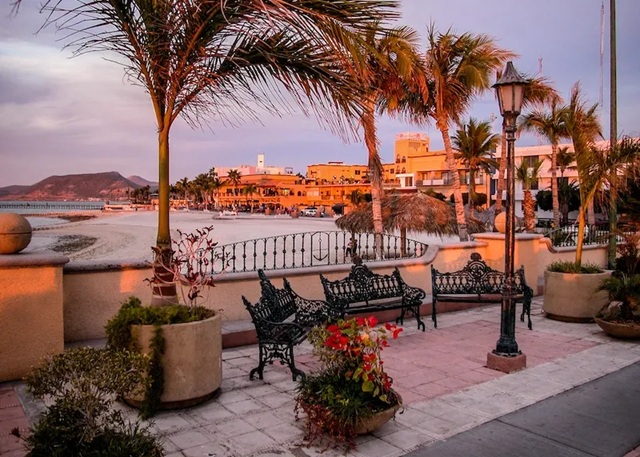
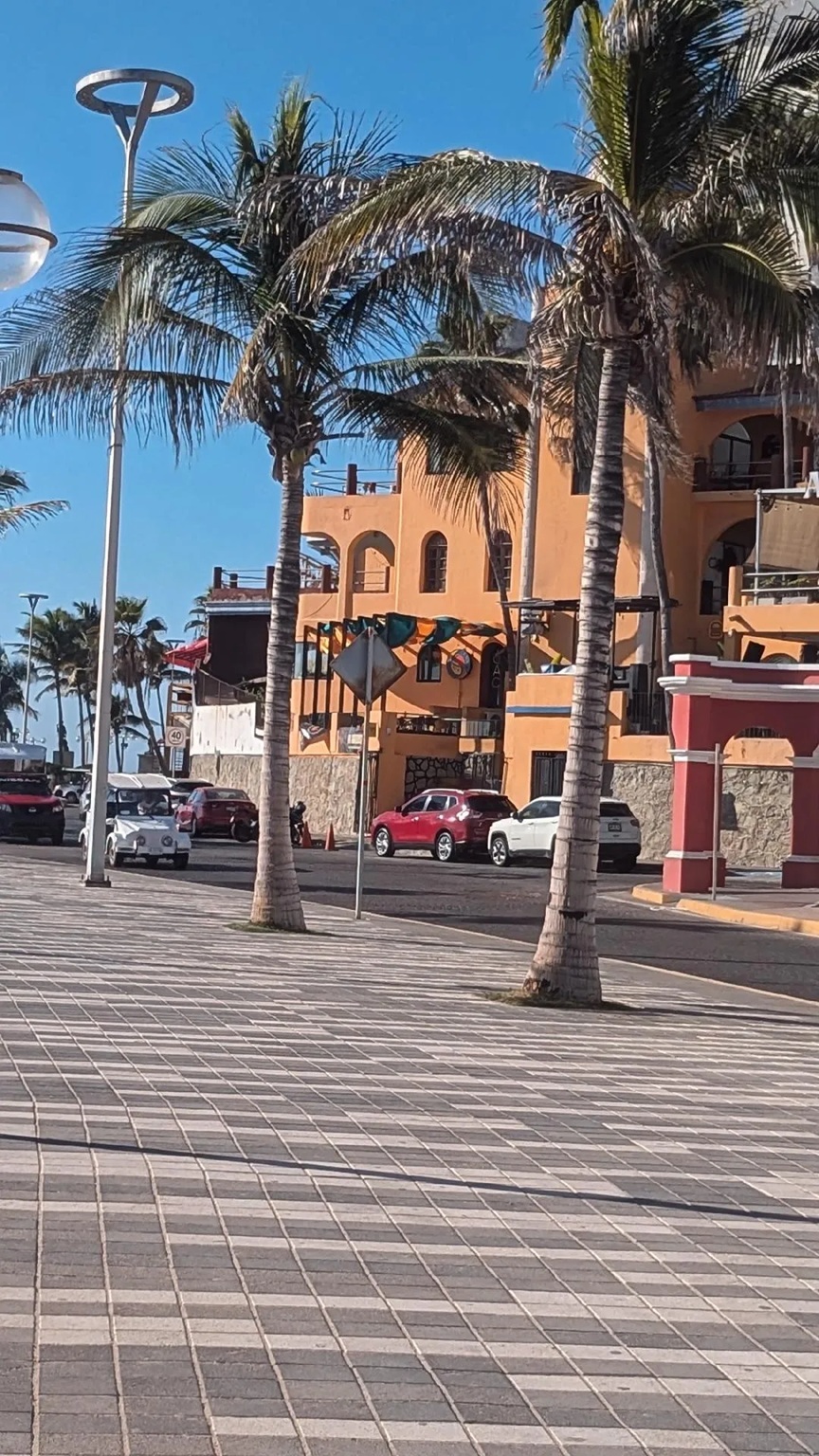
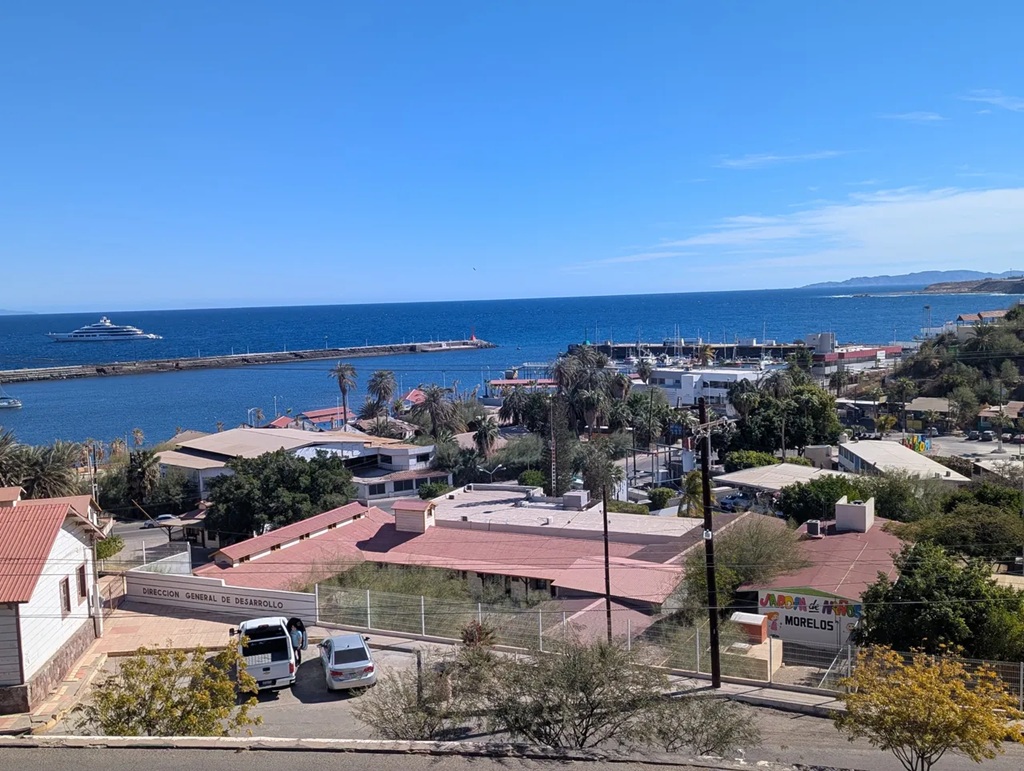
    Santa Rosalia is a lovely little town of 14,000 people. The town almost appears untouched by tourism. The marina is very small with space for only 20 boats. The town was formed in the 1800’s as a copper mining ‘company’ town, originally operated by El Boleo, a French mining company. There is evidence of French influence in architecture and mining operations all over town. Santa Barbara catholic church was designed by Gustave Eiffel and shown alongside the Eiffel tower in Paris. Miners were demanding a place to worship in town and the mine operators purchased the (mostly sheet-metal) church in France, disassembled it, boxed it up, and put it on a ship it to Santa Rosalia where it was reassembled and still stands today.

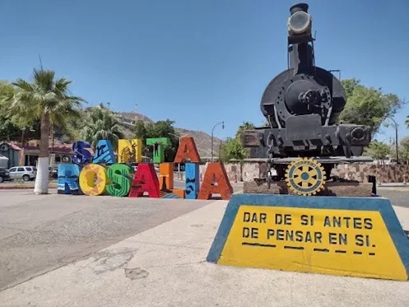
    Numerous buildings and old factories stand as witness to the town’s industrial past. Old cranes, mining carts, a steam locomotive as well as glassy copper refining slag. The harbor is constructed almost entirely of huge lava-like blocks of slag. Many of the town’s buildings were originally parts of the mine operation. Now Santa Rosalia sits on Mexican Highway 1 on the Baja peninsula where a steady stream of RVs, trucks and personal vehicles move all day long.

    In August 2025 Santa Rosalia was hit by hurricane Hillary which caused significant damage. There is still evidence visible today of the destruction. The Mexicans are resilient and immediately started rebuilding and repairing their town the best they could.

    Although Santa Rosalia is not particularly touristy, we quickly found that it has great tacos and a wonderful bakery (El Boleo Bakery) that we visited almost every day. The rotating selection of Mexican and French style pastries kept us well supplied.

    Still after enduring quite a lot of wind for about a week it was time to move on. We’ll take advantage of some light Southerly winds – unusual this time of year, and sail across the Sea of Cortez to San Carlos, about 75nm.
  • Journey from Puerto Escondido to Santa Rosalia

    ๐Ÿ“ท Placeholder โ€” replace with original post image

    January 15 is dawned with the wind still and water glassy flat in the Puerto Escondido Harbor. This was a bit of a surprise since the weather models were suggesting another day of North winds “Northerlies”. What a relief! We’d been experiencing winds in the 30kt range with at least one gust to 38kts on my wind gauge. Immediately, we saw boats beginning to leave the harbor. We made our final preparations and left the next day.

    First stop was the fuel dock as soon as they opened. We were in the midst of fueling when a very large power boat arrived and the captain got on his VHF radio complaining he had a 9:45 am fuel reservation and Island Summers was occupying the dock. We had never heard of a “fuel reservation” nor had the Mexicans working the dock but maybe its a thing in other parts of the world when you need to fill your huge yacht with hundreds of gallons of diesel. In Mexico, everything works on a first-come first-served basis. Unfortunately, the captain had to wait which was evident he was not use to doing. Most boaters we meet are friendly and helpful. Once in awhile you run across an old grouchy big power boat guy, who’s going to tell the Mexicans how they should run their business. You just have to laugh and carry on.

    We departed, glad to be getting ‘unstuck’ from Puerto Escondido – as nice as it is. Our goal was to make a 70nm trip to San Juanico. Remember we tried this a month ago and had to turn around! At around 6 knots this would use all our daylight and hopefully we’d have enough light to anchor once we made our last waypoint. While we motored up the beautiful Baja coast I sent a message to some cruiser friends on SV Global Explorer, who I thought might be in the area . It turned out that they were planning to be in San Juanico that evening. I thought it was pretty remarkable that although we started 600nm and a couple months apart, we arrived in the same anchorage at exactly the same time on the same day with no coordination at all. We had a nice evening catching up but we needed to leave at first light the next day. Hopefully, we’ll connect up again this season. Graeme is a great fisherman and I’d love to learn his secrets for catching yellowtail tuna.

    We sailed to Punta Chivato, anchored and took the dinghy to shore where we found a beach covered with sea shells as far as the eye could see. Bev made the most of the opportunity and we filled a bucket with shells while Riley ran on the beach and got his zoomies out.

    We left early in the morning heading to our final destination, Santa Rosalia. As we approached Santa Rosalia, we saw two huge super yachts outside the harbor entrance. Yacht Infinity is owned by Eric Smidt, CEO of Harbor Freight Tools https://www.superyachtfan.com/yacht/infinity/ accompanied by its support ship Intrepid https://www.superyachtfan.com/yacht/intrepid/ to store and maintain the helicopters. We can’t help but wonder what the point is to being near Santa Rosalia since there was no evidence that Mr. Smidt visited the town at all other than to fly over it on his helicopter….

    As we entered the harbor at Santa Rosalia, we couldn’t hail anyone on the VHF radio at the Marina but once we anchored out in the small harbor and put our dinghy in the water, we were greeted by some Australian cruisers who pointed us to marina security. We quickly arranged for a slip for a week at the 25 slip marina. It was a relief to find a slip since the forecast is for strong winds over the next few days and it would be uncomfortable to be anchored in the harbor being slapped by waves and tossed in the wind. Next up is to explore this old copper mining town, Santa Rosalia.

  • We have a weather window. . . leaving Puerto Escondido

    ๐Ÿ“ท Placeholder โ€” replace with original post image

    After waiting out the Northerly winds for 9 days we finally got a weather window so we could leave the protected anchorage at Puerto Escondido. Our plan is to cruise North to Santa Rosalia. Today we’ll go 38 NM and drop anchor for the night at Caleta San Juanico known for its protected bay and sharp pinnacle geological formations.

    It’s actually been relaxing being stuck in Puerto Escondido. It’s a very modern marina with lots of nice amenities. We had time to learn to play cribbage. In the evenings if we’re not watching movies or listening to live music at the marina restaurant we play a competitive game of cribbage.

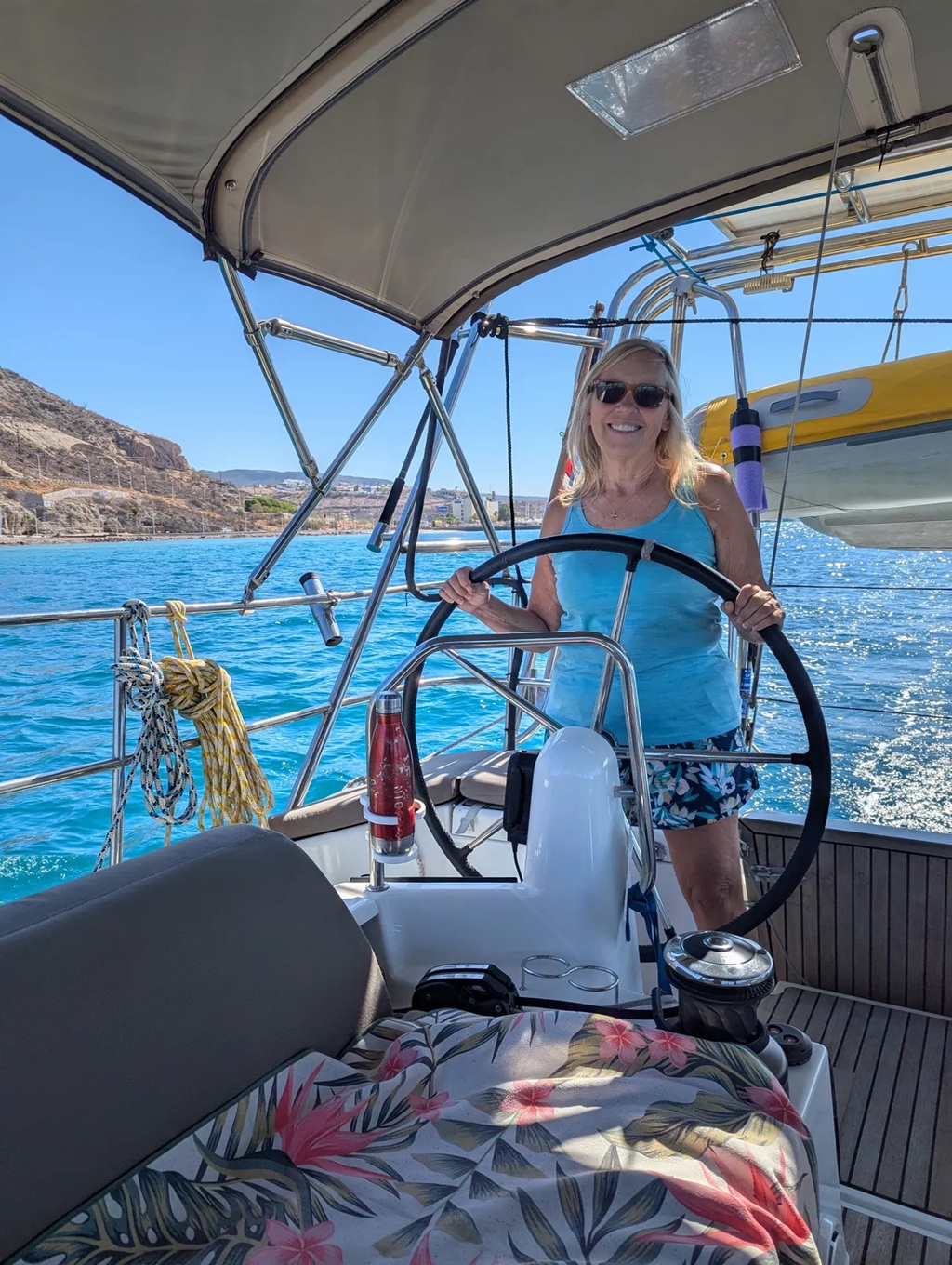
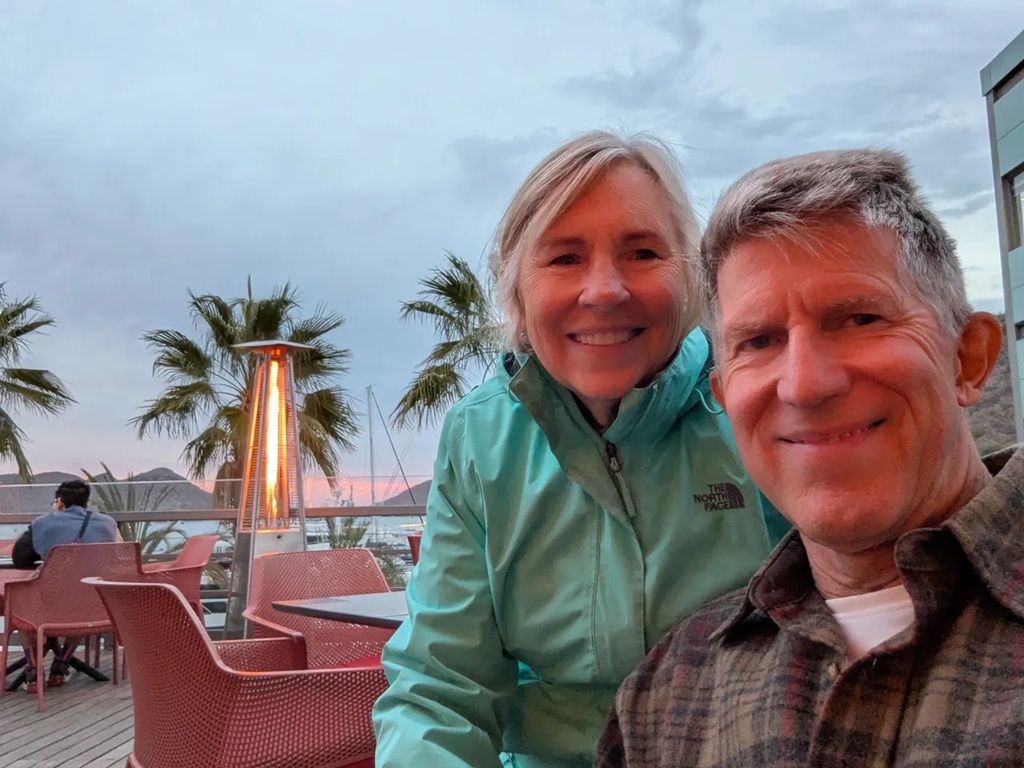
    As you can see in the photo above we are bundled up as the sun is setting. It’s always beautiful here but the Northerly winds are cool and the dessert is cold at night this time of the year. Thankfully, the outdoor restaurant has heaters in the winter.

    One of the things we wanted to see when in Loreto was a 325 year old mission at San Javier (the full name is Mission San Francisco Javier de Vigge-Biaundo). It’s up in the hills above Loreto. The directions to find it were to use Google maps but to be sure to download the maps for offline use since the area is beyond cell service. Getting there would involve a rental car. The ladies in the marina office were very helpful and Ventur Car Rental delivered a car to the marina. We got it for 24 hours and the price was less than a round trip cab to the airport! Now we get to drive on Mexican roads again! We’re a little captive at Puerto Escondido. There’s one restaurant and while it’s a pretty place, getting out and about is exciting. We drove to Loreto to recharge our Peso supply at a cash machine then headed up in the hills. The road is winding and narrow, dotted with shrines for past traffic fatalities. At the end we arrived at a small town of 200 residents with the mission. It’s interesting to see how Spanish colonialism reshaped the culture of North America. Along with the church there were orange trees and olive trees (one of the olive trees is as old as the church!). All of this is possible because of two springs that feed water from the mountains to this tiny town and its church!

    After returning to Loreto, we decided to do some grocery shopping. Grocery shopping is always a challenge. To their credit, Mexicans cook from scratch and use different ingredients than we’re used to. On the Baja peninsula, food is ferried from the mainland and trucked to stores but not every day. So it can be hard to find what you want or all the ingredients for a recipe you were planning to make! We went to three stores and finally found most of what we needed. One of the stores – El Pescador “the fisherman”, seemed to be the store that caters to expats and sells (expensive) American brands. For the first time in Mexico we saw our favorite La Victoria hot salsa. YAY!

    The day before we left Loreto, Ricardo, the outdoor director at the marina (fishing guide, hiking guide, scuba diving guide, and immigration lawyer) took us on a hike up into the Tripui Hills. It was a beautiful hike with numerous indigenous plants along the trail and incredible views of the islands and mountain ranges. Ricardo’s wife, Gabriella, is the Spanish/English teacher, yoga instructor, mid-wife, fill-in waitress for the restaurant, and snorkeling guide for the marina. People in Mexico wear many hats!

  • Happy New Year! We have returned to the boat

    ๐Ÿ“ท Placeholder โ€” replace with original post image

    It’s always a long day of traveling toting many suitcases full of boat parts and food along with other miscellaneous items we can’t seem to get here as well as making sure we don’t misplace Riley in the chaos. But its always fun to be back in the sun and the pretty blue water!

    Our travels went smoothly until we discovered the biggest bag full of boat parts, motor oil and boat data displays, lights (just a small list of what we were able to cram into the bag) did not arrive in Loreto with us. Loreto is a small airport with one flight every few days and it clears out pretty quickly once everyone on the small plane gets through customs. But because we were delayed trying to locate our lost bag we were the last travelers left in the building. Since there were several customs agents with nothing to do they decided they would root through each of our bags asking us what stuff was….really? They laughed at the different types of cheeses I brought. The agricultural officer even took Riley and I into a room and checked him for bugs (glad they didn’t check me) and requested Riley’s U.S. import documentation and U.S. Dept. of Transportation docs. What? I thought we were entering Mexico. Never heard of them asking for U.S. documents. Mexico’s only requirement last I checked is you must provide the microchip number for your pet and a signed document from your vet stating they are current on their rabies vaccine. We were definitely getting the full meal deal!

    Next we moved on to another room where we were greeted by the Alaska agent who was helping Kevin report the lost bag. Then a customs agent joined in and wants to know the value of the bag and its contents. Kevin, assuming it was another Alaska agent said $1,000 USD. Uh oh! He’s actually a Mexican customs agent. He immediately informed us we would be paying duty on the parts related to the boat. Oh no! I told them Kevin had overestimated the value. They asked us to pay up. We convinced them that we’d prefer to pay once the bag was located and we could go through the bag with them and determine a value since we didn’t have receipts for any of the contents in the bag (who does, right?)

    The following day the bag was located but they would not bring it to the marina (despite Alaska Airlines Lost Bag Policy) so Kevin had to spend $104 USD to take a cab to the airport. Once at the customs desk they had his bag and went through it item by item as Kevin disputed the values. They agreed the value was $600 USD. Kevin paid them and they would only accept USD and he was back in the cab returning to the marina.

    It’s close to impossible to get e-batteries into Mexico and I need two batteries for my e-bike. I had the batteries shipped from Florida to a freight importer in San Diego who can magically get stuff like this into Mexico for a fee. He had not seen the batteries but located them a few days later thank goodness. We are at the marina until all the stuff arrives that has been shipped here. Based on the weather, it looks like we are here until next Monday. It’s a great place to be stuck because the marina has a nice restaurant, hot showers, mini market, pickle ball court, free classes, and nice people and the area is beautiful.

  • A quick trip to Coronado Island then home for the holidays!

    ๐Ÿ“ท Placeholder โ€” replace with original post image

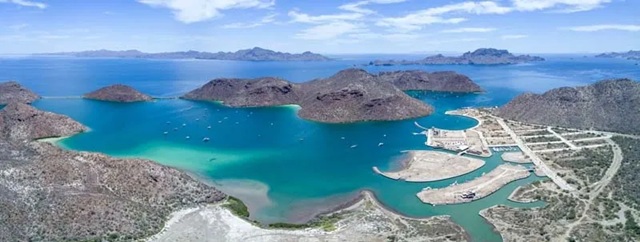
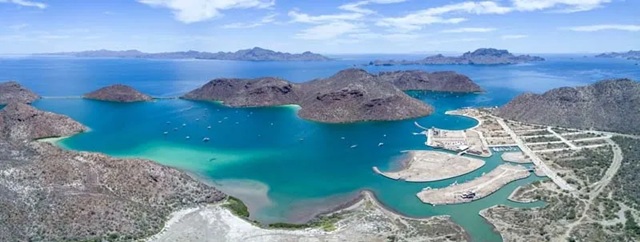
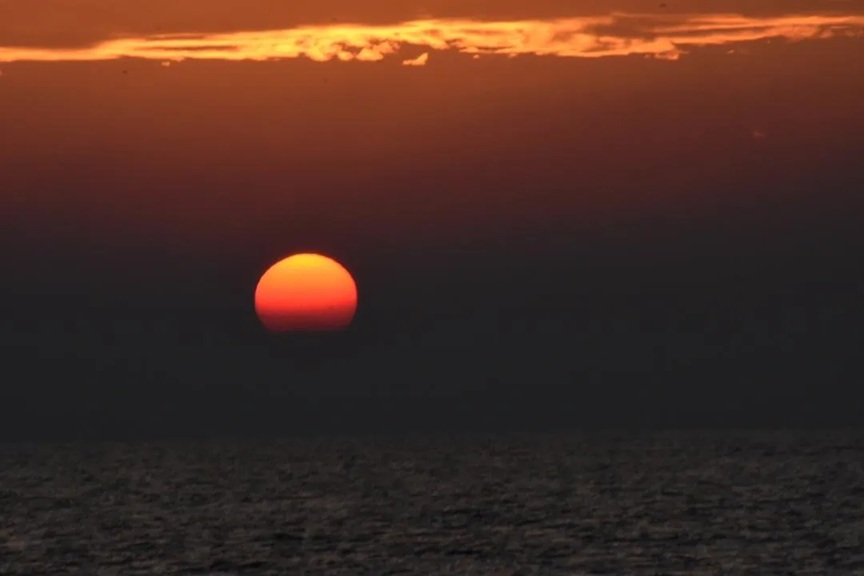
    We sailed with our buddy boat s/v Delaware Girl (Charlie & Wendy) on a 25 NM journey to beautiful Isla Coronado. This island is a national marine park known for its snorkeling, clear blue waters, white sandy beaches, and a variety of marine life . After anchoring in this crystal clear water we took the dinghy to shore and took a hike on the nature trail. If you continue on the trail it leads to the top of the volcano. It was getting to be sunset so our hike was cut short but we didn’t miss the bright red sky as the sun set beyond the horizon.

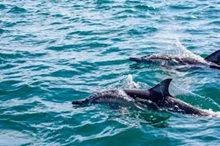
    The next morning we were greeted with sunshine and a pair of dolphins that were very interested in either our boat or Riley. Riley seldom barks but he barked at the dolphins swimming by.

    We pulled up anchor after breakfast and continued North heading to San Juanico another 24 NM. We got about 15 NM when the weather started changing and the sun hid behind the clouds and the wind and swell increased. It got ugly! Time to get out the sea sick meds.

    Even looking at 4 different weather models there’s no real guarantee of good weather or the weather you expect, especially when local landforms can accelerate wind when waves bounce off the shore, etc. We were getting 19kts on the bow.

    Occasionally we dove into a wave and had water on the foredeck. We tried zigzagging and we tried slowing down but it was just an unpleasant experience. We’d finally determined that the best course of action was to dodge into a moderately sheltered anchorage for a few hours to wait for the wind to die down which it usually does in the evening. As we were changing course, I happened to notice a forward hatch open. Oh oh! I looked below and could see water spilling from the hatch onto our bed in the front cabin where we sleep. Water was cascading off the bed and onto the walls and floor soaking bedding, shoes, hats, backpacks, etc. and everything else along its path! It’s one of those salty, wet messes you stand and stare at and you’re not sure where to start to clean it up.

    Since everything was wet we decided the first step was to dry things out. Even though it was cloudy, it was still a warm day so we strung things out all over the deck and cockpit and headed back to Coronado Island to anchor for the night. The next day we headed straight to the marina where we spent the afternoon into the evening doing load after load of laundry.

    Today we are getting s/v Island Summers ready so we can leave her on a mooring ball here in Puerto Escondido while we’re home for the holidays. We hired a boat watcher and a diver to check the ground tackle to keep her safe. There’s a camera onboard so Kevin will be able to monitor it and the batteries remotely. We will take a water taxi to land tomorrow and get a land taxi at the marina to take us 27 km to the Loreto airport.

    We took a break from our chores today and took the dinghy over to a sheltered area looking for the baby hammerhead shark Wendy had discovered while on her paddle board a few weeks ago. He’s living in his nursery until he gets big enough to go out into the ocean. We didn’t see him today but we’ll check again later this afternoon. At first it was disturbing seeing a shark fin heading right towards our inflatable boat until you see him and realize he’s just a juvenile shark (5 ft long…little shark) still I wouldn’t want to swim with him!

    We are headed home to the cold . . . Brrr! We will be back cruising inJanuary to warm up! We hope you all have a great holiday with your family and friends.

  • Puerto Escondido and simple pleasures

    ๐Ÿ“ท Placeholder โ€” replace with original post image

    Puerto Escondido is near the cute and fairly small town of Loreto. From the Marina there is a hike called the Steinbeck hike from the book by John Steinbeck’ “The Log from the Sea of Cortez” written in 1951. We followed the hike up a box canyon climbing over boulders and dry pools until we finally got to a point at a dry waterfall where we chose to go no further, at a pool full of the last water from the rainy season.

    After our hike we took showers at the marina. A shower is a pretty unremarkable thing unless one is in Mexico and on a boat. Mexico is not generally known for great public showers and the boat showers are fine as far as they go. Sort of a “navy” shower. Get wet, soap up, rinse off — try to save water depending on how much is in the tanks. Puerto Escondido has maybe the nicest showers we’ve seen so far. Truly luxurious with lots of hot water and L’Occitane soaps that tingle a little. So Nice!

    After getting cleaned up from being salty sailors, we drove to Loretto with Charlie and Wendy to provision at the Ley grocery store,, stroll through the street market, and dinner at a little family restaurant with a canvas roof that was one of Charlie’s favorites. This place has authentic homemade Mexican food. Both the mole and salsa verde were outstanding!

    After our hike, showers, and a trip to Loreto we had a dark dinghy ride back to the boat. This means a ride of maybe a mile through a mooring field in the dark. Then Riley needs a trip to shore (he stayed on the boat since he’s kind of small for boulder hopping). I only hit one buoy in the dark on my trips with Riley and safely got back to the boat. The next morning after Riley’s morning trip to the beach, I noticed what looked like a quill on Riley’s nose. When I removed it I realized it was a short cactus spine that had probably been there all morning. Let that be a lesson – don’t sniff the cacti!

  • North into new places

    ๐Ÿ“ท Placeholder โ€” replace with original post image

    It’s been 3 days since we left La Paz traveling non-stop. Today the wind was on our nose. We can’t sail straight into the wind so we put up some sail but had to do some motoring as well. Our goal today was to get to a place called Bahia Aqua Verde (Green Water Bay). We are meeting Tyler and Sheila on s/v Liahona, who are already there. We arrived at this gorgeous spot just before dusk so we were able see the beautiful water of Bahia Aqua Verde without having to wait until morning.

    We spent the day in Aqua Verde and took a hike up into the hills. We didn’t get far when a herd of goats with bells around their necks were blocking our path. They quickly retreated to the higher elevations after a few minutes. The view from on top was incredible overlooking the blue turquoise waters of the bay. That evening we went to the beach for dinner at a tiny palapa restaurant with no menu. There were 2 other couples besides the 4 of us. You just ask what they have: Fish Tacos (made with fresh grouper) or Shrimp Tacos. The grouper was wonderful! Sometimes we stay at these place too long into the evening and then have to dinghy back to our boat in the dark which was the case this evening. We will be here just overnight before heading to Puerto Escondido another 23 NM away.

    The next morning we headed to Puerto Escondido ahead of a brief Norther (wind storm that would have been uncomfortable). Puerto Escondido (Hidden Port) is a large landlocked bay with a smallish marina and a mooring field where we have a reservation. It was a relief to arrive since that’s our destination for the month of December. The boat will stay there with a service checking on it regularly and we’ll come home for the holidays. With about a week before our flight out, we should have a chance to do some local exploring by boat and car. Our friends we met up with, Charlie and Wendy on s/v Delaware Girl, drove down here from Oceanside, CA so they have their truck at the marina.

    Upon arrival, we quickly planned a boat Thanksgiving dinner. Bev heroically created a pumpkin pie in the tiny boat oven. It takes constant attention to keep the temperature right and the pie from just spilling out of the pan. We and our friends pooled our food and came up with a nice Thanksgiving dinner. No turkey, so we had steak instead. We all were missing our families and agreed that being away for Thanksgiving is one of the ‘negative’ parts of cruising.

  • La Paz gateway to the Sea of Cortez

    ๐Ÿ“ท Placeholder โ€” replace with original post image

    We left La Paz a couple of days ago and got to thinking about some of our experiences there and want to share a little bit about our visit. La Paz has some sort of magnetism for Mexico cruisers. There’s a whole subculture. La Paz isn’t touristy in the way Cabo San Lucas or Puerto Vallarta are at all. There are certainly tourists though. The Americans in La Paz are expats that live there full time. The life-style is inexpensive and the culture is quite forgiving of cruisers with little money or a lot of money. There are boats ‘anchored-out’ with permanent residents or not. A boat at anchor doesn’t incur any moorage fees (to my knowledge no one comes knocking if the port fees for the harbor aren’t paid).

    Boats are always breaking and La Paz is the best place in Mexico to find parts that I’ve seen so far. Elsewhere, you will have to figure out how to import them somehow. The cruisers look out for one another too. There’s a VHF net every morning where people introduce themselves and ask other cruisers for advice or help. Occasionally, all the cruisers pitch in to offer one of their own help.

    Last week a local expat “Cactus Bob” was in the hospital and needed one pint of blood for his upcoming surgery and he didn’t have the 3000 pesos ($147 USD) to pay for it so the hospital wouldn’t do the surgery. The cruising community was contacted for help and we all jumped into action and donated the necessary money (plus a little extra) to buy a pint of blood for Cactus Bob. The commodore of the club rushed the money to the hospital right away and Cactus Bob had a successful surgery the next morning. It goes to show how incredible the cruising community is. Most hospital visits in Mexico (no direct experience) are cash affairs. Inexpensive enough that most of the cruisers just pay cash.

    La Paz is known for its great restaurants and great street food. We randomly went into a taco place before we left that smelled so good and had some of the best tacos we’ve had in Mexico. There’s a good tamale stand near the public market and some of the best steaks we’ve had anywhere have been in La Paz. A nice steak dinner in La Paz is about 1/4 the price of the same in Seattle. So for all those reasons Americans come in and never leave.

    At the coffee hour at Club Cruceros (Cruisers Club) at Marina de La Paz we met Matt and Mary who got married and brought their boat down to La Paz from the States 60 years ago and never left. Along the way they founded Marina de La Paz (a bit by accident according to them). Now Marina de La Paz is the cultural center of the marina district and cruiser life in La Paz.

    As we returned to La Paz this time we were excited to see some familiar faces and a little sad to know that some of our friends had moved away or moved on. Our cohort of 2022 Coho Ho Ho and Baha Ha Ha cruiser rally boats are spread from San Diego to the Mediterranean now. This year we don’t have boat projects to keep us here in La Paz so we’ll move on before we find a reason to stay longer!

    On another note: As we were cruising out of the channel in La Paz we noticed the 116 Meter exploration cruiser “Multiverse” reportedly owned by a tech billionaire, Yuri Milner. A yacht so big we had a hard time finding the obligatory helicopter on deck (apparently it has a hanger for the chopper so maybe it was just put away).

  • Crossing the Sea of Cortez at Sunset

    ๐Ÿ“ท Placeholder โ€” replace with original post image

    We left Mazatlan Nov.14th with a 72 hour weather-window to complete our 200 NM trip to the Baja Peninsula. This means the boat has a day shift and a night shift and we’re the crew for both. Neither of us likes staying up all night but we have to work something out so we take turns (usually 4 hr. shifts) while the other sleeps. Happily we were traveling under the last super-moon of the year, a so called “Beaver Moon”…lol. It’s pretty dramatic as the sun sets off one horizon and the full moon rises off the other horizon. The moon is so bright that it casts shadows in the cockpit of the boat.

    As it gets dark we both start to feel very small. In the middle of our crossing we were nearly 100 NM from either shore. From time to time during our trip we could see the Baja ferries in the distance. If they knew we were there, they must have wondered how we were creeping along compared to them. We averaged maybe 5-knots while they make the trip overnight at18-knots. As we traveled West the water gradually got more blue and clear as we moved from the Pacific into the Sea of Cortez which is distinct from the Pacific in just about every way.

    We started to see flying fish and kept our eyes out for flying Mobula Rays (although sadly we didn’t see any). By the end of the first day it had become pretty clear that the weather window had shrunk from 72 to 48 hours. We decided to continue past our first anchorage opportunity at Ensenada de Los Muertos (the Bay of the Dead – I love the name!) and continue to La Paz. The huge anchorage there is somewhat sheltered from the Northerly wind and more importantly from the waves that sweep down the 600 NM length of the Sea of Cortez. When we got to La Paz our first order of business was to take boat-dog, Riley, to shore. As much as we’d tried to coax him with treats he refused to use his tiny piece of artificial grass on the boat. Poor little guy – 48 hours is a long time! After that, time to take a good nap!

    In 2022-2023 we were ‘stuck’ in La Paz from November to March getting our stainless steel davits and solar arch fabricated. It’s a familiar place to us and we enjoy it but we have NO plans to stay that long this time. A little surprising to us this time is how much cooler it is. Compared to Puerto Vallarta, it’s much drier and cooler.

    To take a break from walking the Malecon in La Paz we rented a car and took a trip to a town called La Ventana (“The Window”). Situated in a channel with Isla Cerralvo a few miles off shore the prevailing wind blows down the beach steadily most days and provides one of the best places in North America to participate in wind sports. Take a kite/sail/wing and pair it with a board or a foil-board and you have kite-foiling, kite-boarding, kite-surfing, wing-boarding, wing-foiling, etc. We watched all the activity from the roof top bar of the wind-sports school with cold Pacificos.

    Driving in Mexico is not for the faint of heart. I think generally drivers in Mexico are VERY courteous and respectful of pedestrians but the rules are just different enough to be jarring. Stop signs are purely a suggestion. There is no formal driver training, (I think you just go pay for a license). If there’s an accident you may be expected to settle up right there. There are stories of police stopping rental cars for a bribe (our car had a convenient “AVIS” sticker on the back). Luckily, we didn’t get pulled over.

    Usually it’s not recommended to drive after dark outside the city since free range cattle are grazing and may be in the road. On our 30-ish mile trip, we saw groups of cattle along the road and drivers generally put on their 4-way flashers to warn oncoming traffic. Crosses and small shrines at sharp corners and drop-offs next to the road are a regular reminder to keep your eyes on the road.

    The roads are narrow, no shoulders or guard rails and very few signs. Making sure we got back before dark, we made a final stop at the grocery store experiencing the wonderful luxury of putting our groceries in a car instead of the folding wagon that we usually have! Then it was off to return the car.

    Now that we have provisioned and our laundry has been done at the lavenderia for us (the laundry is not self-service), we are ready to depart La Paz on Saturday if the port remains open. The port closes once the winds reach 18 knots. It’s been closed the past few days. You know the status by the color combination of flags they fly at the marina. Blue & Yellow flags mean the port is closed. When it’s closed, you are allowed to enter from the sea but you cannot leave the port once inside the harbor. If you do, you are fined $10,000 USD at your next port of call. Wise sailors only depart when the port is open and the weather is favorable.

  • Adiรณs Mazatlan

    ๐Ÿ“ท Placeholder โ€” replace with original post image

    We hopped in the dinghy and zoomed across the channel to the water taxi dock on the Piedro Blanca side referred to in English as Stone Island.

    We tied our dinghy to the water-taxi dock out of the way of the taxis. No one seemed to be sure if we were allowed to use the dock, but in the end someone agreed to look out for our dinghy in exchange for a tip. This seems pretty typical of Mexico. Vague rules, but being polite and trying to speak Spanish with a propina (tip) seems to go a long way.

    We spent most of the day sitting at El Velero on the beautiful beach behind Stone Island and Goat Island. As the cruise ship visitors began to leave, the palapa restaurants also began to close up and we headed back to our boat attracting some curious stares from the water taxisi as we got in our (tiny) yellow dinghy.

    The main harbor at Mazatlan is a busy port. Tour boats, fishing and shrimp boats, panga, party boats blaring various kinds of music along with much larger vessels. The Baja ferry, tankers, and cruise ships all come in and out of the port only 200 yards or so from where we have been anchored. Our dinghy is definitely one of the smallest craft to operate there. We always wonder what the cruise passengers think seeing us on our sail boat as they go by on their day tours.

    Other things we’ve had fun doing in Mazatlan were visiting the lighthouse (El Faro), the old observatory (El Observatario), the largest aquarium in Latin America(El Acuario), walking the Malecon (it is a nice boardwalk that stretches 13 miles along the waterfront city, and strolling through the public market. There’s always interesting things to see.

    We’ve spent part of each of the last two days preparing to leave in our next weather-window (Nov 14). We’ve rearranged how we’re mounting the kayaks, installed some of our last deck lines and safety lines, and filled the diesel tanks that we keep on deck as reserve fuel.

    Our passage across the mouth of the Sea of Cortez is going to me more or less a straight line for about 200NM. Honestly, it will be a relief to get across to Baja!

    We frequently mention weather-windows: Every day we download forecasts based on global weather models. A period of favorable weather in a sailors preferred direction is called a weather-window. In our case we want to go North. For about 72 hours starting the morning of Nov 14 winds coming from the North will lessen.

    Late on Nov 14th all the models are warning us of conditions the may cause sea-sickness. We’re not sure how to interpret those warnings but we’ll probably find out soon. With that info, its time to dig out the sea-sick meds! Our doctors were very generous with providing us with an array of anti nausea/motion pills and patches. Their recommendation was “try them all and see what works and report back”.

    The morning of Nov 15th winds should be much lighter and we will likely be motoring. After 72 hours winds will increase dramatically and we hope to be in La Paz where it seems likely we’ll have to wait for another weather-window which may mean staying for at least a week. Stay tuned!