Blog

  • Leaving Island Summers in the Jungle of Chiapas, MX

    πŸ“· Placeholder β€” replace with original post image

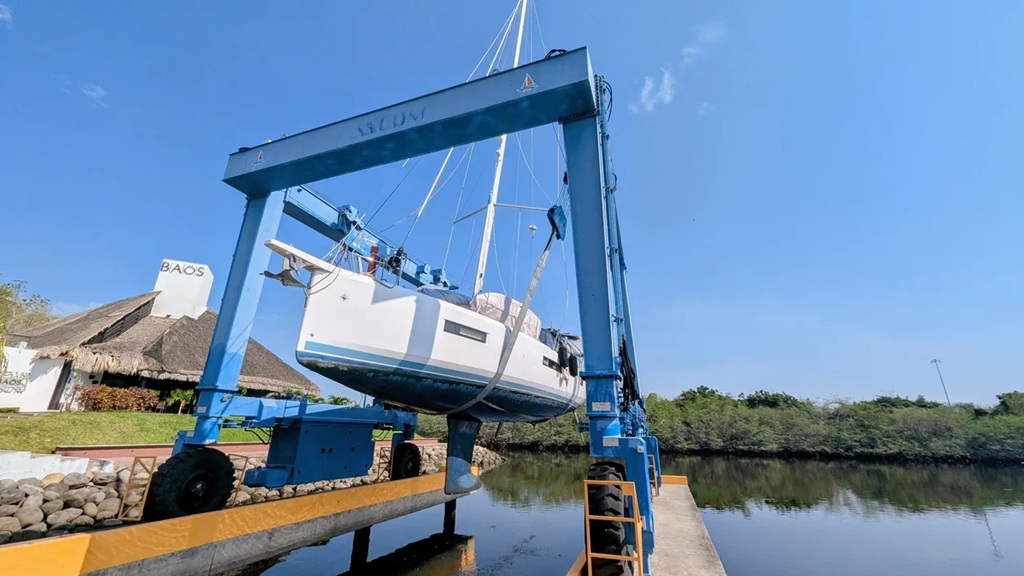
    Marina Chiapas, on the border of Mexico and Guatemala, has a dry-storage yard for boats. It’s open for debate if storing dry or storing in the water is less wear and tear on a boat but this year we’re going to try “on the hard”. A number of things have to line up for this to happen.

    -There has to be space in the yard — with power to run an A/C unit and dehumidifier.

    – There have to be sufficient jack stands to support the boat once it’s out of the water.

    – Because of the size of the travel-lift and the length of the keel on Island Summers, I was told I needed to disconnect the forestay of the mast. A forestay is the wire that runs from the top of the mast to the bow (front) of the boat. Its primary function is to provide forward support to the mast, preventing it from falling backward (aft). This is a potentially dangerous and definitely difficult task that will need to be repeated when we put Island Summers back in the water.

    We’d originally scheduled a haul out but other boats were sliding into the yard and taking up what little space was available this late in the season. We rescheduled with the yard for the next week. Friday morning the yard was unable to locate enough jack stands for our boat so we had to wait. In the meantime, expecting a week to prep the boat before leaving for home we decided to mov our reservations to return home up a week. Now we were crunched between enough time to prep the boat once we got hauled out and our plane reservations.

    The following Tuesday we did get the boat hauled out and we began a frantic round of activity to get ready to leave in a few days. Tasks that were delayed waiting to be hauled out had to be done quickly. Kevin has a spreadsheet of items to ‘summerize’ the boat. There are 79 items on the list from “remove and stow the sails” to ‘remove the depth sensor’. Bev has her list, too.

    Some of the items on the list were done but there were lots of things left to do — starting with re-connecting the forestay. With the help of 5 yard workers Kevin was able to pull the forestay tight enough to re-install a large pin connecting the forestay to the bow. With 3 days of hard work we got our tasks done. Phew! In the meantime we’d made hotel reservations near the marina in a Mexican hotel, La Perla del Pacifico in Puerto Madero. La Perla’s main recommendation was that it was inexpensive and took dogs. (Have we mentioned that traveling with a dog is harder?) Since it had A/C it was OK but definitely not stellar accomodations. Oh well, all part of the adventure!

    We were out of options of places to stay for 3 nights since this boat yard will not allow us to stay on the boat when its on jack stands. Other boat yards in Mexico will allow you to stay but what’s worse: a boat high in the air on jack stands where you have to climb a tall extension ladder fully extended to reach the boat and you can’t use the boat plumbing OR stay in a 0 star Mexican hotel? Again, all part of the adventure πŸ™‚

  • Adventures in Chiapas

    πŸ“· Placeholder β€” replace with original post image

    We arrived in Marina Chiapas located on the Mexico-Guatemala border. We didn’t know what to expect but we were surprised to see it’s a clean, modern and very well maintained marina run by a friendly guy named Memo. There is a beautiful open-air waterfront restaurant, store (tortlla’s and beer), and a nice pool with a swim-up bar with very few people around. There appeared be to several open slips. We plan to keep the boat in the water while we prepare it for storm season and then try dry storage for the first time. There are pros and cons to both storing the boat in the water vs. on land in the hot sun. We are on the list to have it hauled out and placed in dry storage.

    We’re here in Chiapas now what? Since we have Riley we’ve elected not to proceed South of the Mexican border this year. Requirements for bringing Riley to Central American countries seemed daunting. So we’ll lay the boat up here for the storm season and call it a year. That means we have a lot of work to do before we leave. But first some fun!

    Some fellow cruisers arranged a day land tour with tamales, chocolate, pre-Mayan ruins, and shopping on the schedule. We departed early and had a breakfast of different flavors of tamales. The place making the tamales does it entirely from scratch with fresh banana leaves for wrapping. Like everything in Mexico the facility is ‘open air’ and here all the cooking is done over fires right next to the tables. This is a very popular tamale factory and there is a steady stream of customers picking up orders. In the can-do and make-do spirit of Mexico, a very small car pulls up FULL to the roof with fire wood. –The daily delivery!

    Next stop was a place called Izapa ( https://en.wikipedia.org/wiki/Izapa ) Izapa is a pre-Columbian site occupied for thousands of years between 1500 BC to 1200 AD. It includes Mayan ball courts and pyramids and is only partly excavated. There are many obelisks and alters and also small biting ants as we discovered while standing near a striking obelisk (we were standing on top of the ants home)! Planted on the grounds was a rich variety of tropical fruit. Orchids grew on the trees hanging from the branches upside down (which explains why the orchid at home is always attempting to grow down – not up).

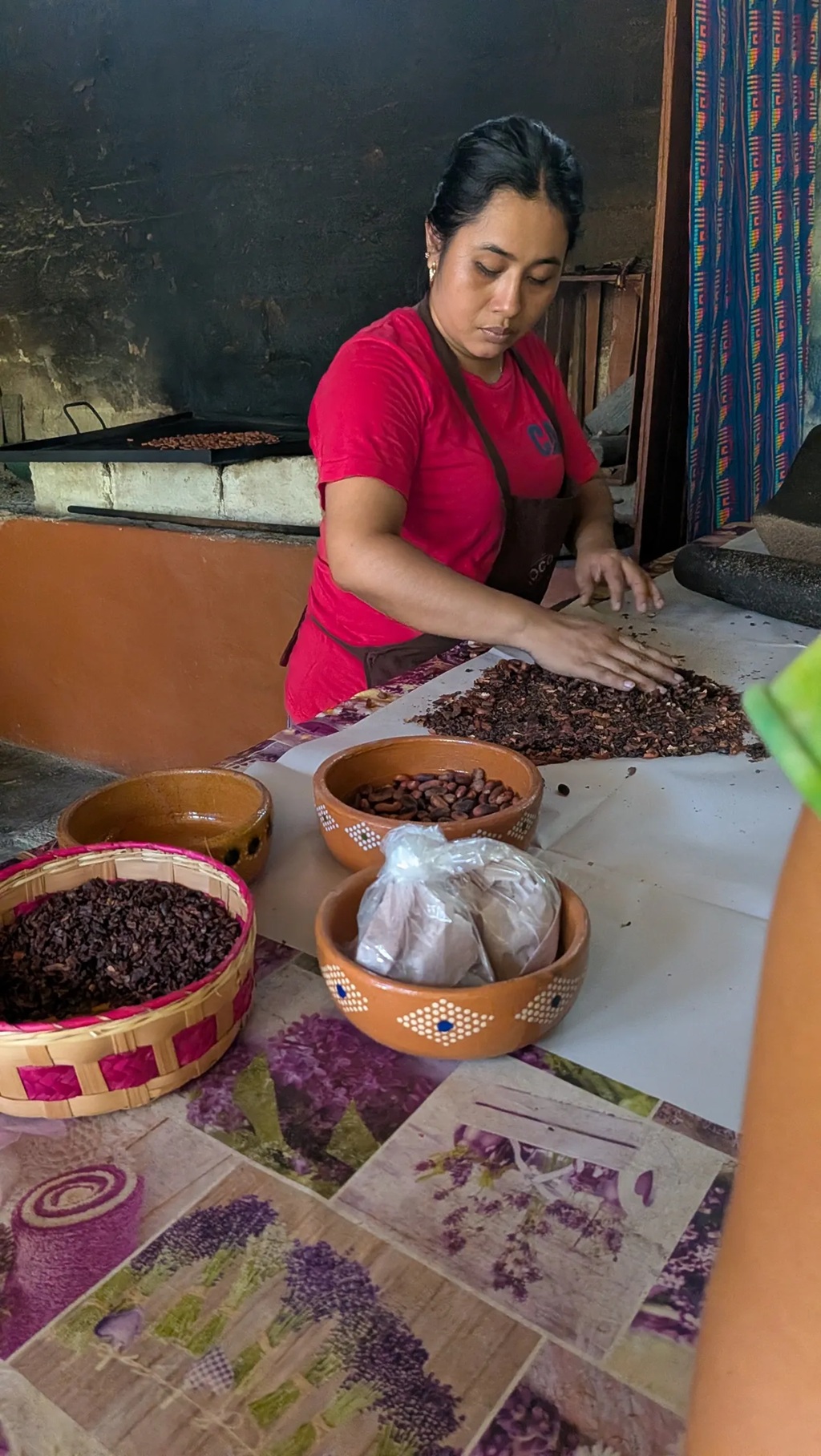
    After Izapa we explored the culture of chocolate near where it was invented. Cacao trees produce cocoa pods full of seeds, which, when dried, husked and roasted the seeds are ground into a paste on stone slabs (photo above). (HOW did they ever figure this out?!!) From there a special swirling stick is used to foam a mixture of chocolate, vanilla, peanuts and sugar into warm water for a delicious drink. They served us the drink with fresh rolls to dip. We had so much fun on that tour that we arranged a trip to the local volcano (Volcan Tacana – https://en.wikipedia.org/wiki/Volc%C3%A1n_Tacan%C3%A1 ) This trip wasn’t so much to the volcano which is over 13000 feet, as up to the villages and coffee plantations on the slopes. We started with a breakfast of seasoned eggs grilled outdoors on banana leaves at a restaurant in the trees on the jungle floor so popular with the locals that there is sometimes a waiting line. We quickly learned bug spray was necessary. The bugs don’t seem to bother the locals for some reason.

    We followed a road up the mountainside through miles and miles of coffee farms and visited a colonial coffee plantation founded by German immigrants. We continued up to the town of Union Juarez where we walked out onto huge concrete hands overlooking the Guatemalan border. Still further up we drove along a ridge of the volcano with cliffs covered in jungle on either side. Any further and the road becomes dirt and we would truly have been on the route to the summit of Volcan Tacana! Eventually we had to get back to the boat and get some work done.

    We’re working on putting Island Summers away for the season. After experiencing a lightning storm a few nights ago while sailing we decided we don’t want to be in this area during storm season (especially in a sailboat with a tall metal mast that acts as a big lightning rod)! The marina worker who will oversee our boat while we are gone told us he sits in a chair all night long watching the lightning and babysitting the boats (and I’m sure he gets a little shut-eye, too).

    It’s always a lot of work to prep the boat for storage and its even a slower process in the hot sun. For our last post of the season we’ll describe what we went through to get our chores done this year.

    This is also the time we say goodbye to fellow sailors that are either heading further South towards Panama or leaving their boats here in the marina and heading back home. You meet wonderfrul people that you travel with for a period of time and then you part ways. Unless your paths cross you may never see them again (sad). We all try to do our best to stay in touch with group texts on WhatsApp.

  • Huatulco to Chiapas

    πŸ“· Placeholder β€” replace with original post image

    The night before we left we had sundowners on s/v Island Summers. It was a great get together before we all make the 3-day, 2-night voyage across the Gulf of Tehuantepec to Chiapas. The Gulf of Tehuantepec is famous for its “Tehuano” gale-force winds that blow through the Isthmus of Tehuantepec and its abundant marine life.

    We departed our little anchorage at Playa Organo (in Huatulco, Oaxaca) on a Thursday morning. There’s always lots to do on departure day . . . boat checks, remove the dinghy outboard and mount it on its stand for the passage, secure the dinghy, pull up the stern anchor (by hand), and the bow anchor (although the windless is electric :-), and take Riley to the beach. Riley has his fake grass on the boat but he likes the beach better, so off Kevin and Riley went.

    The surf was up and the sand was soft but Kevin managed to get the dinghy safely up on the beach (wheels on the dinghy are very handy for rolling the dinghy onto the beach). The return trip — not so successful. Just as Kevin was trying to push the dinghy off the shelf into deeper water the dinghy wheels stuck in the sand at the same moment that a big wave broke just behind the dinghy. The waves picked up the rear of the dinghy and all at the same time turned it sideways, filled it half-full of water and almost flipped it over. Wet but still upright, Kevin dove into the dingy with Riley in hand and got the engine started and backed away from the beach. His only consolation was that a panga trying to pick up snorkelers was not doing any better with the sudden train of large waves arriving.

    We pulled the main anchor up and departed in the company of about 5 other boats who had been sharing the anchorage and also planned to cross the ‘Golfo de Tehuantepec’. For two days we shared intel on the VHF radio and our WhatsApp chat group. Boats pointed out pangas and black flags indicating long lines and we loosely competed to go as fast as we could under sail. Near the end of the first day we all were able to fly our spinnakers until the sun started to set. (It’s the rare sailor that flies a spinnaker at night – too many lines, all attached on the foredeck to deal with if something goes haywire in the middle of the night.)

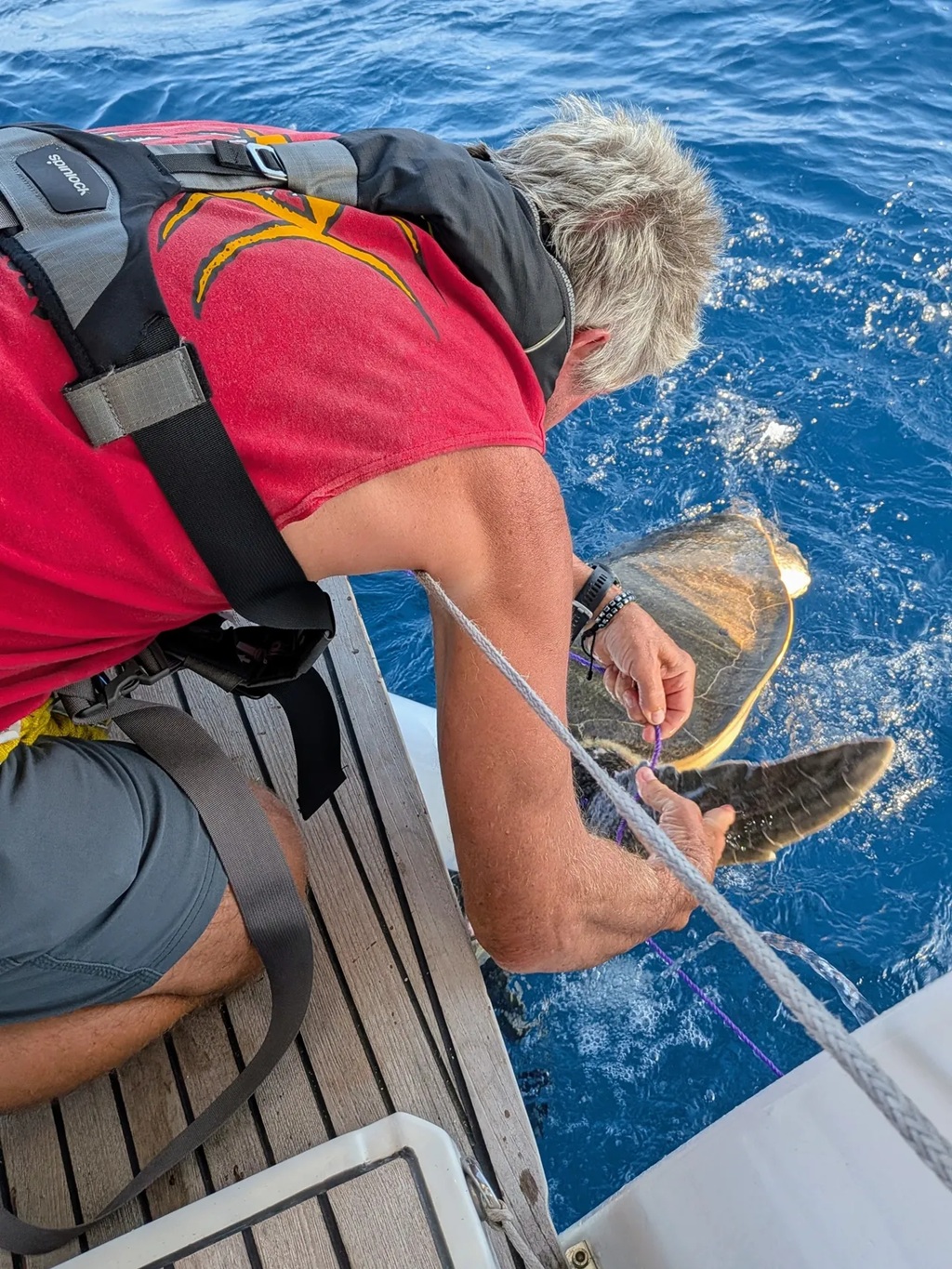
    Our course took us straight across the gulf so we’d eventually get about 50nm offshore. On the morning of the second day, Kevin returned from briefly doing something below and saw that we’d snagged a string of white plastic bottles (long line floats) and directly behind our port rudder was a thoroughly tangled sea turtle. Kevin quickly hailed nearby boats that he was stopping to free the long line and the turtle. Harnessed to the boat, we lowered the swim step and managed to untangle the line the turtle was wrapped in and cut him free. (YAY!) The sea turtle swam off but there was still a line strung around the boat — maybe. Kevin put on his mask and fins and freed the line and jumped in off the stern of the boat and swam around checking that nothing else was wrong or most importantly wrapped on the prop. 50nm from shore the water is absolutely crystal clear with easily a 100ft of visibility. Of course, with 2000 feet of water under the boat, no one really wants to see anything coming up from below! We (all the boats in our caravan) were all sort of surprised to see long lines with pangas tending them as far out as we were. The long line that we found did NOT seem to have a panga nearby.

    Long lines are a constant frustration for us sailors. The legality is questionable. They’re difficult to see and they can potentially do damage to a boat. In addition, they can be a ghost fishing menace that entangles and kills sea life. Did we snag a detached drifting line? Maybe. What can we do about it? Little it seems. At least we freed the tangled turtle.

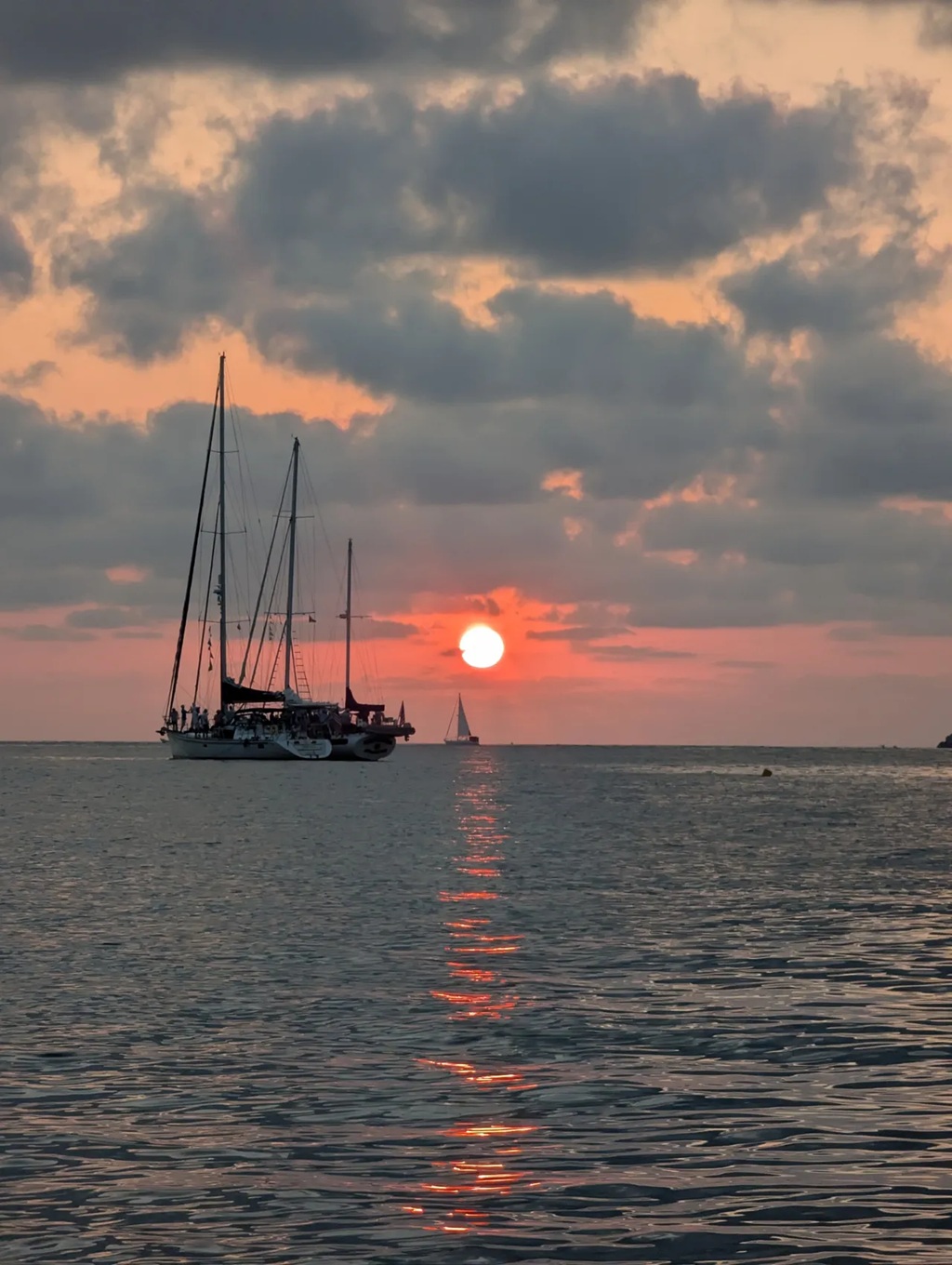
    The rest of our trip was punctuated by beautiful sunsets, moonrises, dawns and an occasional birdle (a sea bird taking a rest by riding on the back of a sea turtle). I thought this was only in cartoons but its very real!

    We arrived in Puerto Madero near the Guatemala border and made our way into Marina Chiapas. There we were greeted by the most exhaustive port check-in we’ve yet received. The Port Captain was accompanied by the military with a well-trained Belgian Malenois dog. At this point Bev had to take Riley off the boat. They toured the boat and took many photos and detailed notes before providing us with our port check-in document. We will get to go through this routine again when we check out.

    Marina Chiapas is located off the Pacific Ocean up a long estuary in the jungle. You exit the surf and follow a few sea buoys making sure to watch your depth and stay in the deepest part of the channel. There are many coconut and banana trees lining the waterway. It’s very hot and humid but lucky for us, this marina has a nice swimming pool and a bar staffed with a very nice dama named LillyAnna.

  • Hualtuco, Mexico is a Hidden Gem!

    πŸ“· Placeholder β€” replace with original post image

    We left Acapulco the morning, Tuesday March 17, for a 48 hour sail to our next stop, Hualtuco. Along the way the sealife was active. We encountered many turtles, flying rays, rays sleeping on the surface with their fins upright in the air, and many flying fish which are always fun to watch. As the sun set, dark clouds began to form and we saw flashes of lightening in the distance. This was our first experience being near lightning on our boat. Lightning strikes on sailboats are dangerous, often targeting the mast, which acts as a natural lightning rod. We managed to stay in ahead of the storm the entire night. Whew!

    It was a nice surprise when we arrived at Hualtuco. Hualtuco has a beautiful bay with sparkling clear water and the quaint town of Santa Cruz in the background. This town is a hub for cruise ships, pristine beaches, and great snorkeling. We took several passes across the narrow anchorage to find a suitable place to set our anchors (because of the wind and swell we needed to set both the bow and stern anchors to reduce the rolling). The designated anchorage is bordering a coral reef. To protect the reef we want to avoid dropping our anchor on the coral. Because of our deep draft (7.5 ft) we also need to be aware of the tides.

    Once on shore, we met so many friendly vacationers mostly from Canada and Europe. People are always inquisitive when they see us arrive on an ocean beach in a dinghy. They ask lots of questions and when they hear our story of sailing from Seattle, they immediately comment we are very brave and a little crazy. There’s definately some truth to the crazy part πŸ™‚ There is a boat in the anchorage here from Chicago which is a surprise because we don’t meet many Americans in these smaller towns.

    We are noticing as we travel South the food choices are changing. We were excited to find Italian and Asian Fusion restaurants here near the beach. A nice change from Mexican food. Although we never get tired of tacos la pastor. Tacos la pastor is a popular Mexican dish of marinated pork, cooked on a vertical spit (trompo) and served in tacos with pineapple, onion, and cilantro. Yum! We are also starting to see grasshoppers on the menu and lots of coffee, chocolate, and unusual looking fruits.

    Cruising in Mexico requires us to check in and out of ports with the Mexican Navy. Sometimes this is just a fomality but here in Huatulco the next port is 200 nm away and the weather can be fierce. So the officials actually care when we plan to leave. Today Kevin had to explain that we were aware the weather was bad for a few days and our departure date allowed us to be flexible. Kevin showed them his weather app and told them that he didn’t want to travel during bad weather either… “No quiero a viajar en tiempo malo”. Finally they agreed to stamp our departure form so we could be on our way. Sigh.

    We moved yesterday, March 30, to an anchorage a few miles away while we wait on weather. This anchorage has a nice sandy beach but no palapas. Its a popular snorkeling site so lots of pangas bring people in and out of the bay during the day. It’s approaching Easter which is a big holiday for the Mexican people. Many of them are vacationing near the beaches which are making them busier than usual.

    We are waiting on a weather window where we can get 3 good days to cross to Chiapas. Chiapas is on the border of Mexico and Guatemala. We are almost out of Mexico. Huatulco is immediately NW of the Golfo de Tehuantepec. If you look at a weather app like windy.com you may see strong winds crossing this area, the narrowest part of Mexico from the Carribean. There’s no good shelter inside the Gulf so it’s a 225 nm run to get to Chiapas (and a marina). Needless to say, we don’t want to be caught out in dangerous winds. A daily morning routine is to check the best weather apps we have for a forecast.

    We have a weekly Monday morning call with a group called the Ocean Possee. One of the topics we discuss is weather. It looks like we will have good weather and calmer seas Wednesday thru Friday this week. We plan to leave either Tuesday night or Wednesday morning for our 3-day journey South.

  • Next Stop Acapulco

    πŸ“· Placeholder β€” replace with original post image

    We arrived in Acapulco in the late afternoon On March 19th. Due to the warnings from the State Department we approached the city of over 2 million people with a little trepidation.

    As we arrived off the coast of Acapulco were were greeted by a city spread across the hillsides with towers jutting up into the sky. We could see walkways leading down the steep cliffs on the North side of town and we wondered if that was where the famous cliff divers do their diving (it was).

    Just before night fell, we anchored off a little beach where pangas bring tourists during the day to spend the day on the beach. Riley got a trip to the beach, and then it was dark. The next morning sitting on the boat, we heard slapping on the water like belly-flops. Stingrays were traveling around the boat jumping several feet out of the water with their wings flapping and landing with a loud FLOP.

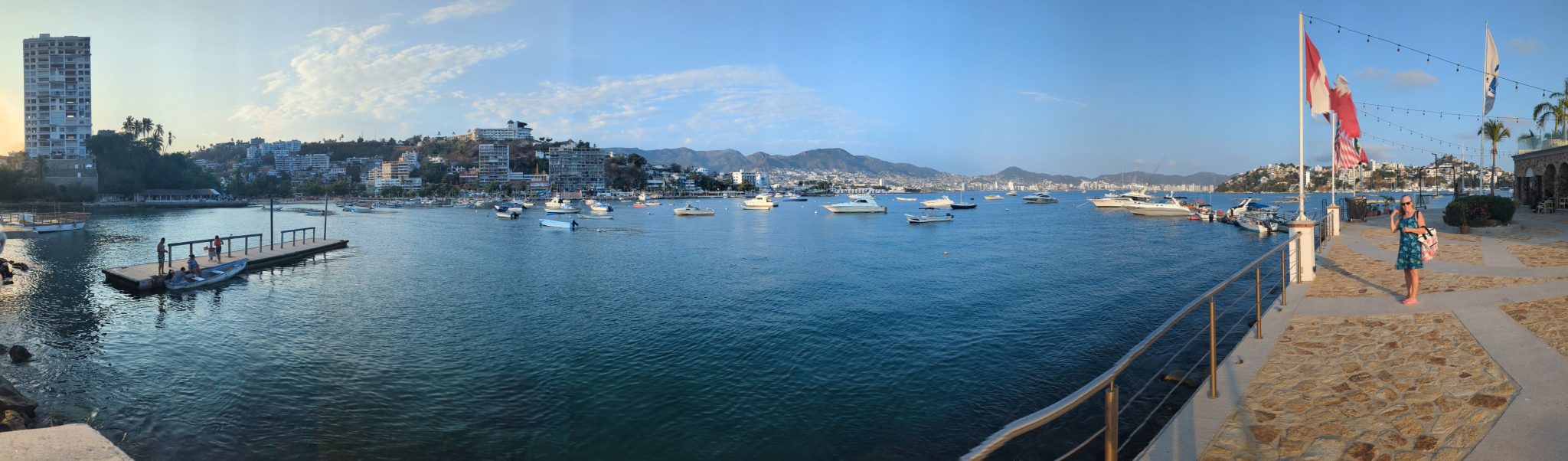
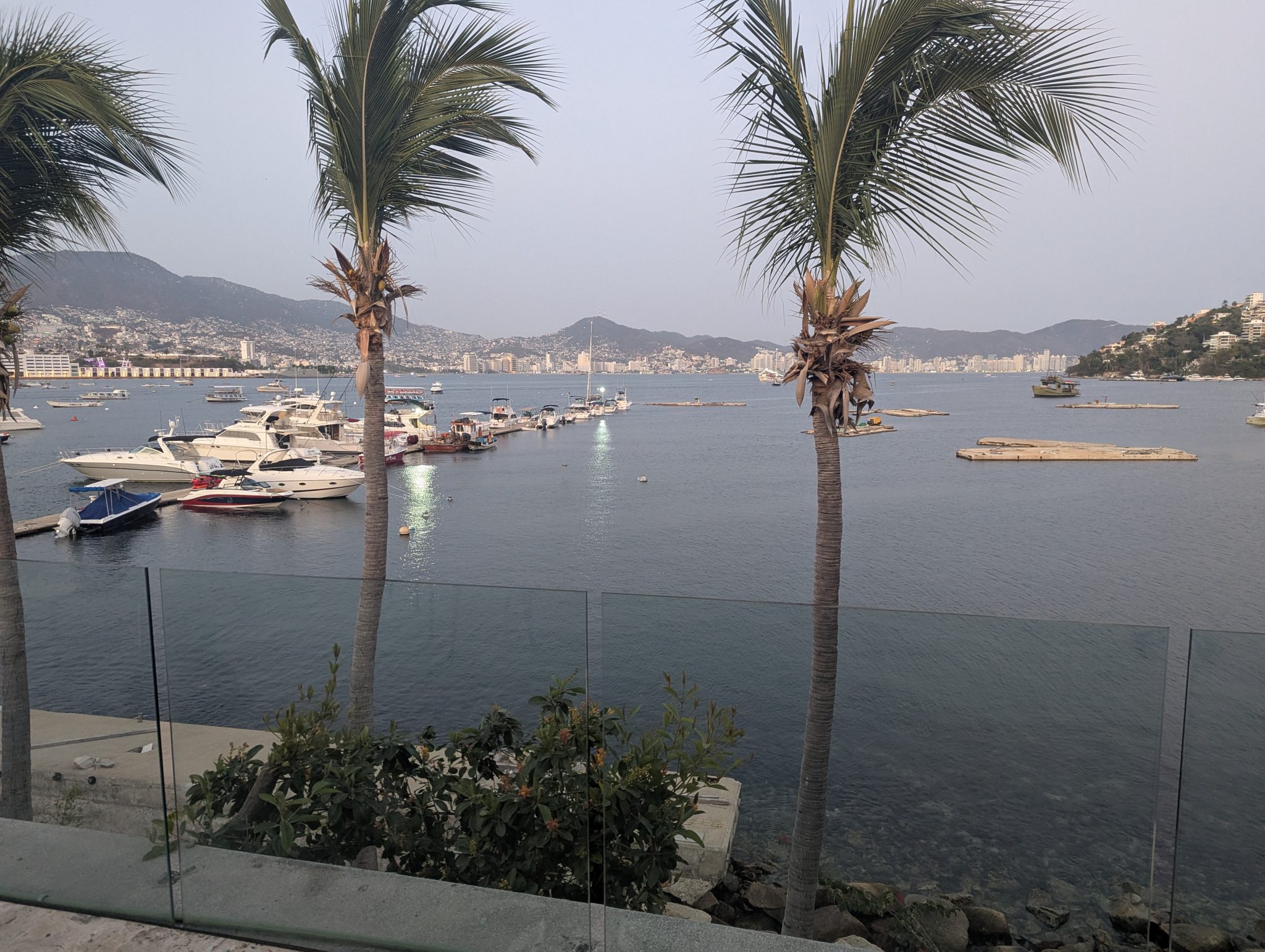
    That morning we called Marina Aculpoco on our VHF radio and inquired if they had dock space for our boat. They had a piece of long linear dock available so we moved the boat. There wasn’t much left of this dock. The marina was completely destroyed by Hurricane Otis in 2023. The marina consists of only a long dock and a few floating smaller pieces. We decided it was a good spot for Kevin to spend two days modifying our solar panel set up to add power.

    There were a few things we wanted to do in Acapulco other than a boat project. We wanted to see the cliff divers, and we wanted to see the old Spanish fort that guarded the fortified trade route through Mexico established by the Spaniards in the mid 1500s.

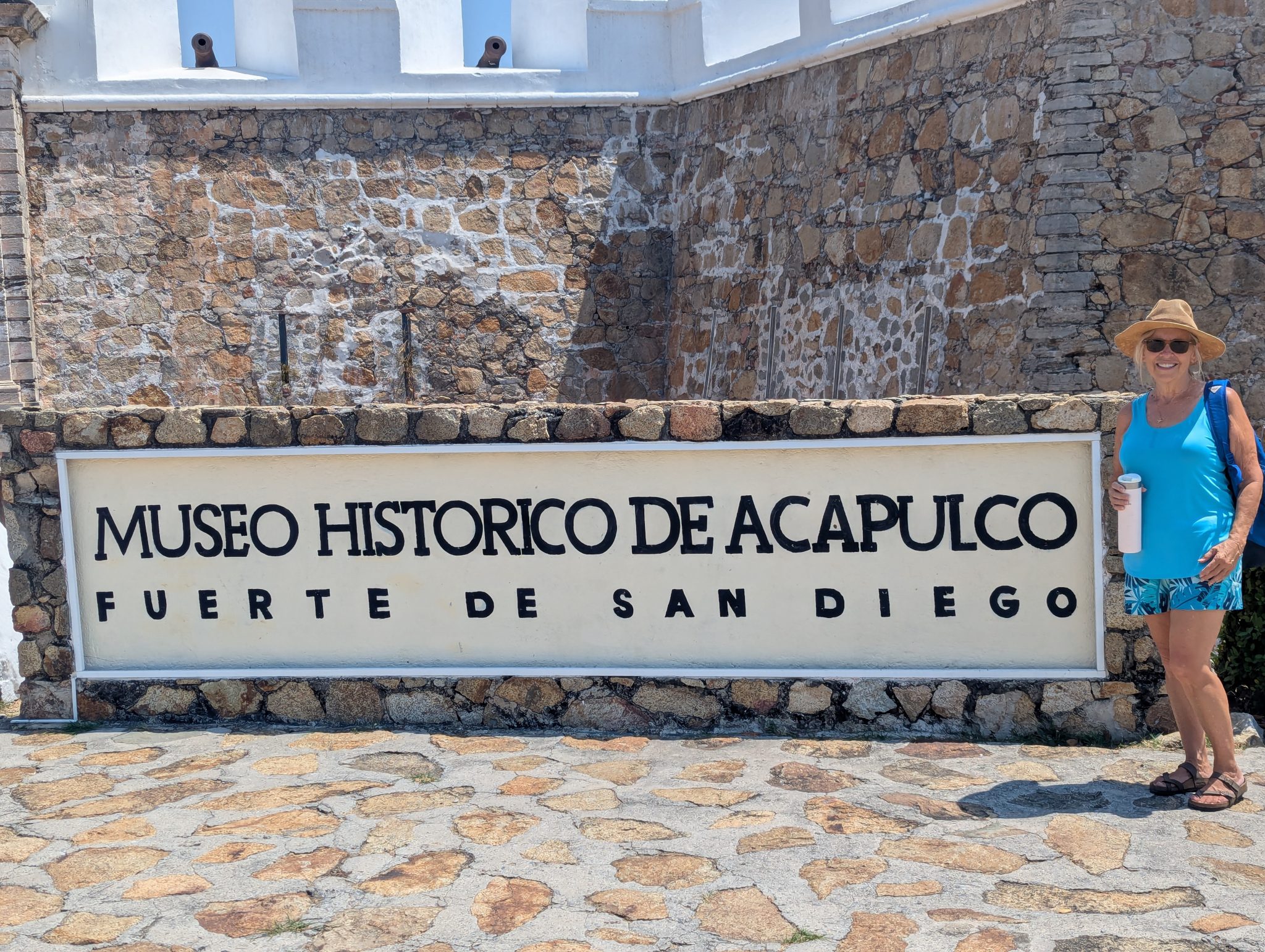
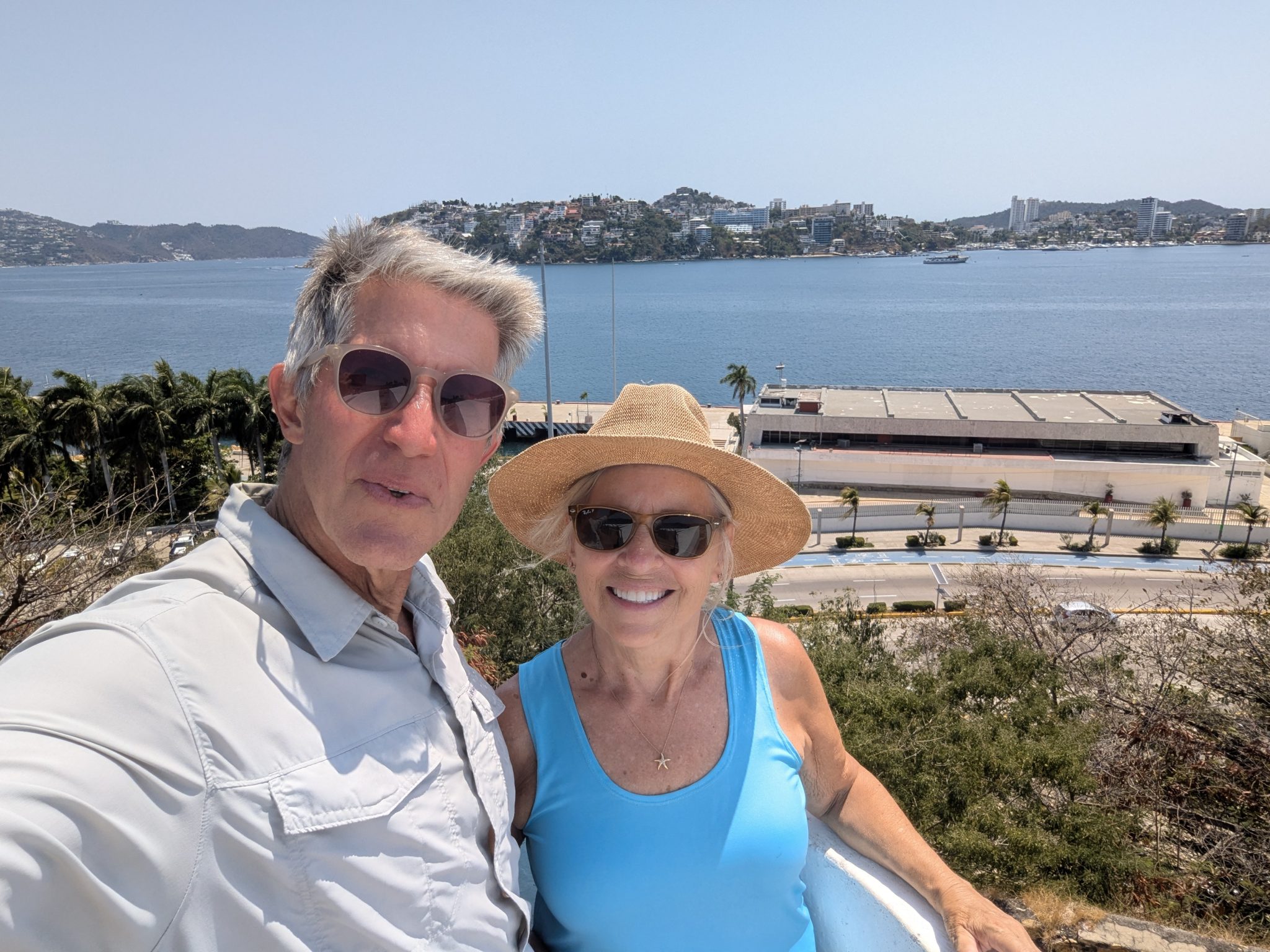
    The Fort of San Diego sits right next to the modern cruise ship dock and could fire cannons across the bay. There are moats and trenches and gun ports and parapets to repel invaders and like other Mexican historical places, complete freedom to fall off the wall if you are so inclined. It was interesting to see the history of Acapulco back through many centuries before the Spaniards arrived. We walked around the oldest area of Acapulco and also saw the central cathedral.

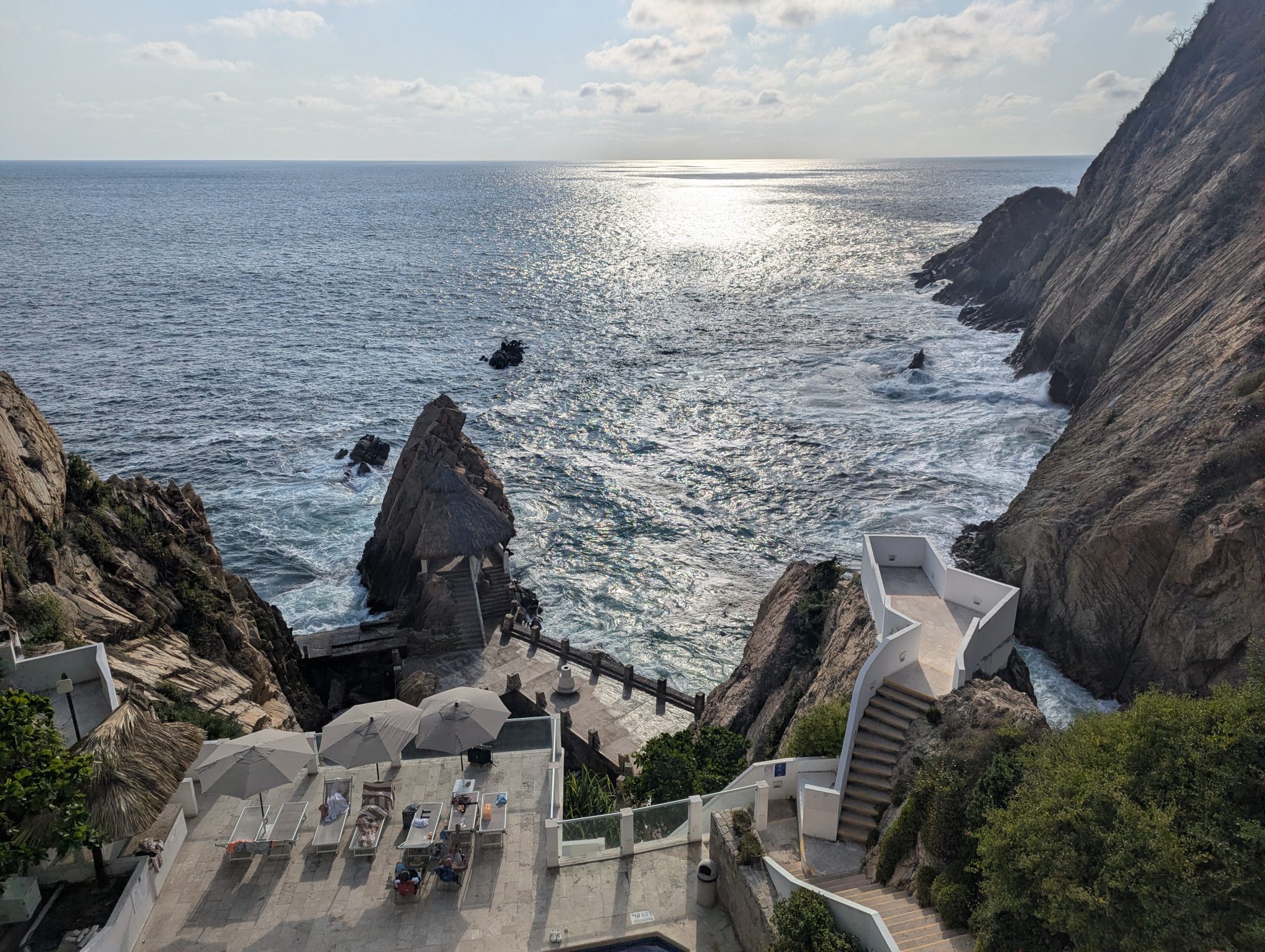
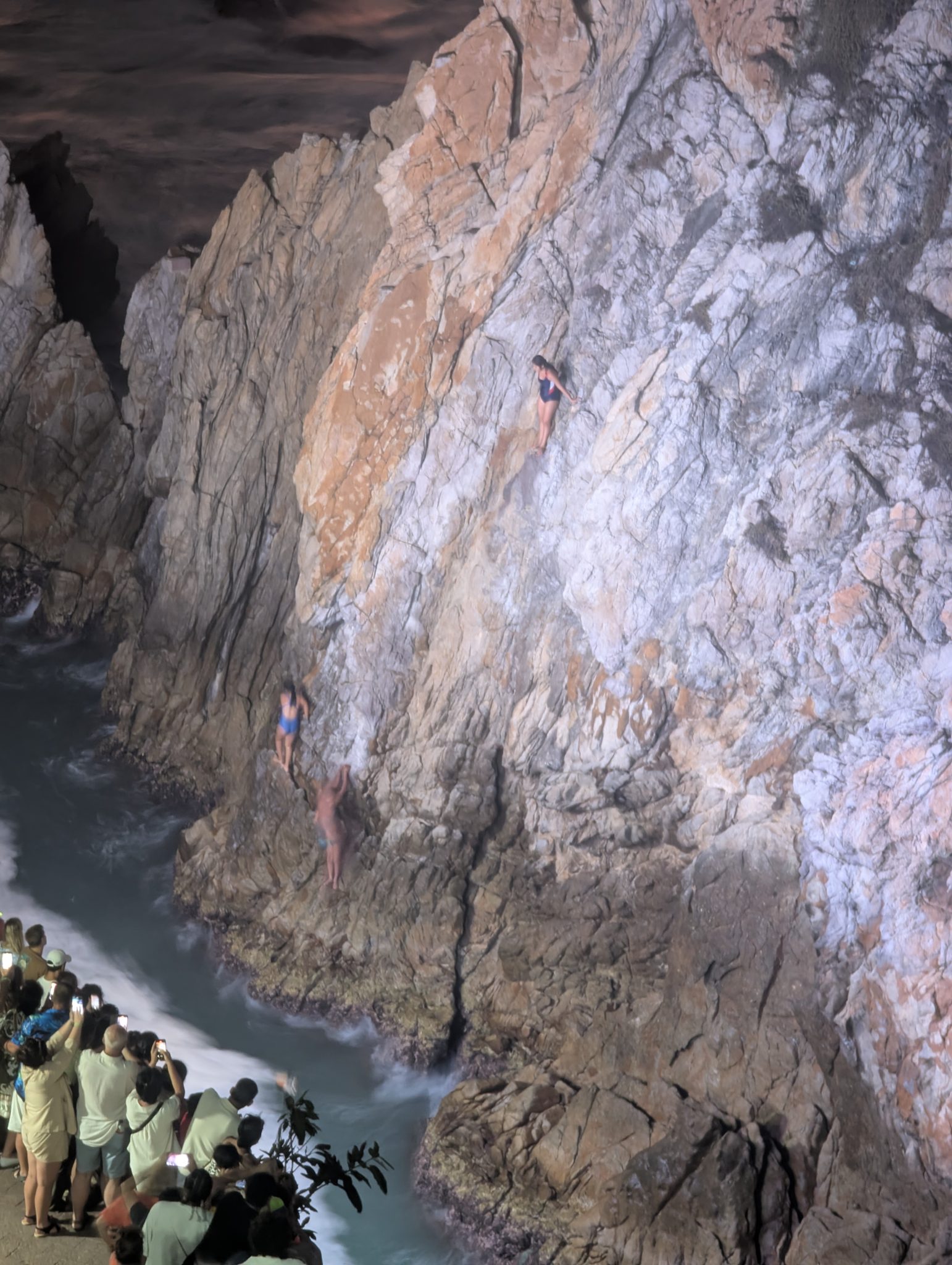
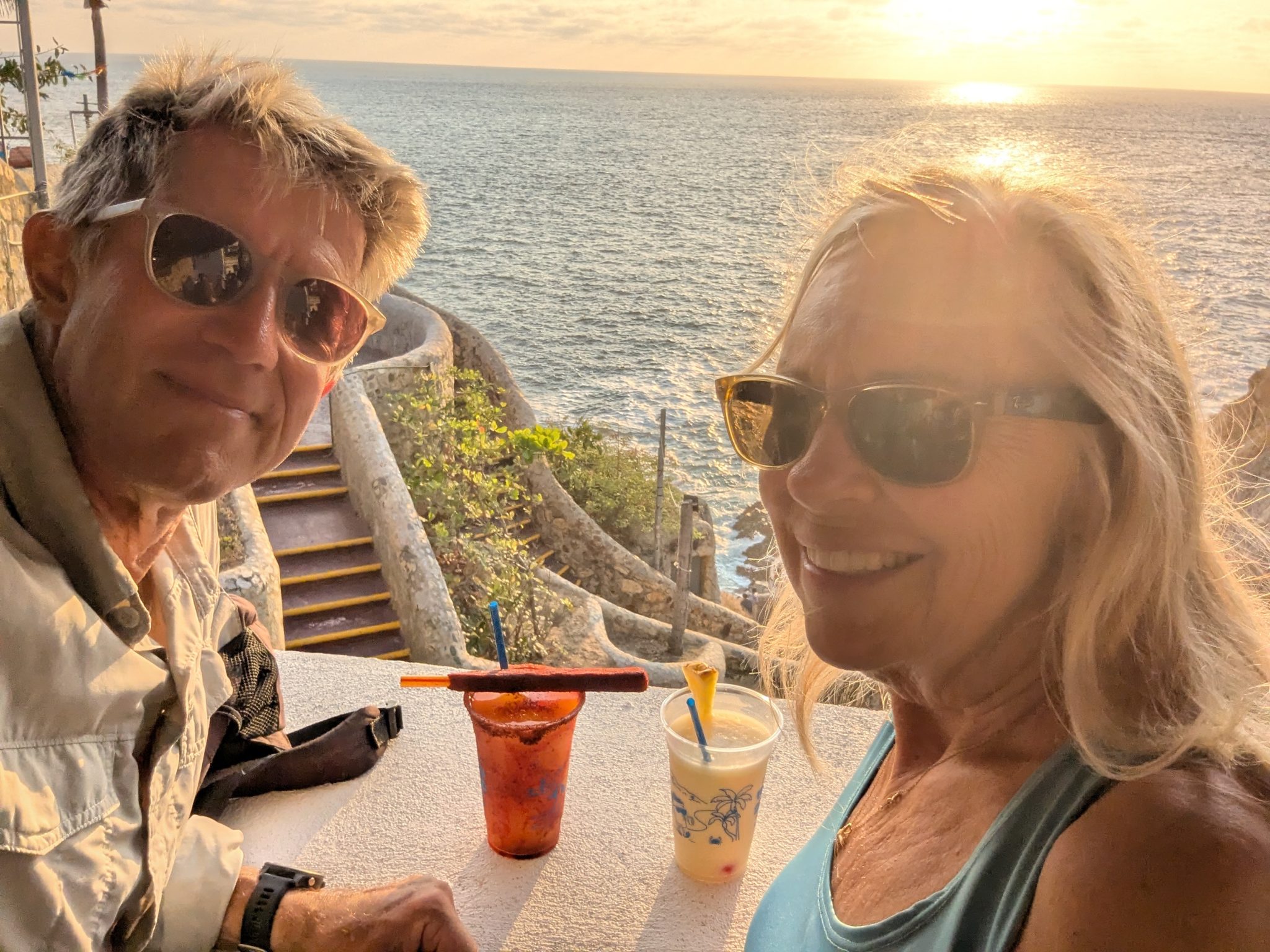
    On the way back to the marina we decided to flag a cab and go see the cliff divers. The taxi took us to the north west side of town to a hotel built on at least 10 stories of cliff wall, Hotel Mirador. From the top of the hotel we took a series of stairs all the way down to the ocean where the Pacific surf boiled against the cliff walls. The cliff divers work on just the other side of this cliff and swim through that water to first climb the cliff before diving back off of it! We walked back up the 10 stories of stairs and found a little cliffside bar overlooking the boiling water and cliff diving area. Here we sipped on margaritas and pina coladas while watching the sunset until the cliff diving show started. The divers – actually the whole diver family I think, walked down the walkway climbed over the railing into the boiling sea by the cliffs, then climbed the cliff. Each one dove from different spots on the cliff of varying heights until the top diver did a back layout from 35 meters up at the top of the area. It was pretty spectacular to see a 100+ foot dive into a narrow crevice between the cliffs.

    There’s a pretty huge crowd for the cliff diving. When the show was over, we flagged down a taxi. When we inquired how much the fare would be the driver asked how much we paid to get there and asked for 20 Pesos more. No problem! The taxi driver was the nicest man driving the absolutely crappiest taxi we’ve been in. He kept revving the engine to keep it from dying and revving the engine and slipping the clutch to keep it going. We drove down at least one one-way street the wrong way with cars honking (Bev had her face buried in her hands) and we got dropped off a the marina security gate after an adventure filled day! The guard at the marina gate with his high powered rifle unlocked the gate for us to enter.

    When we arrived in Acapulco, we were a little unnerved by the different reports we had heard about Acapulco and we were cautious going out and about, but ultimately we both decided that Acapulco was much like the other big Mexican cities we’ve visited and more or less as safe as other big cities anywhere.

    Lastly, we’ve discovered conga juice. Wow, is it good! Fresh squeezed orange juice, pineapple juice, splash of lime juice and pomegranate juice poured over ice and if you choose you can add a shot of tequila or rum.

    We are preparing to leave on a 46 hour non-stop passage to Huatulco, a beach town know for its 9 protected bays, 36 beaches, and 330+ days of annual sunshine.

  • Goodbye Zihuatanejo!

    πŸ“· Placeholder β€” replace with original post image

    We had a great time but it’s time to go. We enjoyed being in Zihuatanejo for SailFest and the kick-off concert for the International Guitar Festival. Zihau is rich in culture and has so many restaurants. We’re also going to miss our cruising buddies we had on S/V Dancy (Dwain and Nancy). They headed back North towards Puerto Vallarta last week. We were going to leave last Thursday the 5th of March but a variety of things conspired to hold us up.

    This morning (March 11) we needed to go out of Zihuatanejo Bay and make water. Since we’d already ran our errands (e.g. pick up laundry, hardware store run to get parts to install solar panels, few groceries, and check out with the Port Captain) we decided to turn South and keep sailing.

    Kevin sometimes frets about not having quite enough solar capacity and Bev gets tired of discussions around power. So Kevin ordered two new Solar panels in Zihuatanejo. He’ll shift some panels around and essentially add about 380 watts of solar capacity by replacing the smallest set of panels. Anyway, they were delivered to Island Summers by a panga boat on a very rolly afternoon (its like having an Amazon delivery by boat). Try managing 6′ panels being passed over the side railing of a sailboat in rolling seas. Yes, me (Bev) was the only person on the boat to receive the giant boxes. I managed but now one of our back berths is pretty full of solar panels until we can get to a dock where Kevin can install them.

    Riley got groomed and his teeth cleaned at the vet in town. It stressed him out so much he ended up with a UTI that required a couple trips back to the vet for antibiotics. We waited a few days to make sure he was better before leaving.

    Since our friends John and Nancy were on vacation here in Zihuatanejo we had a nice time connecting with them in the evenings. We even celebrated their 50th wedding anniversary with them.

    When going ashore in Zihua it requires a beach landing with wheels on the dinghy. It goes pretty smooth unless the surf kicks up. We were lucky the 5 weeks we were there we had perfected our landings (except one day Bev jumped off too early and found herself in very deep water fully dressed). The last day we had to abort one trip to the beach due to high surf. The part Bev never gets use to is wading out into the waves after dark to get into the dinghy when we’ve been in town after sunset. She has visions of sea monsters grabbing her toes!

    Zihua is the furthest South many cruisers go. The sailors like us who do go further are often headed for Panama. We knew of a couple of boats in Zihua that were heading South and started a WhatsApp chat group titled ‘South from Zihua’. The group started off with 5 people on it and at last count it had 22. Of course those boats are now spread out across at least 500 nm of coastline all the way to the southern tip of Mexico but we hope to catch up with some of them soon and do some ‘bungee’ or ‘buddy’ boating.

    Before sunset tonight we arrived at a small anchorage partway to Acapulco that we’ll stay at tonight called Papanoa. It’s a small fishing village lined with thatched huts and panga boats. The locals were very inquisitive when we pulled in and achored as we are the only boat here in their small and protected anchorage. We will depart at daybreak tomorrow and sail the remaining 80 nm to Acapulco.

    Bev checked the U.S. State Department website and it has issued a Level 4 Do Not Travel Advisory for the state of Guerrero, which includes the tourist area of Acapulco. Kevin assures Bev its safe as long as they stay on the coast and don’t travel inland.

  • Las Hadas to Zihuatanejo

    πŸ“· Placeholder β€” replace with original post image

    We left Las Hadas and sailed to Zihuatanejo, a resort city on Mexico’s Pacific Coast. After an overnight sail, we arrived. Zihuatanejo is a lovely town 110 miles North of Acapulco and 200 miles South of Manzanillo and the Las Hadas anchorage. It’s adjacent to, and almost part of the resort town of Ixtapa. Where Ixtapa is high rise hotels on the beach, Zihua (as it’s locally known) has condos and little places in town and a wide bay as an anchorage where we are now. We can take a dinghy to the beach and walk to the center of town.

    The city boardwalk is lined with palm trees, white sandy beaches, galleries and seafood restaurants. Offshore, the sea is rich with marine life such as whales, dolphins and sea turtles. As we were leaving the harbor of Manzanillo, a baby whale swam around our boat to check us out. Later we saw a huge marlin come rocketing out of the water behind us. We commented to each other that it was too bad we didn’t have lines in the water but then quickly agreed we didn’t want to catch something that big. For sure we’d lose the hook!

    We were immediately invited by other cruisers to participate in Sailfest. Sailfest is a two-week fundraiser for the local schools that combines fun, games and international friendships. Visitors can participate in many events that raise money for the least advantaged children. Visitors can buy sunset sailing tickets and we take them sailing out on our boat to watch the beautiful sunset. Its been a fun experience and it gives non-boaters a taste of sailing. We’re not completely sure what they think other than they probably think we are crazy to sail here from Seattle.

    There is a lot of activity under our boat. A school of hundreds of fish all about 6-8 inches long hang out in the shadow of our boat. Periodically, they’ll swarm to the surface and splash and sometimes flap their fins on the boat. There are much bigger fish that swim underneath them such as Jack Crevalle. Jack Crevalle are aggressive reef fish that are fun to catch but no good to eat. Today we left the harbor to sail around outside the bay and make water. A huge school of fish followed us out staying in the shadow of the boat. They’ve been with us all day and followed us back into the harbor. The pelicans are always nearby and on watch to catch them. Life in the food chain!

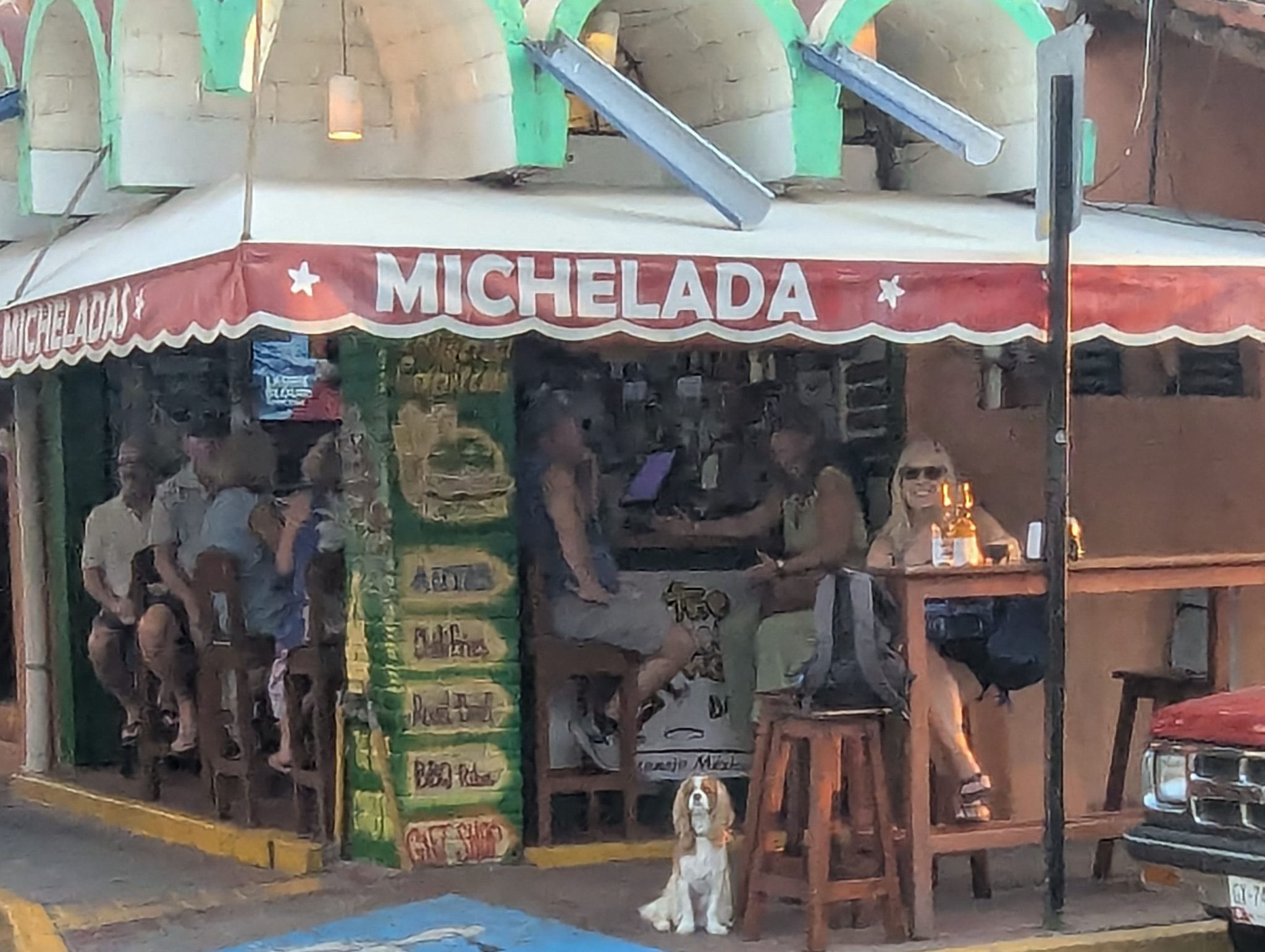
    Zihuatanejo has many shops and little local restaurants. A popular spot and our favorite is the Fishing Hole. The Fishing Hole is a corner bar with 10 barstools and a table on the corner of the street. There’s always people there telling their fish stories and sharing travel experiences. Most of the time it’s standing room only. It’s never empty and always entertaining! Everyone there knows and loves Riley. Monday of this week (Feb 22) we were scheduled to take visitors out on a sunset sail outside Zihuatanejo Bay. Our trip was cancelled at the last minute because the town of Zihuatanejo was officially on ‘shelter in place’ after El Mencho, the head of CJNG (Jalisco New Generation Cartel) was killed by the Government of Mexico.

    The Cartels responded by setting off explosions, hijacking and burning cars and apparently 22 of the city buses in Puerto Vallarta. We belong to some WhatsApp chat groups there and have spent considerable time in Puerto Vallarta so we got blow-by-blow reports as smoke rose around the city.

    Many cars were set on fire in the Costco parking lot in Puerto Vallarta and it’s not clear yet how much the store was damaged. Most importantly, we have friends and acquaintances there. It appears that although tragically there were fatalities, the cartels tried to avoid killing civilians and mostly concentrated on fires and destruction. It’s not yet clear when things will be officially back to normal in Mexico but shops seem to be opening up and after an eerily quiet last few evenings there may be a more normal street scene in town tonight. Zihuatanejo is over 300 miles from Puerto Vallarta and we personally saw no cartel activity in Zihuatanejo.

    As Sailfest comes to a close this week, we will be joining our landlover friends who are arriving on Saturday from Seattle. We are looking forward to spending time with them on the beach. Soon we will sail South to Acapulco. We don’t know what to expect whe we get there. Acpulco was once a glamorous celebrity hotspot but over the years it has sustained severe hurricane damage. We’ve heard there are 600 sunken boats in the bay. We have been inquiring in the bay here who is headed in that direction and we’ve found a few boats heading South so we will have buddy boats along the way.

    Our cruising and hurricane plans have been reviewed by our insurance company and we are approved to proceed to Panama.

  • The New Year is taking us further South down the Mexican Coast

    πŸ“· Placeholder β€” replace with original post image

    We arrived in Barra de Navidad in December to attend a 5-day seminar and get together with fellow cruisers planning to head South down the coast of Mexico potentially to the Panama Canal.

    The seminar is part of a group called the Ocean Posse. The whole idea for the Ocean Posse was geminated right here in Barra de Navidad at the swim up bar in the pool. Back then it was called the Panama Posse and we remember having information cards thrust into our hands at the Annapolis Boat Show 5 years ago. At the time we had no idea that we’d be considering the trip to Panama ourselves.

    Island Summers was docked here in Barra until February1 when we untied the lines and set sail for Las Hadas.

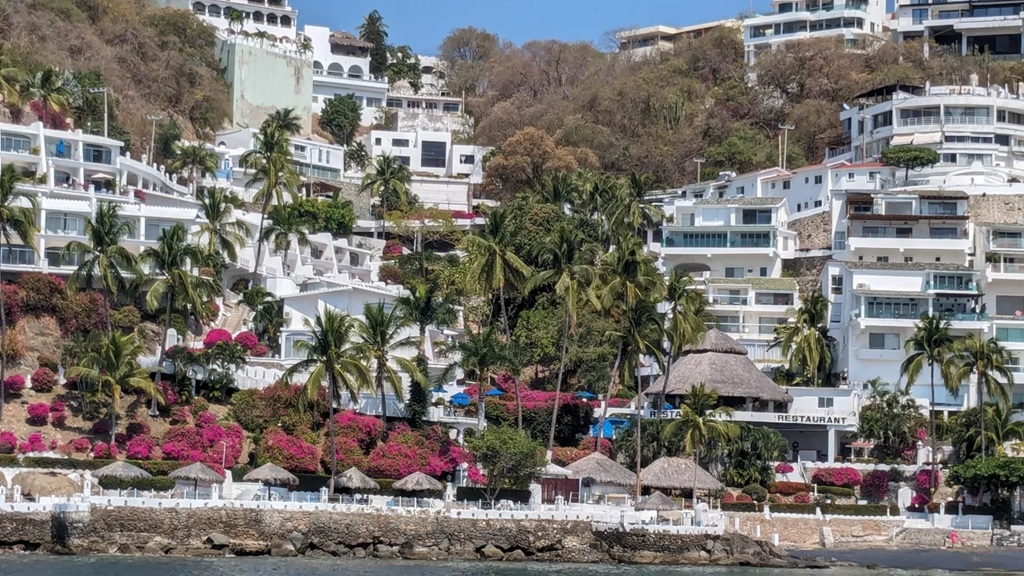
    We are currently anchored in Las Hadas in front of a very beautiful vacation resort 163 nautical miles South of Puerto Vallarta (photo above). Steep cliffs surround the bay with the sprawling Las Hadas Beach Resort with its Mediterranean-style architecture, palm tree lined walkways, nice ocean breeze, restaurants along the boardwalk playing Mexican music, and the landscape decorated with Mexico’s iconic hot pink flowers called “paper flowers”.

    We’re kind of used to Mexico. We know the drill for coming in and out of the country with Riley. But in the next few months we will be out of Mexico and the countries in Central America are a different story for traveling with our 4-legged friend. Lots of rules and requirements that seem impossible when traveling by boat. For instance, get to the nearest U.S. Consulate to have them certify a document you got from an FDA accredited veteranian in the states 10 days or less before your arrival. Pretty hard when it takes months to get there by boat. We need to figure all this out.

    Weather will change for us as we travel South. Travel far enough South and we leave the tropical storm (hurricane) zone. Below about 11 degrees latitude they aren’t much of an issue. Instead, the warm ocean and humidity produce lightning and plenty of it during the Summer months. South of Zihuatanejo there are less cruisers and the ones that are there are on the move. Since there are fewer cruisers, the charts and guide books aren’t as good. This is where the Ocean Posse steps in. They fill that gap with downloadable charts and satellite photos. On the plus side, Central America and Southern Mexico are filled with historical sites. The civilizational history of the region goes back much further than the period we’d consider relatively modern – the arrival of the Spaniards.

    The route toward Southern Mexico and Central America presents some navigational challenges, too. First – Huatulco and the Bay of Tehuantepec. Here the mountains are low and the continent is narrow allowing wind to spill from the Gulf of Mexico to the Pacific Ocean. As they flow down the slope of the mountains, the wind accelerates. Second – Costa Rica has the Papaguyos winds. Same story here as the Bay of Tehuantepec except the wind can be even stronger. Third – Punta Mala in Panama. The Southern Pacific peninsula of Panama creates a combination of wind and current from the area’s very high tidal exchange. Passing boats must ensure they have a safe weather window to proceed around the point. Once past Punta Mala the Panama Canal authority will consider you in ‘canal waters’ and will allow you to make a reservation to transit the canal.

    We covered all this in the Ocean Posse seminars we attended in Barra de Navidad in December 2025. Our brains were completely full and we still have a bunch of decisions to make. Wow! Do we go for it? Run to Panama? Go as far as Chiapas (near the southern tip of Mexico and think about it for a season? We’re hoping we can find a buddy boat or two to travel with (there is safety in numbers). So stay tuned to see what we decide. Soon we’ll be heading South toward Zihuatanejo where we hope to meet up with some vacationing friends.

    Tomorrow is the Super Bowl and its even a big deal down here. There’s a sports bars right near our boat so we will be there rooting for the Seahawks! GO HAWKS!

  • Leaving Puerto Vallarta (engine testing), and Thanksgiving

    πŸ“· Placeholder β€” replace with original post image

    We left Puerto Vallarta in the morning on November 25th, two days before Thanksgiving. There’s a beautiful anchorage called Tenacatita about 120 nm South. In the back of my mind I was thinking that weather and timing would permit us to make one long run and arrive about 28 hours later. An overnight run. Now keep in mind that we just got the engine put back together and this was our test run. Ambitious! Weather indicated 18 – 20kt wind curling around Cabo Corrientes. This kind of wind is kind of fun as long as it’s behind you and not kicking up too much wind waves.

    Cabo Corrientes has a well deserved reputation for being a place to get your ass kicked if you misread the weather forecast. As the wind built in the afternoon we rounded the point and ducked in a little behind the point to get out of the building wind and swell. Bev and I discussed our options. There’s a tiny anchorage called Ipala that we decided to duck into and stay overnight. Riley got to go to the beach (yay). And just like that we had a new plan for going down the coast. So far the weather and wind had been very cooperative and the engine was performing flawlessly.

    There were a few other boats in the Ipala anchorage as the sun was setting and Riley made his dinghy trip to the beach. Local folks from the town offered to hold onto my dinghy line while Riley sniffed around. Everywhere we go in Mexico people are kind and helpful. While we certainly know of petty theft and have friends who’ve been victims, we have been blessed with kindness where we’ve been.

    The next morning after a dawn run to the beach with Riley, we secured the dinghy and watched as most of the other boats in anchorage prepared to leave around the same time as us. We’d need the whole day to make the 65 nm trip to Chapala (Punta Perula), the next anchorage down the coast.

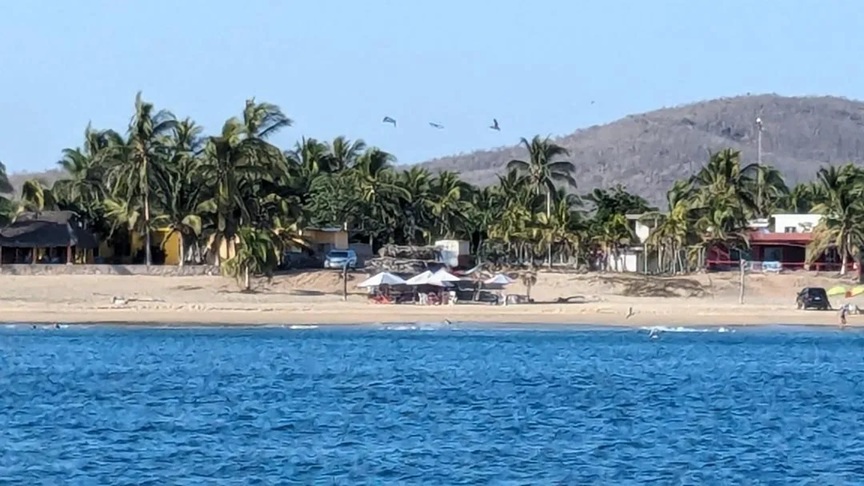
    After a nice day of both sailing and motor-sailing we pulled into the bay near the town of Chapala and tucked into the anchorage at Punta Perula. At Punta Perula the beach is lined with palapa restaurants and the surf crashes all night long.

    There’s a little river and a set of docks that the dinghy can go up. The landing is easy for Riley. As we returned through the tiny river mouth Riley saw some small waves off the bow of the dingy where he likes to ride. He quickly jumped down and hid underneath the dinghy bench seat. He’s clearly an experienced boat dog and watches the waves carefully!

    We recognized most of the boats in the anchorage from either Ipala the night before or previous seasons in Mexico. After traveling by boat for a while, either the boat name looks familiar, or you’re traveling together and just haven’t met the people (yet).

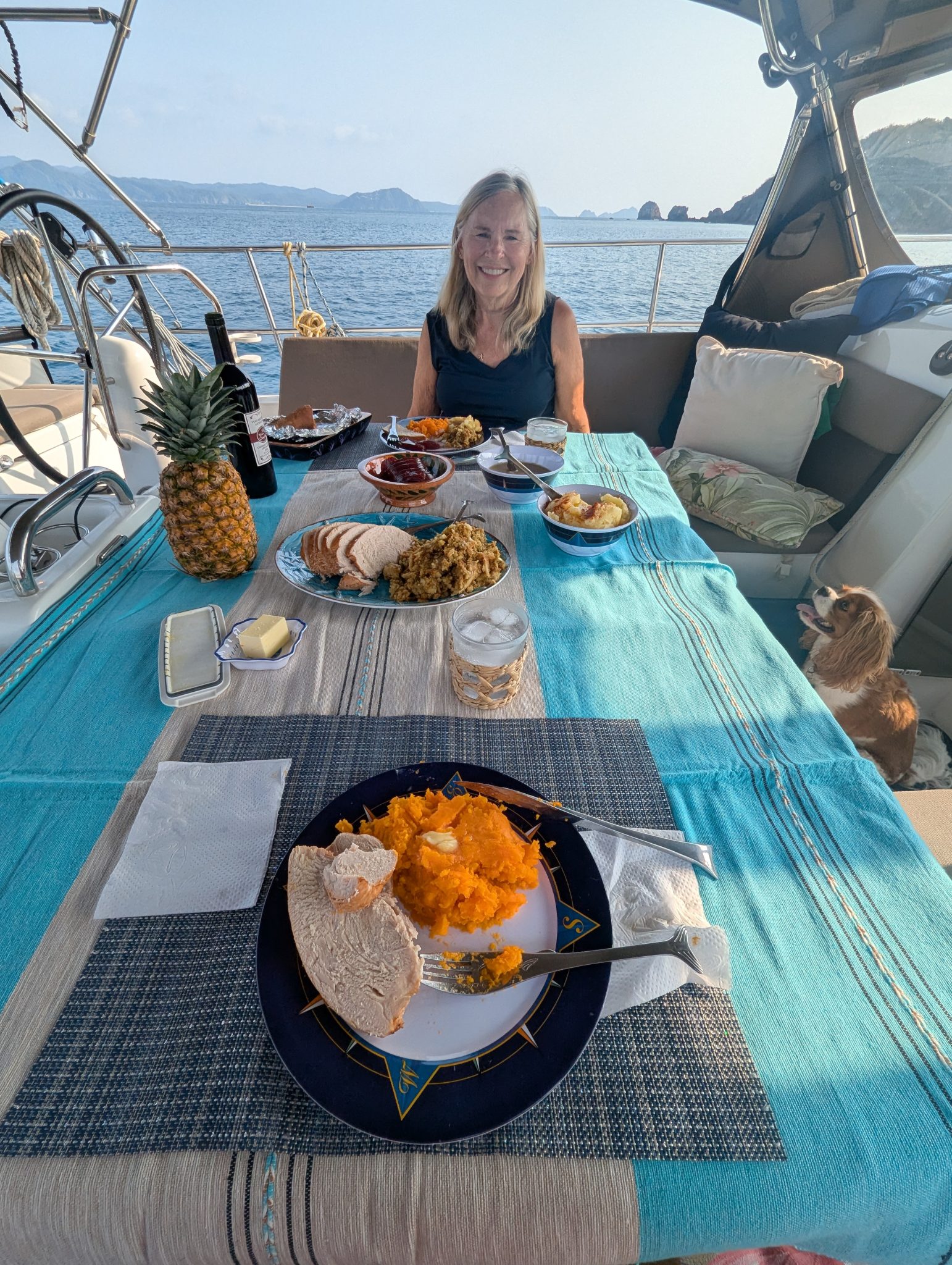
    Happy Thanksgiving to us and to everyone else. Our Thanksgiving morning took us to Tenacatita. As we got there we saw only ONE boat in the anchorage. Wow! Sometimes there are dozens of boats there. Tenacatita is one of the most beautiful and pleasant anchorages in this part of Mexico. The water is clear and blue, and it’s well protected from prevailing winds. We prepared our Thanksgiving dinner and sat down to a very nice feast. Bev had been collecting ingredients as we saw them as we traveled around Mexico. In the past we’ve had shrimp for Thanksgiving dinner. This year we had a wonderful turkey dinner with stuffing, sweet potatoes, cranberries, gravy and mashed potatoes.

  • Land Trip to Mexico City

    πŸ“· Placeholder β€” replace with original post image

    We made our trip plans so quickly we really didn’t have much time to pre-plan any activities. Fortunately, Mexico City has so many things to do that it was easy to find interesting activities on short notice. Day one we decided to visit Xochimilco. Briefly, Mexico City was founded around 1325 although the area was occupied far longer. The city used to be on an island of reclaimed land in the middle of a lake. Goods were moved by canals all through the city, similarly to Venice.

    Xochimilco is all that remains of the canals and the lake. Here brightly colored boats move tourists and bachelorette parties through the canals. The scene seems a little chaotic with boats bumping and tequila flowing and food vendors selling boat to boat. It was all super fun and relaxed and sort of life in slow motion.

    Xochimilco is also the only home of the Axolotl. Here’s a link if you want to know more https://en.wikipedia.org/wiki/Axolotl None of these little guys remain in the wild but there are many in captivity around the world.)

    The second day we took a locals tour of hidden gems of Mexico City. We hired a guide that walked us through the Palace of fine arts, and we discovered that the street we were walking on dated back to the original Aztec main street of the temple complex that Mexico city was built around. This easily makes this street the oldest continuously used street in the Americas – dating back nearly 700 years. We saw murals painted by Diego Rivera and the most important muralists of the 20th century in the Ministry of education, We looked over the original Aztec temple complex that was discovered when utility work was being done near the Mexico City cathedral in the center of the city near the presidential palace. Diego Rivera’s wife was named Frida Khalo and she might be more famous than Diego Rivera. Her art and likeness are everywhere in Mexico. We toured her home with a another guide near the Coyote Fountain in Coyoacan district square.

    Mexico City has some wonderful museums. If you remember pictures of the Aztec and Mayan calendar stones from your middle school textbooks, those are in the museums we visited. Although you aren’t supposed to touch these centuries-old artifacts, for the most part these exhibits are not preserved under glass or behind barriers. The experience of standing beside something carved so many centuries ago is mesmerizing.

    For our last full day we toured the archeological site of Teotihuacan. This site is much older than even the Aztecs. These pyramids date back 1700 years and had already been abandoned when the Aztecs saw the eagle eating a snake perched on a cactus on an island in a lake. (This was the prophecy that caused the wandering Aztecs to settle in what would become Mexico City – and this image still adorns the Mexican flag today).

    The temple of the Sun pyramid is over 200 feet high and it is immense. Built as a ceremonial site, it was the center of a city that had between 115 and 220-thousand people in it. Our tour covered perhaps a mile of walking but in the surrounding area I doubt there is anywhere that one could dig without digging into ruins.

    There are still visible murals of jaguars and birds that have survived there for centuries. At one point we stopped and a local artist drew us a picture using completely natural ingredients including red from insect larvae and blue from lapis lazuli (a mineral that had to be imported by this culture from the southern end of South America). He was kind enough to give it to us.

    Mexico city has some world class restaurants and a ton of street food. During our locals walking tour, at one point we walked down a row of street food vendors a block long with every variety of taco and fried Mexican food you could imagine. At the end of our walking tour we stopped in a very tiny and very popular taco place in Zocolo. In the evening street food vendors lined the street near our AirBnB. Often we were on the go and probably didn’t take full advantage of the Mexico City street food scene. At one point we took a too-expensive cab ride to go to a world renowned restaurant only to find they were closed. Darn! Near the end of our stay we found a wonderful restaurant serving food from the Chiapas (Southern Mexico) area. They had absolutely outstanding mole sauce and we sampled a number of different kinds!

    We’re really glad we visited Mexico City and we’d definitely leave this city on a list of places to return to someday.

    Now back to the boat! The new engine manifold and heat exchanger have cleared customs and are here in Mexico from Yanmar U.S. Hopefully, (if they are the correct parts. . . there was a bit of a language barrier when ordering them) we can get them installed this weekend. In the meantime, our boat watcher, Israel and his staff, are washing and waxing the boat which usually takes a few days. They do incredible work!

    If all works out with the new parts in the engine and the wind and tide align, we hope to leave the dock on Monday. It’s a shallow passage in and out of the Paradise Village Marina and we have a deep draft so a high tide is important. It’s been fun being here at this beautiful marina enjoying resort life but after a month tied to the dock its time to release the lines and start heading South.