Blog

  • Hola Mazatlan

    πŸ“· Placeholder β€” replace with original post image

    As we departed La Cruz for the second time in a little over 24 hours, we watched our engine temperature carefully and eventually relaxed realizing that our overheating problems was fixed. (Don’t jinx me for saying that Neptune!) The wind picked up and we were able to sail. During the two night passage we enjoyed dolphins, gorgeous sunsets and beautiful sunrises.

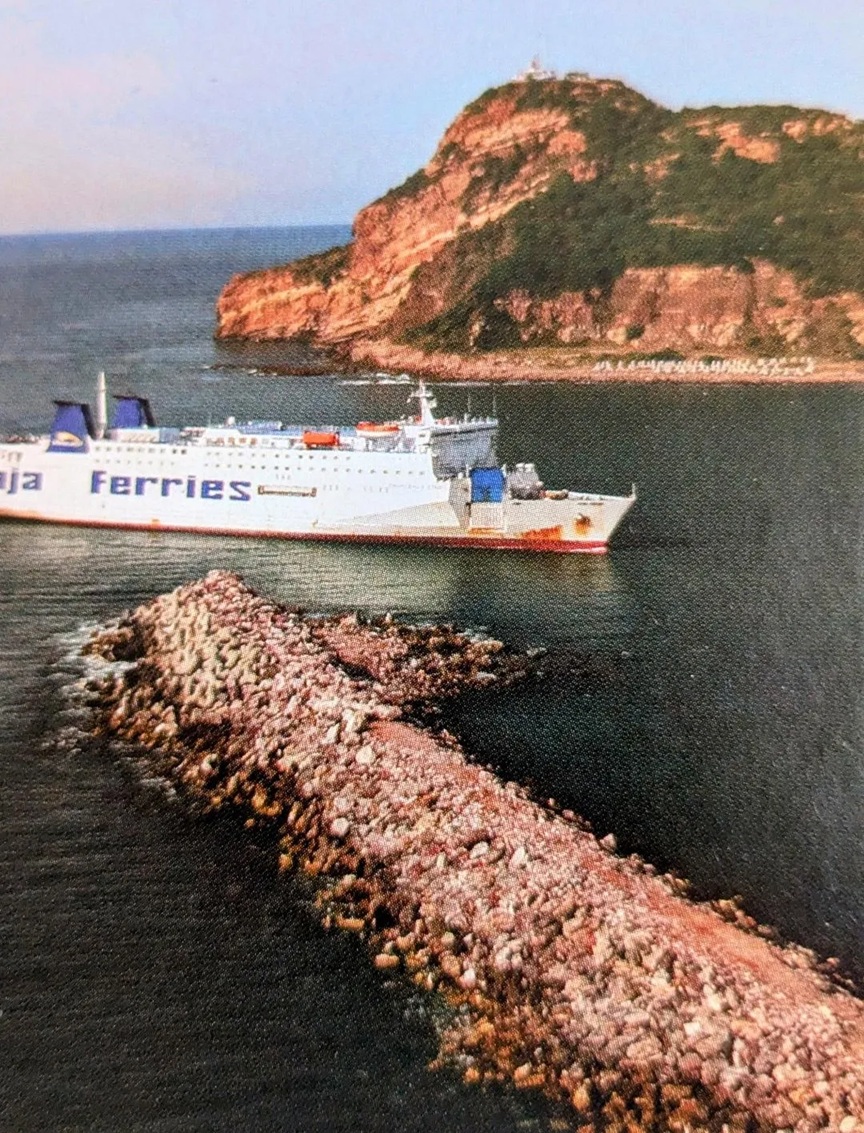
    Friday morning we arrived at Mazatlan harbor. The entrance to the harbor is extremely narrow (see photo above) with a constant stream of boat traffic consisting of large cargo ships, ferries, and cruise ships. Mariners must call Maritime Traffic prior to entering. Kevin radioed a couple of times requesting permission to enter in both English and Spanish with no response so we just went for it. We waited for a shrimp boat to exit the channel around the blind corner and then proceeded quickly. Success!

    It’s always a relief to drop anchor after a tiring passage and this was no exception. There was a sailboat (s/v Asume) already anchored and another arrived within minutes of us (s/v Okisollo). Apparently we’re the first few cruisers to arrive in Mazatlan harbor for this season. We also met Jennifer on the dock from Canada. She is a solo cruiser who has been living on her boat here in the anchorage for the past year doing odd jobs helping the locals.

    After taking a short rest, we got to work cleaning up stowing gear and getting ready to wait for our next weather window. The La Cruz to Mazatlan trip was 177NM and our next hop will be just over 200NM to the Baja peninsula. It will be a relief to get across the Sea of Cortez. It’s both a long non-stop trip and will take us offshore more than we usually go thus far in our travels. We’ll be about 100NM from any land in the middle. I know 100NM is small-potatoes for true offshore work but we’re heading upwind and the mouth of the Sea of Cortez can be a fierce place in the wrong wind conditions.

    In the meantime, we’ve been enjoying Mazatlan. We rode a Pulmonia (uniquie Mazatlan taxis) to the central market and walked to old-town and the town square. The town square was still decorated with Dia de Muertos (Day of the Dead) sculptures and on the way back we walked the Malecon and enjoyed the public art of Mazatlan and stopped along the beach for a margarita and cervezas.

    The weather is perfect! It’s 85 degrees (10 degrees cooler than Puerta Vallarta and La Cruz). The temperature makes a big difference when you are essentially living outside like we are. There is no a/c running when anchored in the harbor. When the boat is anchored the bow will swing into the wind and funnel air through our hatches which keeps the boat cool.

    Yesterday we went to the Gran Acuario (Mazatlan Aquarium). This is a brand new aquarium that recently opened and it’s the largest in Latin America. We watched a Sea Lion show where the sea lions clapped for themselves after their performance. It was very entertaining! Later we watched divers feed the fish in the giant reef tank. We couldn’t understand what was being said at the shows because the Mexicans speak Spanish so fast but it was still a good time.

    We finished cleaning our boat and had the other cruisers in the harbor over for sundowners in the evening. This is fun for two reasons, the first is that it’s always fun to get to know the cruisers around us and before we have them over we feel compelled to finish boat tasks- putting away unstowed gear and cleaning some of the messiest places on the boat (Kevin’s desk).

    Tomorrow is a beach day on Stone Island, a short water taxi ride from the Mazatlan pier.
  • Goodbye Paradise Village Puerto Vallarta

    πŸ“· Placeholder β€” replace with original post image

    Since we arrived 2 weeks ago, it’s been continual boat work. The marina is hot with little breeze and there are a lot of boat chores. Our plan has been to go North into the Sea of Cortez in November as soon as storm season is over. A 3 1/2 day weather window was opening on Monday, November 4th so we completed last minute preparations and untied from the dock. Our plan was to make one long Northeasterly arc from Puerto Vallarta to the inside of the Baja peninsula, a 280NM trip that would take continuous travel for about 3 1/2 days (the same length as the weather window). Our arrival would have been 1/2 a day before a wind system arrived that would have made for very unpleasant travel.

    We left Paradise Village just North of Puerto Vallarta during high tide. The entrance to the marina is narrow and shallow but they run a dredger continually so deep keeled sailboats (like Island Summers) don’t get grounded. We will move over to La Cruz and check the weather one last time before we attempt our crossing to the Baja side of Mexico.

    A couple hours after we left the dock in La Cruz our engine gradually overheated and we found ourselves turning around with more boat work on our hands. We were both a little discouraged questioning our whole decision process to cruise. Stupid boats!!! Since we had checked out of the marina, we were now at anchor outside the entrance troubleshooting our cooling system. We went to bed with some ideas of where to look and in the morning we were able to track the problem down to bits and pieces of a shredded impeller (from 3 years ago) that had finally made their way to the inlet of the heat exchanger and restricted the water flow. We could use the motor if we went slow but the motor would overheat if we tried to go fast.

    Our very kind dock neighbors on SV Hiva Oa loaned us their marina keys to use the VIP Lounge, restrooms and showers while we cleaned and tested the cooling system. By Tuesday afternoon we decided to make the best of the 2 1/2 days remaining of the weather window and go to Mazatlan. Mazatlan is not on the Baja peninsula but is 165NM North from La Cruz. This simplifies our travel planning for a crossing next week and Mazatlan is a fun place to visit anyway. We’re on our way and while overnight crossings are tiring they’re also beautiful. Bev woke up this morning to dolphins swimming next to the boat.

    If you’ve read this far and want to read more you can also check out our tracking page where Kevin will occasionally write his thoughts in the middle of the night. https://forecast.predictwind.com/tracking/display/IslandSummers/ or you can click the where-are-we link on the website home page.

  • Day of the Dead

    πŸ“· Placeholder β€” replace with original post image

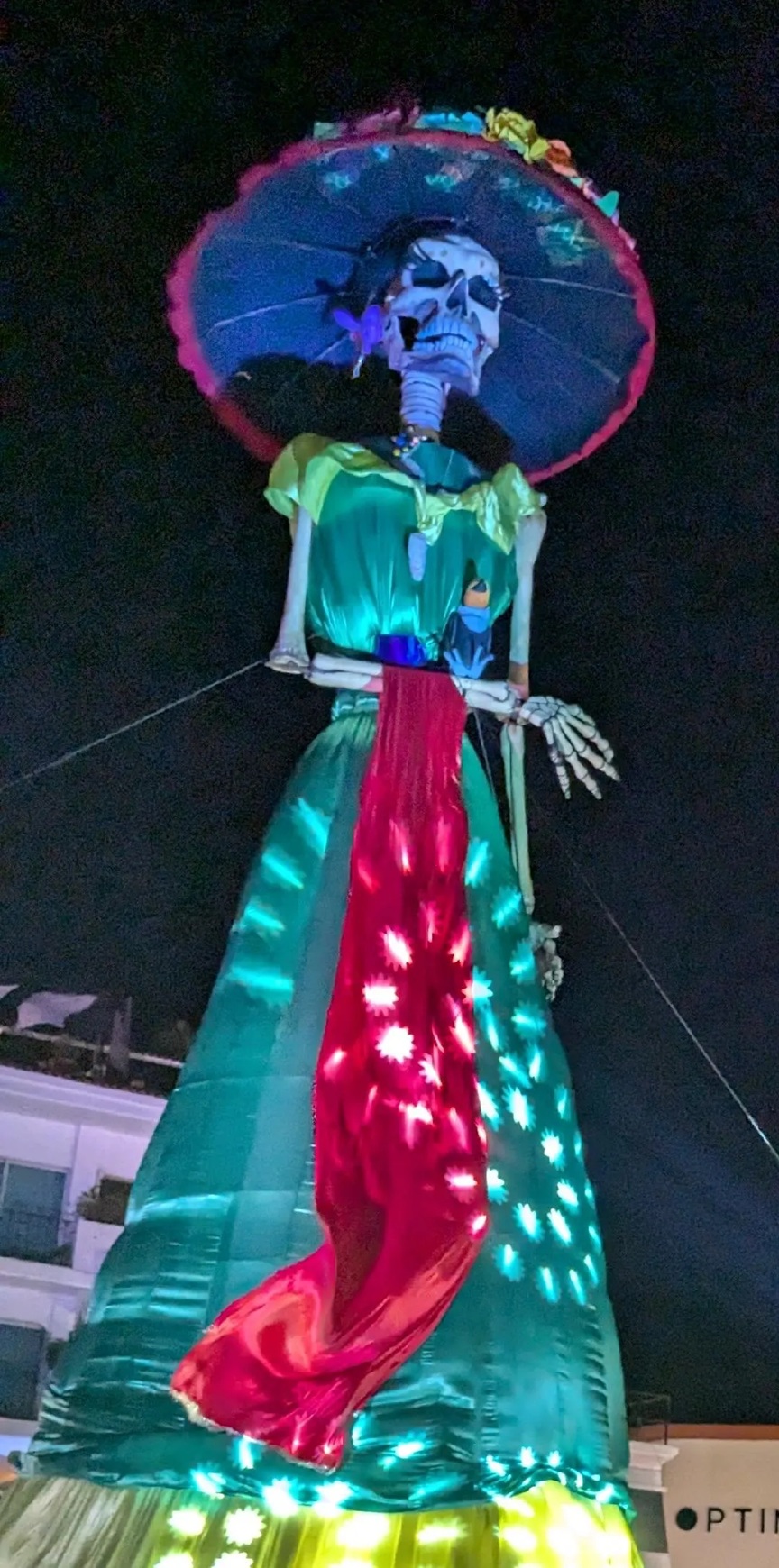
    This 75.5 ft. Catrina is the largest in the world and is displayed on the MalecΓ³n in Puerto Vallarta. The art piece was created for the city in celebration of the “Day of the Dead”. The Day of the Dead is a Mexican holiday celebrated for two days after Halloween. During November 1 and 2, the spirits are believed to return home and spend time with their relatives. Altars are erected all over the city decorated with pictures of the deceased, flowers, tequila, candles, perforated paper (allows souls to travel through) and favorite foods.

    Catrina’s represent the cycle of life and death. With her elegant attire and distinctive skull makeup, she embodies the idea that death is an integral part of life, to be acknowledged and celebrated. There are contests to create the best catrinas.

  • Little turtles BIG Adventure

    πŸ“· Placeholder β€” replace with original post image

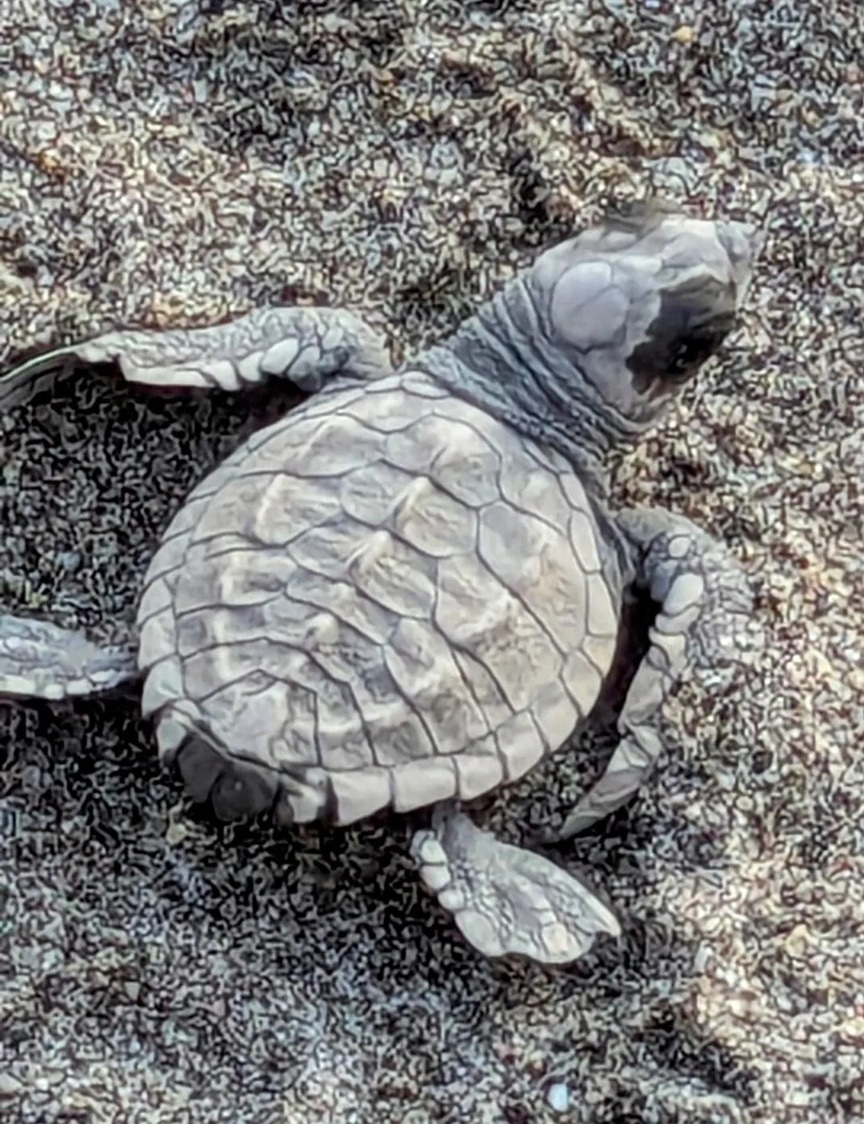
    During summer, the coast of Banderas Bay gives refuge to the female sea turtle that leave the security of the ocean to lay their eggs in the warm sand of the beaches to be incubated by the sun. Once they lay their eggs in a deep hole they make in the sand, the females return to the sea, trusting the next generation to Nature. Volunteers take care of the nests for about 50 days and guard the eggs from being eaten by racoons that dig up the eggs. Once the turtles hatch, they are prey to birds, fish and other natural predators like coati’s.

    We visited a turtle camp in the evening just before sunset. We were given a little turtle that had hatched 3 hours prior. They gave us a coconut shell to hold the turtle in to keep him safe until he is released. We held the baby turtle for a short time in the coconut shell and then released him to the ocean coaxing him to run fast and swim hard. The survival rate in nature is 1 in 1,000 and with human intervention it is 1 in 100.

    We are leaving the turtle sanctuary to join in the celebration of “Day of the Dead” on the MalecΓ³n in downtown Puerto Vallarta.

  • View from the Top

    πŸ“· Placeholder β€” replace with original post image

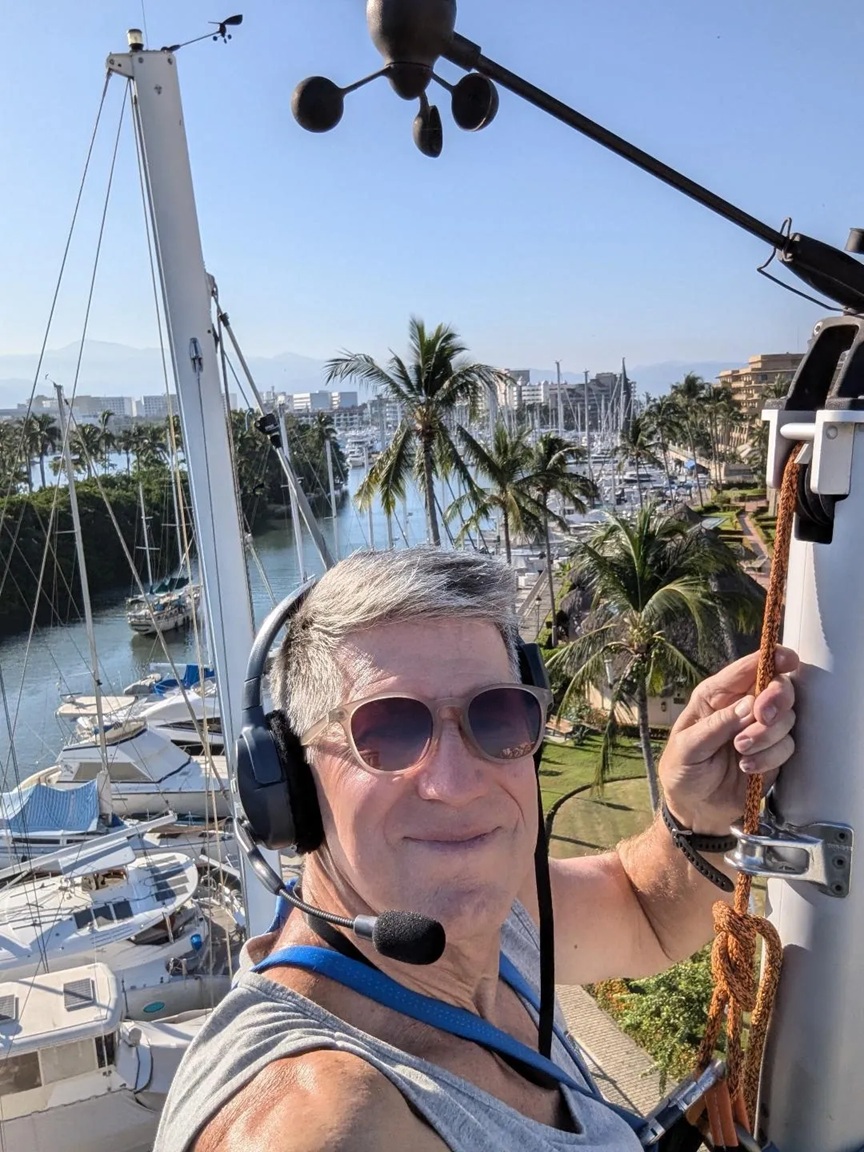
    It’s been about 9 days since we got here. Every day we chip away at the chores of putting the boat back together. We’re mostly done with the big stuff. Halyards are up, sheets are attached to sails, the genoa is back on the furler. Some projects are off the list (done). One of the things I’ve been working on for two years is poor AIS (Automatic Identification System) reception. My equipment has been shipped to Raymarine and declared “NPF” (no problem found). Raymarine suggested I investigate my antenna. The antenna, however, is at the top of the mast.

    I don’t love going up the mast. I have to strap into a bosuns chair and have Bev winch me up. I work my way around the various lights, spreaders (with sharp cotter pin ends), the radar and various cables. When I’m at the top the boat sways just a bit and I’m about 6 stories up with a nice view of the roof of the 5-story condo next to us.

    I knew I had to go up since last year I removed one wind-vane and broke another one by grabbing it accidentally. I bought a new antenna and brought it to Mexico, of course the connectors and the mount system are not the same. I can work on one connector on deck but the other connector and the antenna mount has to be worked on at the top of the mast. This particular boat project turned into a struggle.

    I’d like to go up the mast one time and get everything done all at once but it just didn’t work out that way. I usually plan what tools I need and either carry them with me in a little pouch attached to the bosuns chair or in a bucket that I can pull up from the deck. But, with so many different things to do and tools needed there’s a limit. Parts will get dropped and bounce off the deck into the water (they never seem to land on the deck). It seems likely that I would need to make more than one trip up the mast.

    I finally managed to get my project mostly completed with trips up the mast on three consecutive mornings (until it gets too hot and mentally exhausting to stay up there). I hauled up power drills, wrenches, screwdrivers and a butane soldering iron trying to re-do the antenna connections (one of the connectors got dropped and bounced into the water). Darn! Now I have to improvise since most parts are impossible to get here. I will have to wait until I make another trip home. Even though my soldering iron was kind of dying and didn’t do a great job on my connectors, this morning we heard the morning radio net in the marina which has NEVER happened before. Hopefully my AIS will also be working better too.

    Comments from Bev: It’s nerve wracking hoisting Kevin up to the top of the mast. I am in control of the lines & winches (and possibly his life). I’ve done this enough times now that I’m gaining confidence. For added safety, we use an ascender line and communicate with headsets (“marriage savers” as they are called in the boating community. . . because no yelling is involved). Usually he’s asking for tools and parts to be sent up in a bucket or he’s ready to descend (sometimes swearing at the parts in the microphone). Sailing definitely is easier with two people although we’ve met sailors (both men and women) along our travels that are sailing solo.

  • Back to cruising. . . lots to do before we leave.

    πŸ“· Placeholder β€” replace with original post image

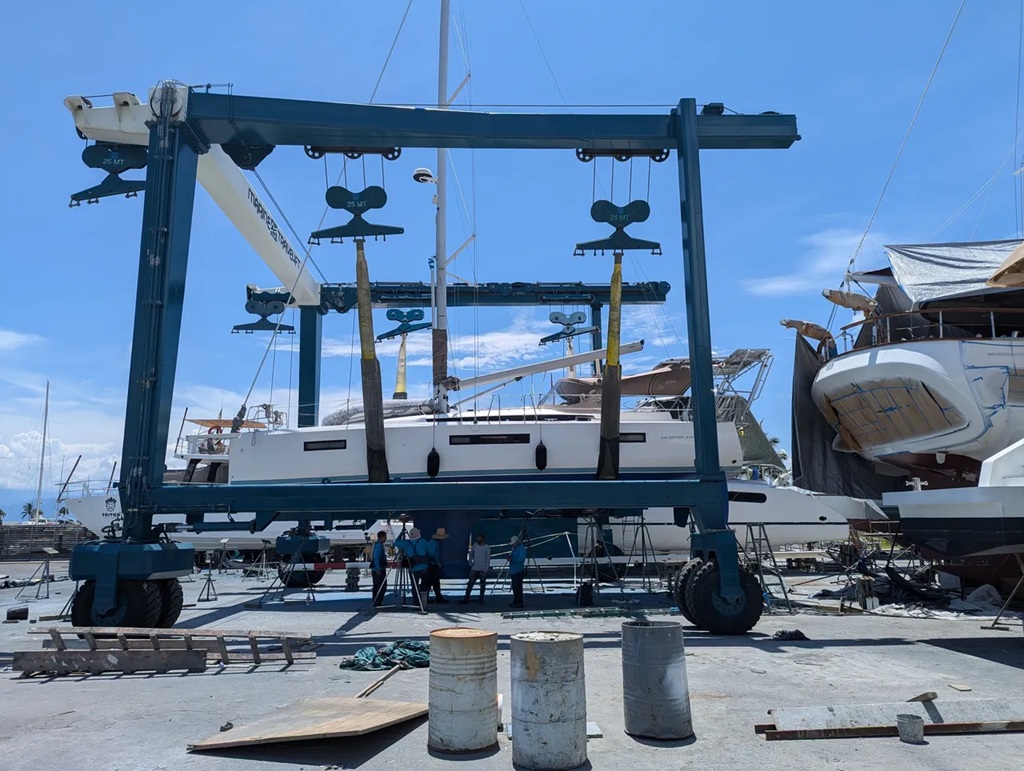
    Kevin came down to Paradise Village in Puerto Vallarta in August to move Island Summers to La Cruz (5 nm) to have her hauled out of the water for new bottom paint. We have now returned to the marina to get ready for sailing. We will be at the dock for at least another week while we provision and put up her sails. Part of getting the boat ready is putting everything back together that we took apart when we left her for hurricane season. In the meantime, we work on her in the cooler mornings until the hot afternoon. Then we stop work for the day and enjoy the resort while eating tacos and sipping pina coladas and margaritas by the pool. We are planning to stay around for Halloween to celebrate the “Day of the Dead” in Puerto Vallarta. We’ve heard its pretty spectacular.

  • Island Summers is stored in Paradise Village for storm season

    πŸ“· Placeholder β€” replace with original post image

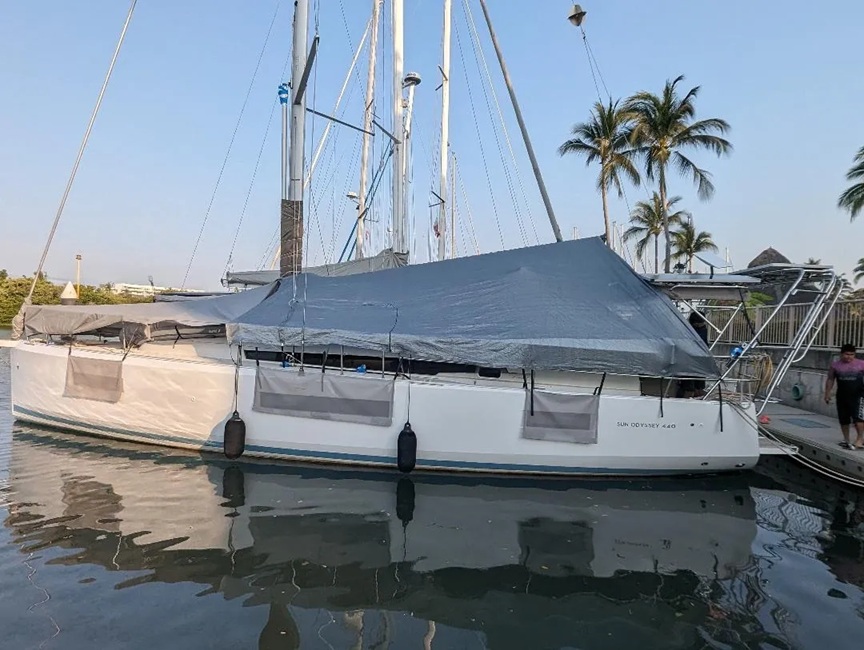
    The boat is all put away for the Summer. (That sounds weird to me because Summer seems like boating season). In the tropics it’s storm season though. We have a protected slip in Paradise Village (Nuevo Vallarta) that keeps Island Summers safe.

    Putting the boat to bed is always a little sad and a fair amount of work. But the weather this time of year is getting hot and deep in a protected marina it’s even hotter. It’s also nice to get home to a little more space and a change of scenery.

    We had a new shade cover made for the front half of the boat which will be an improvement over taped on aluminum foil. We took the tarps we used last Summer and Bev sewed them together to make a cover for the bow. So now the whole boat should be protected from the most intense parts of the sun. Cushions are stowed, mattresses are moved around, tanks are drained, dehumidifier is running. There’s a fairly long spreadsheet of tasks to check off before leaving.

    I’ve been up the mast a few times this year and I’m always struck by the view. Boats and marinas spread out beneath me- or maybe just a different angle on life in Mexico, I’m not sure. I’ve tried to take pictures that have not turned out from up the mast.

    But WAIT! I have a drone. I’ve had it with me for two years and I’m sort of afraid to use it because everyone I know has crashed their drone, or lost in trees, or sunk it. Salt water and drones are a bad combo!. So I’ve been very reluctant to fly it.

    My dock neighbors and friends on SV Felicita ( https://gntsailing.com/ ) were preparing to go up the mast and wanted some video for their youtube channel. I thought why not and got the drone ready. Keep in mind I’ve flown it very little in the past months. I quickly tested it and then landed it back on the dock. Tim went up the mast and I got ready to take some drone pictures. I _think_ I misremembered the take off sequence from a helicopter I have and when I took off, the drone lurched forward, crashed into the side of the boat and fell into the water! THE SALT WATER! I was on the boat and before I could get close to the spot the drone dropped, it had already sunk. Now since Tim was up the mast and I was helping, I didn’t have a lot of time to pout. I had to suck it up and get back to helping – but WHAT A DRAG. No drone, no pictures. I didn’t even try to retrieve it. Salt water + drone = instant death.

    We will return to Island Summers in October. Follow us then as we cruise the North part of the Sea of Cortez. It’s gorgeous blue water with breathtaking views and beaches.

  • Marina La Cruz

    πŸ“· Placeholder β€” replace with original post image

    How quick can your day change course? As it turns out VERY quickly. I had my day all planned:

    Make coffee, check out with port captain, settle marina bill, perform one or two ‘odds and ends’ chores, untie lines and move SV Island Summers to Paradise Village marina (an hour or two away).

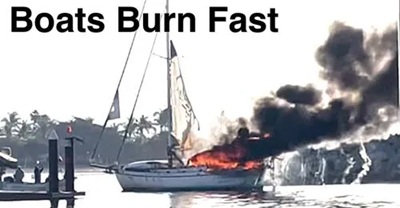
    I had just set the coffee cups out and was reaching for the espresso machine when I heard a low thump like an underwater fire-cracker or a boat collision. (0 seconds) I looked out the window and saw my dock neighbors on their bow and another bow very close to their boat . . . too close. Time to take a look.

    A boat across the fairway from us, SV Chrysalis was drifting apparently without power toward SV Hiva Oa (my dock neighbor). The skipper of SV Chrysalis shouted that he thought his battery had exploded and he had no power. (15 seconds) I jumped down to the dock to get over to lend a hand when someone said there’s smoke coming out of the boat.

    I ran back to SV Island Summers and grabbed our biggest fire extinguisher. (45 seconds) Hopping onto Chrysalis from the bow of SV Hiva Oa, I ran to the cockpit and was confronted by a cockpit opening to a salon filled with dense black smoke and smoke streaming out from the edges of an aft hatch behind the cockpit. I would have been at best spraying the fire extinguisher into the salon with no idea where the actual fire was. Opening the hatch seemed unwise unless I actually wanted to allow more air to what was clearly an out of control fire. Emily from SV Hiva Oa had also jumped on and we all had reached the same conclusion. Get off this boat! (60 seconds)

    Paul, the skipper, was still looking for something he could do. But suddenly the smoke coming from the cockpit turned to open flame. As he dodged around the burning cockpit to come to the bow of the boat I saw his hair catch fire. (90 seconds) He shook his head and his hair went out and everyone called for him to jump off the boat. Finally he jumped into the water. Now it was a race to get the flaming boat away from all the other boats. One of the dock workers tried to pull the boat down the fairway by hand with a dinghy.- not working. The burning boat was directly off our stern, in the center of the fairway with a slight wind blowing it away toward the other side of the fairway. (120 seconds) Someone on a paddle board out for a morning paddle helped Aron, the man with the dinghy, tie the boat to the dinghy and slowly SV Chrysalis moved down the fairway burning. A couple of further explosions happened as propane tanks ruptured. (2-3 minutes). Finally some fishing pangas got lines on SV Chrysalis and pulled her out of the marina into the anchorage.

    Eventually firefighters reached SV Chrysalis out in the anchorage and were able to put the fire out, but it quickly re-ignited and eventually she sank to the bottom of Banderas Bay.

    Paul lost everything (his home, passport, wallet, glasses, etc.). He got onto the dock only wearing a pair of shorts. SV Chrysalis was his home and he and his son had worked on it to convert it to an electric boat. At this point maybe you’re saying to yourself “ohhhh…” But stop right there. Everyone in the cruising community modifies their boats. Many of us have done electrical modifications without any “official” certification. All of us have been on the receiving end of some unexpected mischance that has ruined our day. Boats break, systems fail. Generally we laugh about it later. In this case anyone below after the 60 second point in this disaster would have been seriously injured, after 90 seconds….

    Boat fires are absolutely terrifying. Battery fires, even worse. There’s no time to think. Deploy all your emergency equipment as fast as possible and get away from the boat. Maybe the boat will survive, maybe it won’t but don’t be on it to see. Watch from a safe distance.

    I’m adding a link to a video from our friends on GnT Sailing who were nearby when this happened.

  • Land trip to Guadalajara

    πŸ“· Placeholder β€” replace with original post image

    We took a four day trip to Guadalajara, a city in western Mexico known for tequila and mariachi music. Guadalajara is Mexico’s second biggest city with about 7-million people in the metro area. Located in the central mountains of Mexico, Guadalajara is at 1566 meters elevation, just short of a mile. With it’s cooler weather and location in the Mexican state of Jalisco, it’s ideally suited for growing green agaves and in fact is not far from the town of Tequila, the traditional home of the liquor by the same name. We travelled with sailing friends from SV Felicita, Tim and Gretchen. Our trip started with a 3.5 hour bus trip through the Sierra Madre mountains near the coast. The bus was quite nice with reclining seats and TV screens and headphones for everyone. We could watch tele-novelas in Spanish and feature films with subtitles. Mexican drivers, including the bus-drivers are quite willing to pass on two lane roads and blind corners. Everyone moves over and the roads become temporary 3-lane roads. Renting a car is a feasible option for this trip but the bus was much more relaxing. Guadalajara is very metropolitan, and really felt like a city in Europe. There are options for fine dining and we had dinner at Restaurante Bruna. Besides having wonderful food, the restaurant felt like a combination art gallery and garden. There were walking paths around bonsai trees over a century old and rooms full of contemporary Mexican art. One of the appetizers we tried was a sample plate of 10 different mole sauces. Who knew there were that many different flavors! Guadalajara has a rich colonial history and features a governor’s mansion (now mostly used as a museum) filled with murals and a clock with a bullet hole from Pancho Villa’s gun. We also visited the historic town of Tlaquepaque with old saloons that still serve food and drinks and of course more street art and good food. It’s hard to find a ‘highlight’ of this trip because it was all pretty fun, but a day trip to the town of Tequila with a tour of Tres Mujeres (Three Women) distillery was certainly memorable. We saw the agave ovens and walked through a long cave filled with Tequila aging in barrels. We visited a colonial era estate with a pre-historic hand dug cave back to a natural spring complete with pure drinkable water at the end and bats that flew past us as we disturbed them with our phone lights.

    We visited Cantarito el Guero ( https://cantaritoselguero.mx/ ) This is by far the largest Tequila party I’ve ever seen. Here one can purchase fruity tequila drinks in various sizes from 16 oz with 4 shots of Tequila to a large clay bucket with two bottles of Tequila in it. There was a girl selling cocaine near the restroom (no thanks) and a special sink to vomit in. We tasted many different kinds of Tequila and eventually visited the town of Tequila and walked along Jose Cuervo street next to the distillery of the same name. Too soon it was time to board the bus again and head back through the winding mountain roads back to our floating home Island Summers and Riley who had stayed at a dog resort in La Cruz.

  • Day trip to San Sebastian

    πŸ“· Placeholder β€” replace with original post image

    We got back to Banderas Bay (La Cruz / Puerto Vallarta area) a little sooner than expected so we decided to do some land day trips. One we have heard is good is a land day trip to a little town called San Sebastian. Included in the trip was a tequila tasting and walking tour of the town. Perfect.

    San Sebastian is about two hours from Puerto Vallarta by car. To understand how small and remote San Sebastian is consider this: The town of San Sebastian is the largest town in the municipality of San Sebastian which encompasses about 1100 square miles. The municipality has a total population of around 5100 people. The town of San Sebastian has about 700 people living in it and is the largest town in the municipality. By comparison Puerto Vallarta has about 300,000 people. San Sebastian is truly a tiny place in a nearly empty jungle in the mountains at about 5000 feet.

    Originally founded as an ore processing site for silver mines, San Sebastian has gotten smaller over the years as the mines closed. The European Spanish families that originally settled there tried hard to avoid inter-marrying with the native population and consequently have an extremely condensed family tree (yes, most are married to their relatives).

    There’s still a tiny hotel with no power and telephone service that Richard Burton and Elizabeth Taylor and other movie cast members used to escape the press while Richard Burton filmed The Night of the Iguana in Puerto Vallarta. (This 1964 movie put Puerto Vallarta on the map for a tourist destination). Elizabeth Taylor was not in the movie but she came along to keep an eye on Richard Burton.

    Now San Sebastian is a small destination in its own right for small scale guided eco-tourist tours and trips to the top of the nearby Sierra Madre mountains from which Banderas Bay and the sprawl of Puerto Vallarta can be seen in the distance.

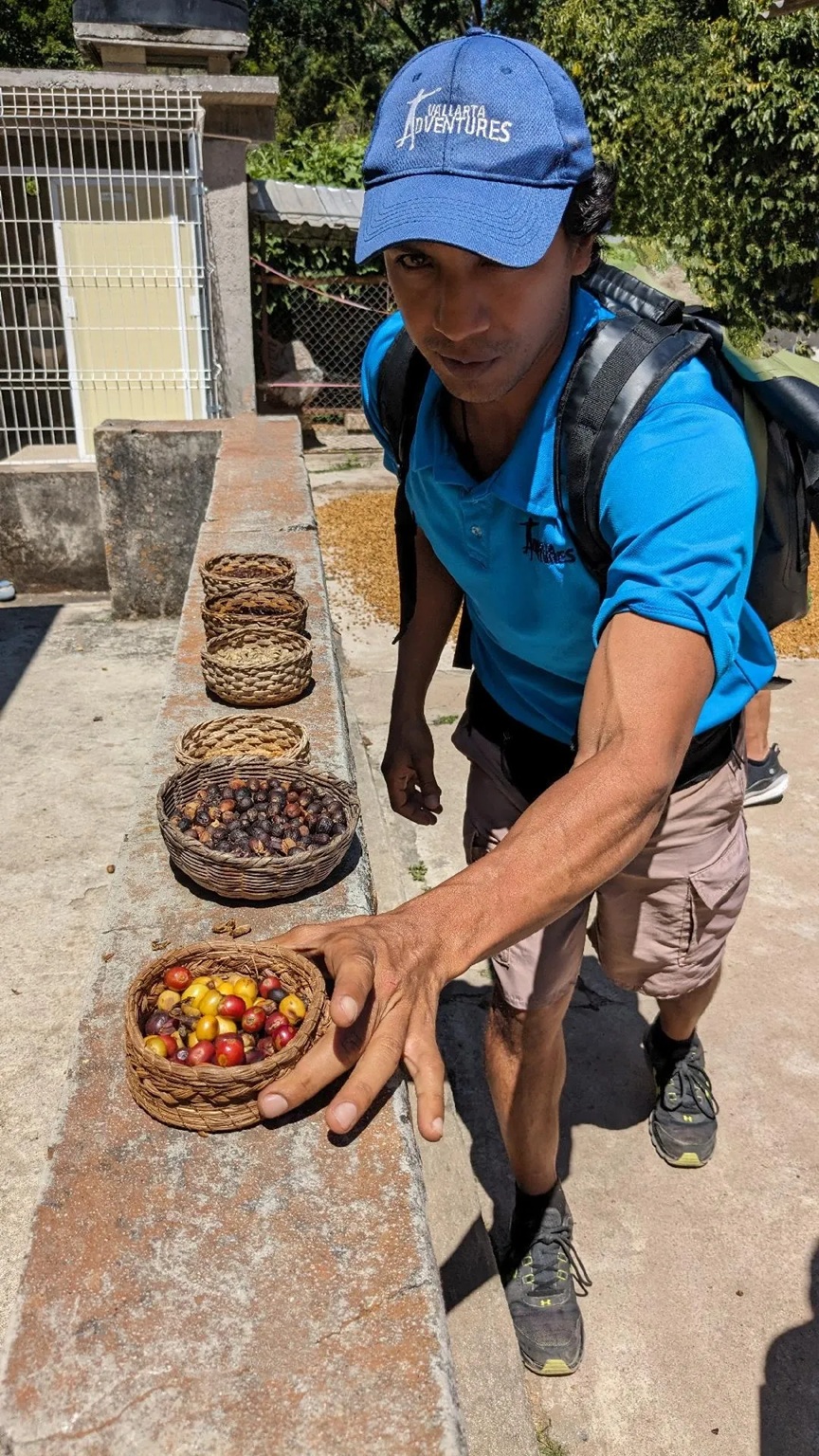
    Because of the somewhat cooler temperature nearly a mile up in the mountains, the area is good for growing almost anything, from fruit to coffee. One of the exports from the area is gourmet shade grown organic coffee. Pictured above are freshly picked coffee beans before they are set out in the sun to dry. Situated in the state of Jalisco the area is also prime for growing the blue agave used for Tequila. We passed many blue and green Agave fields. Along with the cultivated blue Agave, the green Agave grows wild and is used in the production of traditional and only recently legal Raicilla.

    On the way back we stopped at a small Tequila and Raicilla distillery and sampled artisanal Tequila and Raicilla. What a great way to end the day!