Author: sailoregil

  • Guest Post

    📷 Placeholder — replace with original post image

    Living on the boat for the last two weeks has been interesting, to say the least. I’d never spent more than a day or two on a sailboat, so I’m hoping to give a bit of an outsider’s perspective on boat life. I’ve been eagerly watching Island Summer’s journey since my parents first started provisioning the boat a few years ago, and I’ve always been intrigued to find out what it’s like to live on a sailboat.

    One thing that’s struck me is just the sheer amount of things that you have to pay attention to. As we came into the anchorage of Isla Isabel from San Blas, we got a warning call over the VHF radio telling us there were quite a few fishing nets we’d need to avoid coming in, and we pulled up the binoculars to take a look. The island was absolutely inundated with a labyrinth of fishing gear that we had to navigate around, and hitting any of it would have required diving under the boat to disentangle it from the keel and rudders and then dealing with an angry fisherman whose nets we’d just destroyed. Needless to say, we had to take it slow and steady to navigate in, which is much easier said than done with a 44 foot sailboat.

    Once we got in, it was quite late and we dropped anchor for the night on what was supposedly a rocky bottom. I couldn’t figure out why this was causing my dad so much anxiety and said to him, “What’s the worst that can happen? So what if our anchor drags a bit?” After thinking about the answer to that question and looking over at the enticingly sharp rocks not more than a few hundred feet off our bow, the reality of the situation set in for me. If the anchor gave way while sleeping, we could wake up to the boat crashing up against the rocks or some other calamity. I stopped hard timing him after that, but nonetheless woke up in a bit of a mild panic when an alarm started going off at around 2 AM. While initially thinking it was our anchor alarm (we set up a GPS system to notify us if we move too far from the anchor point), it was thankfully just the autopilot system that got left on trying to tell us that we were somehow off course. Nonetheless, this was not the most restful night’s sleep I’ve had.

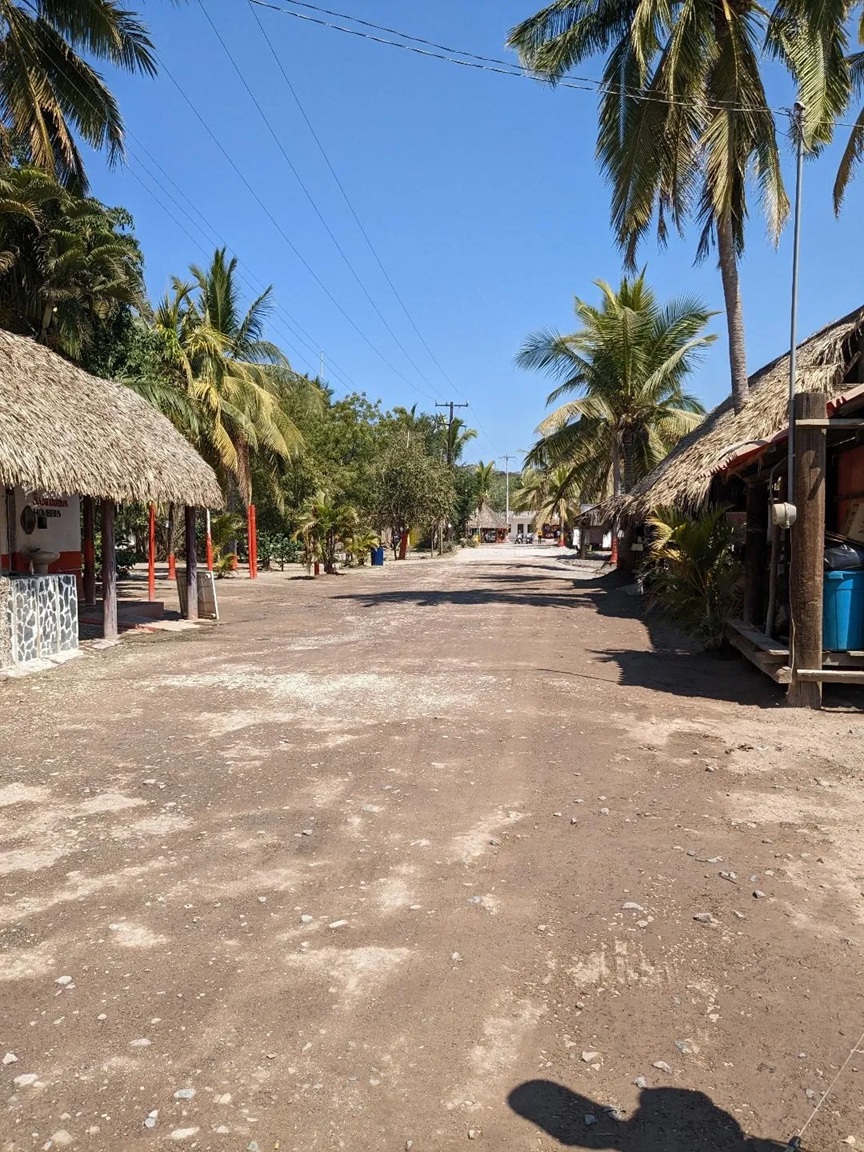
    The next day, we loaded up the dinghy and went for a small hike around the island. It’s a pretty small island that has a small fishing camp of about 10-15 people living there in some semi-permanent wooden shacks. As we were pulling the dinghy onto shore, a kid ran over to us and started talking with us immediately in very fast Spanish. We eventually figured out that he was telling us that we needed to pull the dinghy higher up on shore because the tide was coming in.

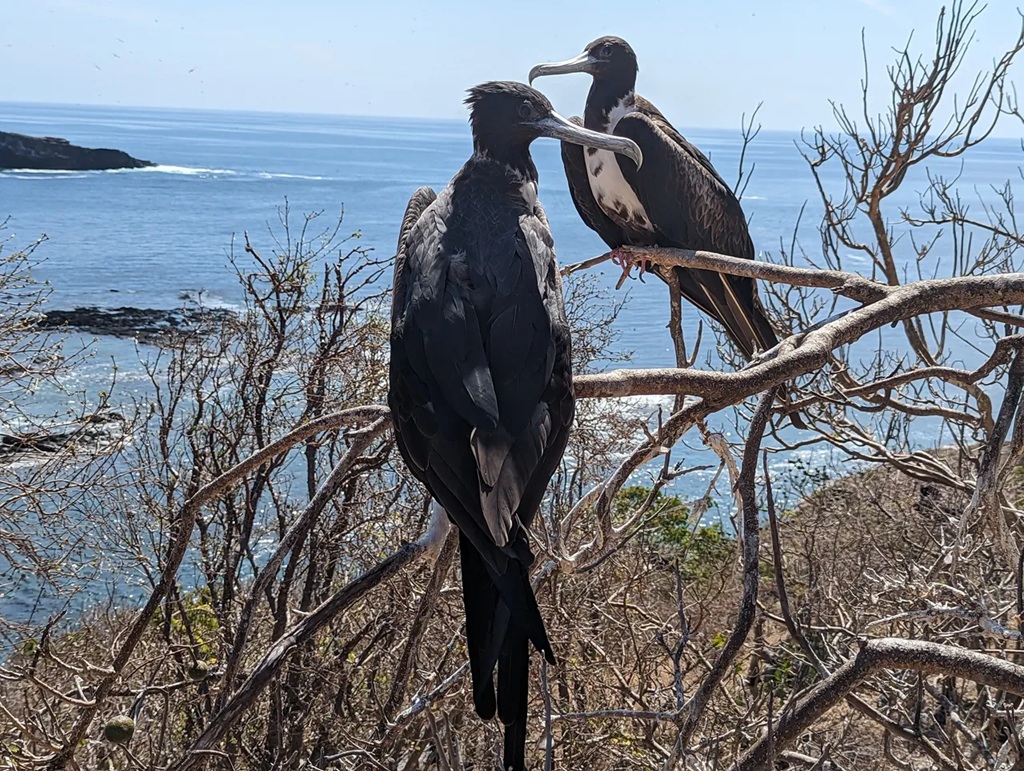
    As we started our hike along the path to the island, the kid started telling us that there were also native Mexican milk snakes on the island that we should be aware of, and was pantomiming fang bites into his arm. We think he was telling us that they aren’t venomous, but we weren’t sure. It set the tone for the rest of our time on the island nonetheless. Stepping into the brush was like stepping into another world – the whole island is a national park because of all the seabirds that nest there, and also has an abundance of iguanas and other wildlife. Because the birds have no natural predators on the island, you can get up close and personal with the frigate birds – and they certainly feel much bigger when you’re facing them down eye-to-eye less than a few feet away. The sheer amount of wildlife was overwhelming. The second we stepped into the brush, we heard the constant calls of seabirds, both in nests and flying in the air, and the bushes felt absolutely alive as iguanas fell out of trees and scurried through the underbrush. The brush was so thick that it was hard to shake the paranoia that a Mexican milk snake was lying in wait – they’re supposedly quite large snakes, and I had no desire to see one.

    After our visit to the island, we set out for an overnight sailing trip from Isla Isabel to Chacala – I wanted the full sailing experience, even if we probably didn’t have to sail overnight if we didn’t want to. My dad brought out the offshore life jackets and harnessing gear, which I initially thought was overkill. Why did we need all this stuff when we’ve been sailing all over the place without it so far? When the sun set, I quickly realized why. The sheer darkness around you is absolutely pervasive when there’s no source of light for 30 miles in any direction and you’re surrounded by nothing but ocean. While you can hear the surf around the boat, it’s actually quite hard to see it, and your world shrinks down to just a handful of square feet in the cockpit of the boat. It almost felt like being on a spaceship, and we were all a bit on edge because a boat similar to ours had disappeared without a trace near where we were sailing just two weeks prior. While mildly terrifying at times, it was incredibly peaceful watching the stars and listening to the wind and waves push us along.

    Living on a boat has been a fascinating experience – everything takes more time and effort. Taking our dog Riley for a walk suddenly requires us to put the dinghy into the water and motoring to shore, and the whole effort often takes nearly an hour. Similarly, things that you take for granted in day to day life start requiring a ton of attention to detail. When you’re taking a shower, you’re bracing against the walls as the boat rocks in the waves and using as little water as possible because there’s always a limited supply. Whether it’s monitoring the battery or water levels, it feels like there’s always something that needs to be taken care of, and every decision you make is some form of tradeoff. Sure you can take a nice long shower, but then you need to run the water maker for hours offshore and have to take care of how much power you have available. It’s a one of a kind experience that’s hard to put into words – it almost feels like everything is hanging in a delicate balance at all times, and you need to be careful to keep it that way. It gives me a newfound appreciation for a trip around the world that I’ve had stuck in my mind since I was a kid 15 years ago completed by Jeff, Casey, and Matt (many of whom have been featured previously on this blog). I’d definitely recommend giving it a try if you ever have the opportunity 🙂

    While life is a little harder, the opportunities are astounding – Isla Isabel is a place that very few people ever have the opportunity to visit, and I would have never gone out of my way to see it otherwise. But it was absolutely incredible to observe places that are generally well off the beaten path and get a sense of what life is like outside of the tourist destinations.
  • A Visitor in San Blas

    📷 Placeholder — replace with original post image

    Our son, Ryan, has arrived! He flew in late to Puerto Vallarta and we met him at the airport to Uber back to the boat. He had a pretty long day of traveling. He started off with a tram from his house in Dresden, Germany, a train to the Berlin airport, a flight to Amsterdam and then a flight to Mexico City and another to Puerto Vallarta, an Uber to La Cruz and finished it off with a midnight trip (in the dark) in a dinghy to Island Summers in the La Cruz anchorage.

    From there we planned a loop around Banderas Bay but the wind pattern wasn’t entirely cooperative with our route planning. Instead we headed out Friday morning and made haste for San Blas, about 65NM North of La Cruz.

    San Blas has an amazingly 4 mile long beach and super friendly people and… bugs. The guidebook has a warning about the bugs, friends had warned us, and we took precautions but it actually wasn’t as bad as we were worried it would be. We anchored about a 1/2 mile from shore in Bahia de Matanchan so the bugs couldn’t find us. We had plenty of spray for going into town and had a fun time walking around. There’s an old fort from the 1800’s that we visited on a hill and we worked on our Spanish. There isn’t any English spoken in San Blas but we manage to get by – at one point we got a cab to return us to the beach where we had left our dinghy but we were going in the wrong direction. Eventually, Ryan saved the day by dusting off his Spanish and realizing the cab driver didn’t really know where we needed to go. We were able to get it sorted out with Google maps.

    Since we had to dingy in to shore and walk or take a taxi into town, we needed a place to safely store the dinghy. A family that runs the restaurant by that stretch of beach kindly watched the dinghy while we went into town. Families playing in the water thought it looked pretty funny coming out of the water onto the beach on it’s funny wheels.

    When we returned from our first day in San Blas we sat at the beach and relaxed with some beers. As we were sitting there one of the beach vendors began pointing at the ground near our table and yelling something in Spanish. After a moment we realized he was pointing at a snake crawling under our table. We hastily moved away and the snake crawled onto Ryan’s chair as he passed by Riley who was laying in the sand. Kevin moved the chair to some bushes so we wouldn’t have to share our table. We later learned that it was a Mexican Vine Snake. As the day turned to afternoon the beach-goers started to disappear at the same time the bugs began to appear. Time to go.

    The next day we took the La Tovara Jungle Tour. San Blas is near a large estuary called La Tovara populated by cocodrilos (crocodiles) tortugas (turtles) and aves (birds). We REALLY enjoyed zooming through the jungle on a panga and looking for crocs, birds and turtles and finished the day with some more beer on the beach before heading back on our half mile dinghy ride to our refuge from the evening bugs.

    We’re working to give Ryan an honest feel for what our lifestyle is like. So far we’ve introduced him to bugs, snakes, beautiful beaches, sunny weather, and tasty Mexican cuisine. We made sure he realizes that even 14 or 15 miles from shore, the ocean seems like a big place. We left San Blas and sailed to Isla Isabela to hike on the island to see red, yellow and blue footed boobies and the abundant marine life.

  • Mazatlan Anchorage

    📷 Placeholder — replace with original post image

    Mazatlan is about 160 nautical miles from Banderas Bay (Puerto Vallarta). We can go 6.0 knots so the trip is more than 24 hours. We mostly motored for the next day and overnite and arrived in Mazatlan with a familiar feeling of being somewhere brand new. We anchored in the main port area near the “old town’, and the ferry terminals. We were soon treated with a close view of the arrival of some large cruise ships. It was quite entertaining. Cruise ships come in the morning and leave in the evening. So I guess you would get to choose one activity to experience in Mazatlan if you were on a cruise ship.

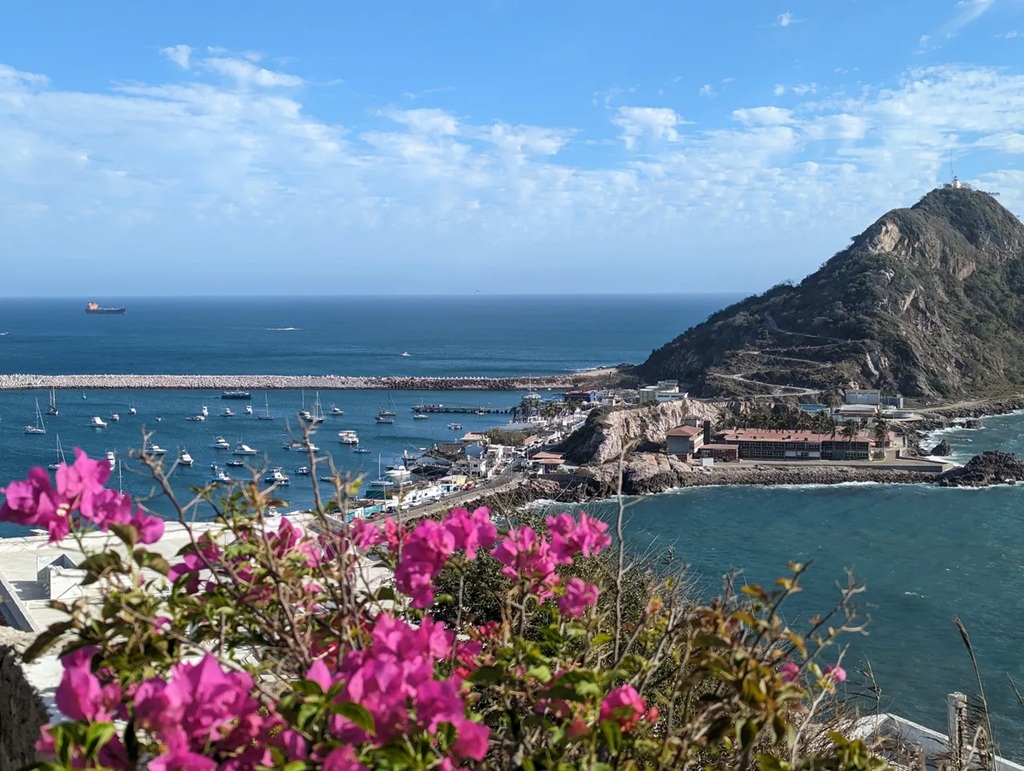
    The anchorage described by the guidebook is at a place called Club Nautico, a cruisers destination that has mostly been replaced by large marinas 8-miles North. Apparently at some point a hurricane also took out the restaurant and Club Nautico (cruiser’s club) so there is really not much there other than ruins, a minimal bathroom, a decaying dinghy dock and a security guard at a gate. Good enough to anchor but not glitzy at all. The security guard takes care of 20 cats on the property. There are also a few friendly dogs that wander around. There’s apparently no charge to use the dinghy dock but we tipped the guard every day to let us in and out of the locked gate. (I never figued out what they were guarding other than our dinghy at the dock but we had it locked up anyway). We spent our first day trying to get checked in with the Port Captain (unsucessfully) and then walked on the Malecon along the water. Mazatlan has a very long Malecon and we walked from one end to the other (over 4 miles). I don’t know what the translation of Malecon is,but ‘promenade’ is probably close. It’s a wide walkway with statues and sculptures, restaurants and shops. There are beach palapa restaurants, food carts, hotels, fishermen and families walking and sun-bathing on the beach. At the far end of the Malecon are the MAZATLAN letters where we had lunch, found a grocery store and took an Uber back to the boat. A cruiser friend told us not to miss three things in Mazatlan. Old town, The Observatario, and El Faro. Happily, although Club Nautico is not ‘deluxe’, it’s quite close to all three. The Mazatlan public market is huge with trinkets, fruiterias, carnicerias, panaderias (vegetable shops, butchers, and bakeries). Being on a boat with limited space we saw lots of cool stuff but managed to just look. The walk to the market took us through Old Town and the town square, a beautiful garden area surrounded by shops and restaurants with lit-up flamingo sculptures in the middle. We also walked past the Mazatlan Cathedral, a huge beautiful basilica. The Observatario is a nineteenth century building with a view of the entire Mazatlan coast. It was used as a lookout for approaching ships. Since then the grounds have been converted into a beautiful park with peacocks, an aviary, an iguana preserve and even a couple of giant tortoises. There’s a funicular railway up and a sky bar at the top. Although my descriptions are short, I can’t speak highly enough of the place. It is just beautiful and peaceful up there. It looks like it is also used as an event venue and it would be lovely. There is also construction to add a whale museum in the future. El Faro is the Mazatlan Lighthouse (literally El Faro means Lighthouse in Spanish). Possibly the highest one on the Mexican Pacific Coast. There’s a hike to the top that we could access with a very short walk from Club Nautico. We were treated to a vantage point that actually looked down on the Observatario in the distance. For a small fee we also could walk out on a glass floored walkway over the edge of the cliff that the lighthouse is built on. The walk up was only a couple of kilometers with about 300 stairs in the last half. From the top we could look down on the anchorage and see Island Summers waiting for us to return. On our last day in Mazatlan we moved to Marina Mazatlan, had dinner with cruiser friends Charlie and Wendy and listened to the late evening celebrations before Easter Sunday when we began our 2-day trip back to Banderas Bay.

    On our return back we experienced yet another panga boat fishing with a long line that we had to navigate around. The line would be more visible to cruisers if the fisherman used something other than small clear coke bottles for floats. After floating awhile they fill with sea water and float under the surface. We had to come to a stop, reverse, and figure out how to navigate around them. While doing so, we spotted a turtle with a little sea bird hitching a ride on the turtles shell. Sometimes its a blessing to slow down and enjoy the finer things in life.

  • Barnacles at Punta de Mita

    📷 Placeholder — replace with original post image

    After being at anchor in La Cruz for 2 weeks we had some vague plans of going various places for several reasons. The La Cruz anchorage has been suffering from red-tide for the last couple of days and it’s kind of gross. The water is an icky brownish red color and it doesn’t seem wise to run the water-maker. We’d also skipped Mazatlan on the way to Puerto Vallarta and there was a weather-window to blast up there. With all this in mind we got an early start and left the anchorage headed for a place called Punta de Mita. This place is right at the point at the North entrance of Banderas Bay and a good spot to jump off North to Mazatlan . There’s a Four Seasons Resort, St. Regis Hotel and some other expensive places there but also supposedly some beach restaurants with an anchorage that is well protected from swell and rolling so we had high hopes.

    The wind picked up and we sailed and saw a number of whales on our journey. This gave us a chance to practice ‘heaving-to’. In a sailboat, that means turning into the wind allowing your speed to die off then allowing the jib to backwind while at the same time turning the helm hard upwind. This sets the boat up to have all sails engaged with the boat going nowhere except sideways at about a knot. It was perfect for when we saw a whale ahead and we wanted to stop and watch it. At one point a momma whale and her calf were in front of us with the calf breaching and playing in the water. Pretty darn cool!

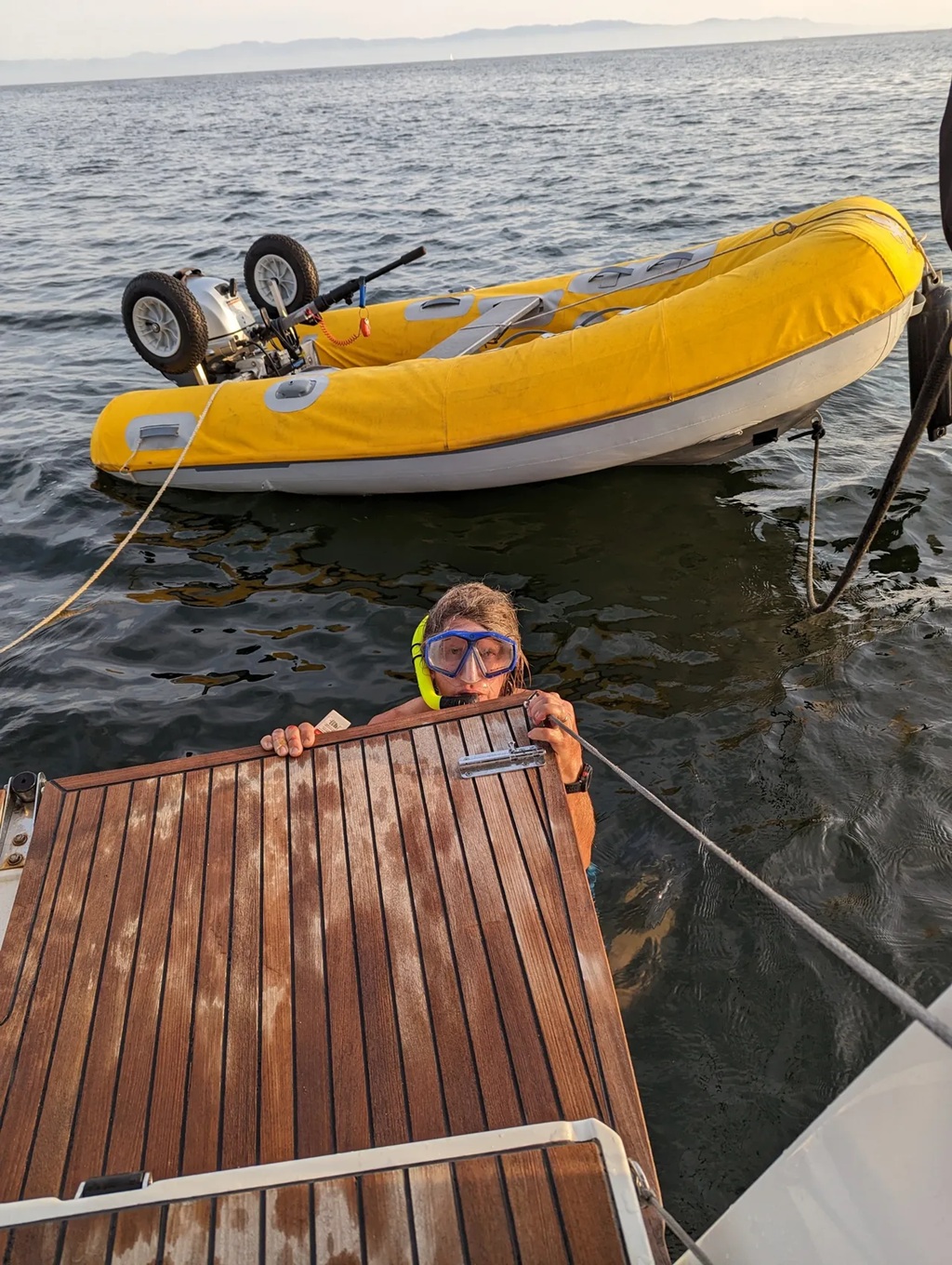
    As we neared Punta de Mita our plans began to go awry. The water got less and less appetizing and soon we were in Red Tide again (strike one). Darn. At least we’d made a little water on the way so we wouldn’t go thirsty. As we hauled in the sails to motor into the anchorage the prop wash looked ‘funny’ and the boat wouldn’t make good speed (strike two). I began to wonder if I’d snagged something on the prop and made a note to grab my mask and snorkel and take a look. We took Riley and the dinghy to the beach and walked into the small town. It was filled with small shops trying to be expensive boutiques for the tourists at the high end hotels. Even the food was twice as expensive as in La Cruz (strike three). We returned to the boat surrounded with icky brown water and I reluctantly put my snorkel on to look at the prop. No wonder the prop wash looked funny, the prop was covered in a layer of barnacles. Ugh (strike 4). I returned to the surface and Bev got me a scraper, by the time I’d cleaned just the prop, my hands and arms were bleeding and I was scraped up on my back from sharp barnacle shells. Bev helped me shower on the swim step of the boat to feel human again and we decided to abandon our plans for Mazatlan and return to La Cruz for a much needed bottom scraping.

    Back in La Cruz the next day we got together with some friends from the dock who left the Seattle area for Mexico the year before we did. Since they have the same boat that we do, it was fun to catch up and compare notes about the different things we’ve learned about sailing the same boat and our different trips South. The next day we arranged for a diver to clean the bottom of the boat and started to discuss plans for our next weather window. Do we go North or South for a 10 day adventure? We made the decision to head North so off to Mazatlan we go!

  • Chicken Bus Experience

    📷 Placeholder — replace with original post image

    La Cruz is small and charming in the way that La Paz was except La Cruz is a much smaller town. La Cruz has a small fruteria (fruit and vegetables) stand and a small merdado (market). There’s literally one cash machine (cajero automatico) for the entire town. The machine spent a couple days having broken internet and another couple days being out of cajero (cash). Cant be out of cash in a cash only (solo efectivo) town. Despite some inconveniences, the live music and Sunday markets here are incredible!

    We decided one morning to take the chicken bus from La Cruz to Puerto Vallarta. We wanted to visit Puerto Vallarta and we were also interested in stopping at Paradise Village Marina in Nuevo Vallarta which is on the way. Paradise Village is where we are storing our boat this summer during hurricane season. We looked up ways to get from La Cruz to Paradise Village and found there was regular bus service (well not really “regular” but a chicken bus). We had no idea where the bus stop was but off we went. Keep in mind there is no bus schedule or bus stops. You just wave the driver down. Crazy!

    The Chicken Bus has gotten it’s name throughout Mexico and Central America because chickens being taken to market rode on the bus too. We didn’t see any chickens on our bus but we did have Riley on our lap. We got on a bus heading to Puerto Vallarta. The bus is an old rickety school bus with it’s destinations written on the front window with a marking pen. These buses don’t look like they are ever washed and some of them smoke. The bus ride took us all along the shore of Banderas Bay. Frequently we changed lanes and headed off on side roads to drop off people and pick up more. Sometimes the road was pretty rough and the bus would brake aggressively for another driver or a speed-bump. The busses are manual so the driver is always shifting and the people that are standing in the crowded aisles are losing their balance. You get the picture. The biggest downside is the bus picks up EVERYONE! People just keep squeezing into the bus and its hot and humid and a circus when someone in the back needs to get off. We asked where to get off and someone on the bus that spoke English told us when to get off and then we had to take a combi (a 15 passenger van that runs shorter routes). The bus ride cost us 54 pesos ($6) for both of us and the combi we caught cost us 20 pesos ($1) and dropped us off at Paradise Village. Paradise Village was our first stop for the day. It could NOT be more different from La Cruz. There’s a Starbucks that smelled just the same as all the ones in Seattle (I noticed the smell right away). There’s a shopping mall with a grocery store and a McDonalds inside, golf course, yacht club, hospital, restaurants, numerous hotels and condos, and a beautiful marina. It didn’t seem like Mexico there other than it was much warmer and there were lots of palm trees.

    Then we hopped on another chicken bus and found our way to Puerto Vallarta where we spent the afternoon walking the malecon that is lined with beautiful sculptures, scenic views of the water, shops, thatched roof bars and restaurants. The crew ships had left the night before so it was much quieter as we walked around town. On the way back to La Cruz we took more combis and got a pretty crazy combi driver. The driver even had his wife and kids riding in the front seat with him. Bev was hanging on for dear life the entire ride. At one point the driver got pulled over and got a ticket from the police. Our first traffic stop in Mexico! Everyday is an experience!

  • La Cruz (a Mexican Fishing Village)

    📷 Placeholder — replace with original post image

    La Cruz has been on my personal map for LONG before we anchored our boat here. Our friends Casey, Jeff and Matt sailed around the world and stayed in this anchorage a decade and a half ago. I’ve always remembered the name of the place and sort of where it’s located. If you type it into google maps as La Cruz you won’t find it easily unless you zoom in and know where to look (for reference it’s North of Puerto Vallarta in the same bay). The official name is La Cruz de Huanacaxtle. I’ve heard it pronounced but I don’t think I can even come close to pronouncing that. I would bet that Casey Jeff and Matt would be surprised at how much it’s changed in 15 or so years but it’s still a very cool place. It has streetside restaurants that come alive with rooftop music venues in the evening and many places that serve an excellent Margarita and cold beer. There are several marinas in Banderas Bay (where La Cruz and Puerto Vallarta are located) but this town is a favorite of ALL the cruisers I’ve talked to.

    Puerto Vallarta and Nuevo Vallarta have been and continue to develop rapidly. La Cruz has improved its roads and access from 15 or 20 years ago and I imagine someday it may be swallowed up by mega hotels too but for now it retains a very nice local and small town charm. Banderas Bay is the largest deep water, sheltered bay on the West Coast of Mexico and in the winter Humpback Whales congregate here to sing to one another and nurse calves until they are big enough to continue with the pods in their migration which will soon begin again. This morning a pod of dolphins swam by. Because our boat casts a shadow there’s an ecosystem of little fish that live underneath it. In the morning they swim near the surface and make little bubbling noises like the water is fizzing. When we turn on our newly installed lights on the dinghy arch in the evening a pelican or two will quickly show up and patrol just on the edge of the light like feathery battleships, looking for a late evening fish treat.

    Of course boat projects never really end, and since we’re living on our boat we have normal life things to do. Right now I’m listening to the water-maker run. Since we’re not at a marina we have to make our own fresh water.

    The La Cruz anchorage is a little more full today since there is a pretty big ‘norther’ building in the Sea of Cortez which is ripping right down the West Coast of Mexico with gale force winds. Happily we’re behind a mountain here in the bay but I’ll be interested to see what the wind peaks at here in La Cruz. As I write this we’re a few hours from the forecasted peak of the winds and it hasn’t been nearly as gnarly as it was in La Paz. Yay for that!

    We’ve figured out how to get around here in Banderas Bay. It’s different from La Paz but we’ll save that for our next story! “Chicken Bus”.

  • Sailing Across the Sea of Cortez into the Pacific Ocean

    📷 Placeholder — replace with original post image

    It took us about 4 1/2 days to get from La Paz across the Sea of Cortez into the Pacific Ocean to La Cruz. The first day we were able to anchor in Ensenada de Los Muertos (the Bay of the Dead) just as it got dark. The weather was a little unclear so we decided to wait a day in Muertos, then in the morning the weather forecast seemed better so we headed out across the Sea of Cortez. Pretty soon the winds built to 24 knots and I was wondering if we’d made a good decision as the boat rolled with short period swells from the port aft. By nightfall the winds had calmed down and I turned the motor on. It ran for the next 2 1/2 days. At one point we considered stopping over in Mazatlan but ultimately decided to continue straight through to Banderas Bay (where La Cruz and Puerto Vallarta are located).

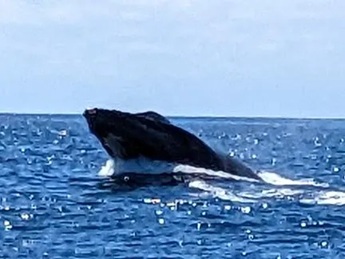
    We had one other stopped planned. There’s a group of islands off the Mexican coast, the smallest of these islands is Isla Isabelle, also known as the Galapagos of Mexico because of the wide variety of sea birds, iguanas and fishing grounds nearby. We planned to spend an afternoon in an anchorage to time our arrival in Banderas Bay in daylight. As we approached Isla Isabelle we were slowly dropping our sail when we noticed that we were about to get tangled up in a long-line. Long-Lines are a type of deep-sea fishing gear consisting of a long main line anchored to the bottom to which shorter lines with baited hooks are fastened. With no desire to dive on a fouled prop we quickly put the boat in reverse and managed to avoid any serious problems other than the fact that we didn’t know where the end of the line was. We traveled almost 3 miles before we found the end of the line and were able to cross. Following the line back once we’d crossed it, we began to see whales. The photo is of a mama whale who poked her head out of the water to get a look at the boat that was getting close to her and a calf. This pod of whales was crossing in front of our bow and was so close that we had to put the boat in reverse to avoid running into the pod. Humpback whales are so big and strong that we’d certainly come away with damage from even the most casual contact from a fluke or tail.

    We anchored for lunch and put the dingy in the water to explore around the island and we were rewarded with our first glimpse of the Blue Footed Booby. They have feet like a duck but their feet are very distinct because they are a very vivid baby blue.

    The moon hasn’t been rising until after 1am so our night time sails have been very dark. You don’t know what dark is until you’ve been out in the ocean without the moon. You have to trust your instruments. We only saw a couple of fishing trawlers and a crew ship on the whole journey. It seemed like we had the ocean to ourselves.

    After one more night of motoring in the dark, we finally arrived at noon in Banderas Bay tired and glad to be in a new place. . . La Cruz.

  • Adiós La Paz

    📷 Placeholder — replace with original post image

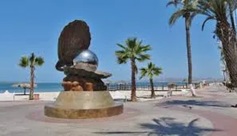
    This is a picture from the malecon (boardwalk) in downtown La Paz. The malecon is lined with emblematic sculptures, tall palm trees, palapas, playgrounds and benches along 5 km of paved waterfront. This is a popular gathering place for Mexican families on Sunday (family day). You often see the older children holding grandma’s hand as the whole family strolls along the malecon.

    This morning we untied our dock lines and pulled out of our slip after calling this place home for the past 4 months while waiting for our stainless steel project to be completed. The early morning sun was warm and the channel winding out of La Paz was calm and peaceful. We are going to miss this beautiful place. La Paz means “peace” and this place has definitely lived up to its name. The pace is slow, the people are friendly, the town is safe both day and night, so many interesting and unique restaurants, and the weather and water are gorgeous.

    We sailed/motored 53 nautical miles today to Los Meurtos (Bay Of The Dead) where we are anchored for the night. On the way, we saw several manta rays. These animals leap from the water up to 3 ft. into the air. They are amazing to watch.

    We are working our way to Puerto Vallarta. Since its on the mainland we need to cross the Sea of Cortez which is about 250 nautical miles. We plan to start crossing tomorrow. It will take us a couple days without any places to stop. Needless to say, we will be sailing day and night.

  • Island Summers sprang a leak!

    📷 Placeholder — replace with original post image

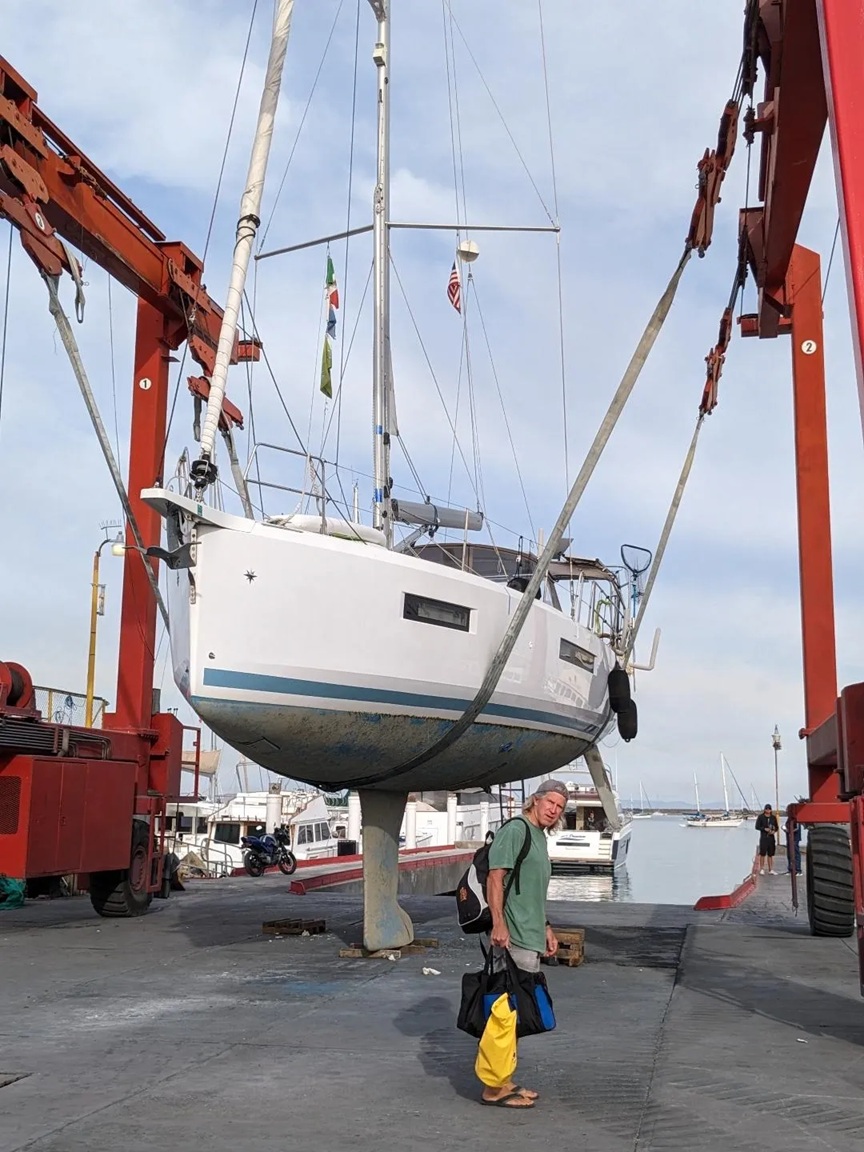
    This is the topic of our “to be continued” in our last post. One night we noticed the bilge pump running and when we investigated we found a trickle of water coming from one of the valves we use for dumping holding tanks. Since we are planning on being off-shore we consider this a big deal. The fitting in question was a 2 inch valve and the trickle was coming from the seawater side of the valve so a failure could have been catastrophic. The other problem is that to fix it we needed to haul the boat out. The boat yard here is VERY busy and we had to use connections and favors to get the work done. Island Summers is pictured on a 100 ton lift which made her look pretty small. The Abaroa boat yard pulled her out at 5:00pm on Monday and we put her back in the next morning with two new thru-hulls and valves. That’s a pretty impressive turn-around. We can’t thank them enough for the emergency slot in a schedule that is full through April.

    The most stressful part of this whole fix was waiting for almost 2 weeks for yard space to clear up. Every boat has issues when it’s in the yard and we were waiting our turn but I certainly worried I was hanging around too much asking what day we’d be able to get hauled out. While waiting, Kevin had to dive under the boat and put a foam plug in the thru-hull in the event the leak got worse and the bilge pump was unable to keep up.

    After we got back to the dock this morning we spent the rest of the day cleaning up from our months of projects here in La Paz. Finally, we’re ready to cross the Sea of Cortez to the land of jungles and iguanas.

  • The arch is done!

    📷 Placeholder — replace with original post image

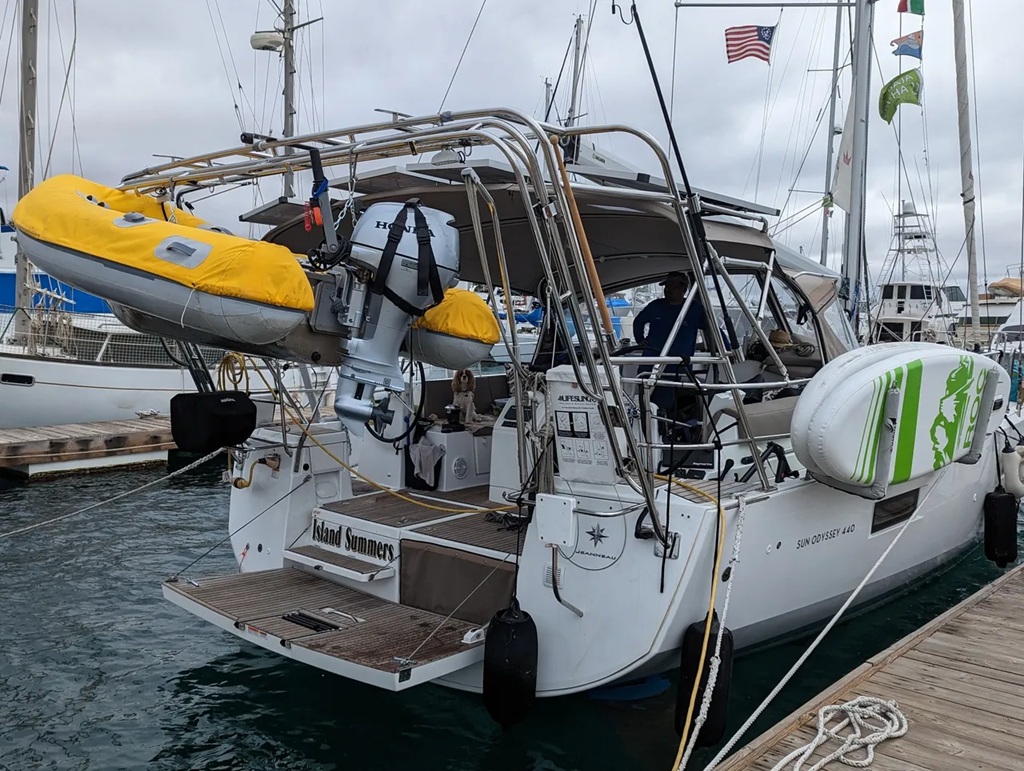
    After being in La Paz since the middle of November waiting to get stainless steel work done we are finished with the project and will be planning our next adventure. Because of the drop down stern, the davits and arch needed to be custom designed to lower the dinghy into the water while clearing the platform when its in the drop down position. It required lots of stainless steel that had to be ordered, a fair amount of welding, and a crew of 5 stainless steel guys. It works with an electric winch so its easy to control the raising and lowering of the dinghy. We couldn’t be happier with how it turned out. It was well worth the wait.

    Why did we need to add this arch? We needed to be able to lift it out of the water. For long crossings it will still go on the foredeck for safety in rough weather. At anchor, we really wanted to be able to easily lift the dingy with the motor on it out of the water and secure it. It’s not common to have a dinghy stolen but, on the other hand, I have talked personally to three people that have had a dinghy stolen.

    Besides the dinghy, the arch also provides a convenient spot for two more solar panels for an additional 450 Watts. I’m certain you’ve heard me complain about batteries, alternators and the amount of solar I had – but this brings all those systems into balance and makes Kevin VERY happy. Bev immediately requested additional electrical appliances 🙂

    The last few days have been reassembling areas removed to install the arch, pulling wires for solar panels and installing lights on the arch. I’ve made many trips on my e-scooter to the chandleries around town!

    Finally, we were feeling like we were ready to plan our next move AND then we discovered a serious problem. To be continued . . .