
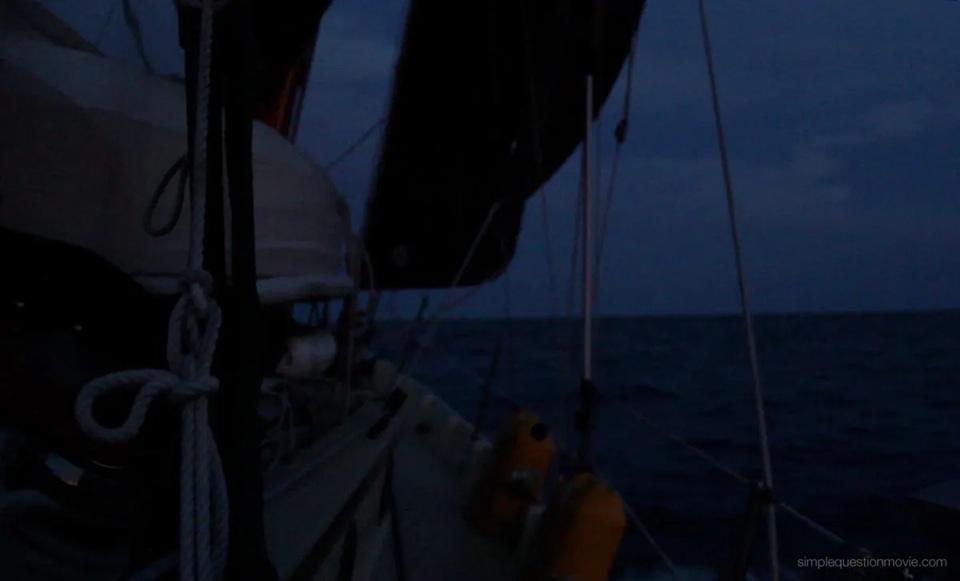
After spending a week in Tenacatita we were ready to move on. We had been watching the weather forecasts for an opportunity to go North. The prevailing winds are northerly (from the North) and heading into the impressive Pacific swell can make for a miserable (and probably seasick) passage. With a one-day weather window and 120+ NM to travel, we’d be traveling overnight. If we had decided to stop in one of the anchorages along the way we would have had to spend a week there waiting for the next ‘weather window’ of calm seas and light or southerly winds. So off we went. We left Tenacatita bay Thursday morning with an expected arrival in La Cruz and Banderas Bay the next morning. We didn’t have a buddy boat traveling with us this time but we were confident since we’d been through the area on our way South.
The main feature of this trip was going to be rounding Cabo Corrientes, the prominent point at the South end of Banderas Bay. Like other capes all around the world, this one makes its own weather. Wind maps may not give good information, thermal effects may dominate the local winds and Cabo Corrientes is a good spot to get an ass-kicking in a boat. Night crossings are sometimes favored here because the wind is typically lighter. The guide book recommends staying 5 NM off the coast if the wind is blowing. This seems to me to be especially good advice at night. Moonrise (a tiny sliver of moon) wouldn’t happen until almost 0400 in the morning. This would be a very dark passage. At about 2130 we were 3 NM from shore and a few miles South of Ipala. I (Kevin) was just laying down for a nap so I could take a 0100 watch to round Cabo Corrientes. The boat was set on auto-pilot and Bev was on watch. Just before I closed my eyes I was looking at the stars outside the canopy. As I watched the stars move past the bimini I suddenly realized that the stars shouldn’t be moving past the bimini the boat must be turning. I sat up and called out to Bev that I thought the boat was turning. We both hurried to the helm to check the charts just as EVERYTHING shut off and went dark. No nav displays, no radar, no auto-pilot, no navigation lights, no refrigeration, no salon lights — NOTHING. Somehow we’d had a MAJOR power failure and we were in total darkness. The engine was running (thank goodness!). But where were we headed? When the auto-pilot turns off the boat immediately started sailing in circles. I (Bev) grabbed the wheel – turned the boat, then became disoriented until Kevin instructed me to keep the shore to the starboard side! We’re going mostly North! What’s the compass heading? The light on the compass is out -we need a flashlight! A few moments of frantic activity to get straightened out and at least we weren’t headed towards some big rocks or shore.
Bev took the helm and did a fantastic job of hand steering with navigation from my cell phone (44% charged with a half discharged back-up battery) while I went below to troubleshoot. I (Bev) felt like I was starting to panic! I had a vision of hitting huge rocks, would we be blown into shore, do we need help from the Mexican Navy, at what point do we abandon ship and deploy the life raft? I knew I had to keep it together so that I could steer while Kevin figured out what happened. It was so dark and occasionally Kevin would need his phone to troubleshoot and then I was navigating by watching the distant lights on the shore. At one point he shut down the master switch which killed the engine. Now I’m really frightened! We’re bobbing around with no lights on in the Pacific Ocean. We can’t see anything and nobody can see us!
I (Kevin) replaced every spade fuse on the boat with no results, there were no circuit breakers tripped but my battery manager was reporting a short-circuit alarm and refusing to turn back on even though the batteries were fine. I was finally able to trace the problem to a failed 250A fuse on the battery manager (short circuit protection). I verified that there was indeed no short circuit and replaced the fuse. FINALLY after about two hours power was back on!
We proceeded on our journey and arrived safely in La Cruz a few hours behind schedule the next morning.
Always have a backup Nav system! We had my phone. Usually we have a tablet too but the battery blew up from exposure to intense heat earlier this year and we haven’t replaced it yet. Know where ALL the failure points in an electrical system are and be prepared to fix them with the correct easily located fuses – in the dark with a headlamp. Speaking of headlamps, always have one nearby at night. The first thing that will happen in an emergency will be that the lights will go out. Be prepared, know what the emergency procedures are. Be prepared to execute them in the dark.
Leave a Reply